

Do Curtains Help With Echo? Acoustic Curtains, Soundproofing, and What Actually Works
Short answer: Heavy custom curtains can absorb a meaningful amount of mid- and high-frequency sound, making them useful for reducing echo, flutter, and harsh reflections from glass.
However, they are not a substitute for soundproofing. Fabric mounted on a rod will not stop significant noise from a neighbor, street, or adjoining room. The real value of acoustic curtains is their ability to soften reflections while also functioning as a practical window covering.
Why Bare Windows Can Affect Room Acoustics

Glass is a highly reflective surface. When sound waves reach a large window, much of that energy reflects back into the room rather than being absorbed.
This becomes more noticeable when the window faces another hard, parallel surface. A simple hand clap can reveal the problem. If the sound produces a short metallic zing or repeated flutter, the room has noticeable reflections between its hard surfaces.
Windows can also create problems in listening spaces. Sound from speakers can travel toward the glass, reflect back, and reach the listener slightly after the original signal. That delayed energy can reduce perceived clarity and make stereo imaging less precise.
Curtains change the character of that surface by introducing a softer, more absorptive material. They do not eliminate every reflection, but they can reduce the amount of high- and mid-frequency energy bouncing around the room.
How Much Sound Do Curtains Actually Absorb?
The acoustic performance of curtains depends on more than simply choosing a thick-looking fabric. Material density, construction, fullness, mounting distance, coverage, and frequency all affect the result.
A heavy, properly gathered velour or similarly substantial curtain can provide useful absorption in the mid and high frequencies. By contrast, a lightweight panel hung flat against a wall generally has a much smaller acoustic effect.
The distinction matters because curtains are sometimes described as if they were universal acoustic treatments. They’re not. Their useful range is mainly associated with reflections and higher-frequency room energy.
Low frequencies are a different challenge. Bass wavelengths are much longer and require substantially different treatment approaches. If a room has persistent bass buildup or a boomy response, curtains alone are unlikely to solve it. Speaker placement, bass traps, room dimensions, and other acoustic measures may be more appropriate.
How Curtain Placement Changes Acoustic Performance

Where the curtain sits can influence how much of the reflective surface it actually treats.
A narrow panel that covers only the center of a window can leave considerable glass exposed around the sides. Extending the curtain beyond the window frame creates more coverage and reduces the amount of uncovered reflective glass.
Height also matters. A ceiling-height curtain can cover more of the wall surrounding a window than a short panel installed immediately above the frame.
Fullness is another important consideration. When a curtain is gathered into folds, more fabric is presented to the room than when the same amount of material is stretched completely flat. Those folds increase the effective surface area and can improve the curtain’s acoustic contribution.
The goal is therefore not simply to put fabric over a window. Instead, you should place enough substantial, folded material where unwanted reflections are actually occurring.
Four Features That Make a Curtain More Acoustically Useful
1. Substantial Fabric
Heavier fabrics generally provide more useful absorption than very thin decorative materials. Dense woven fabrics, velour, and lined constructions can be suitable choices when acoustic performance matters.
Fabric weight should not be considered the only specification, but it is a useful starting point when comparing different curtain options.
2. Sufficient Fullness
Fullness is one of the easiest details to overlook. A curtain gathered across a wider track creates folds and presents more fabric to incoming sound than a flat sheet.
For acoustic purposes, a curtain should not be stretched tightly across the opening. Additional width allows the material to remain naturally gathered when closed.
3. An Air Gap
Mounting the curtain slightly away from the wall can provide an advantage over pressing the fabric directly against a hard surface.
The exact distance does not need to be extreme. Even a modest space between the curtain and wall allows the fabric to interact with sound differently from a flat covering attached directly to the surface.
4. Broad Coverage
Treat the reflective area rather than thinking only about the window dimensions.
A track that extends beyond the window frame can provide better coverage, while a higher installation can allow the curtain to cover more of the surrounding wall. When closed, the curtain should cover the glass as completely as practical.
Choosing Curtains for Better Room Acoustics
Before choosing a curtain, identify what you actually want it to accomplish.
If the primary problem is a bright, reflective window in a living room, bedroom, office, or listening space, a substantial curtain may make a noticeable difference.
If the goal is to reduce speech reflections in a home office, the curtain can become one part of a larger treatment strategy.
If the goal is to block outside noise, expectations should be different. Acoustic absorption inside a room and sound isolation between spaces are separate problems.
Fabric choice should therefore follow the acoustic objective. A curtain can provide useful absorption, light control, privacy, and visual softness at the same time, but those functions should not be confused with structural soundproofing.
When Should You Combine Curtains With Acoustic Panels?
Curtains are particularly useful when a room contains large areas of glass that would otherwise remain highly reflective. Acoustic panels can then be positioned at important wall reflection points.
This creates a division of responsibilities. Curtains can address windows and other areas where a permanent wall-mounted treatment would be inconvenient, while panels can provide more targeted absorption on walls and ceilings.
This arrangement can be useful in home theaters, music rooms, offices, podcast spaces, and listening rooms. It also gives homeowners more flexibility because curtains can be opened when a more reflective acoustic character is preferred.
The important point is that the two treatments serve different purposes within the same room rather than competing to solve the same problem.
Are Thick Curtains Enough for a Recording Room?
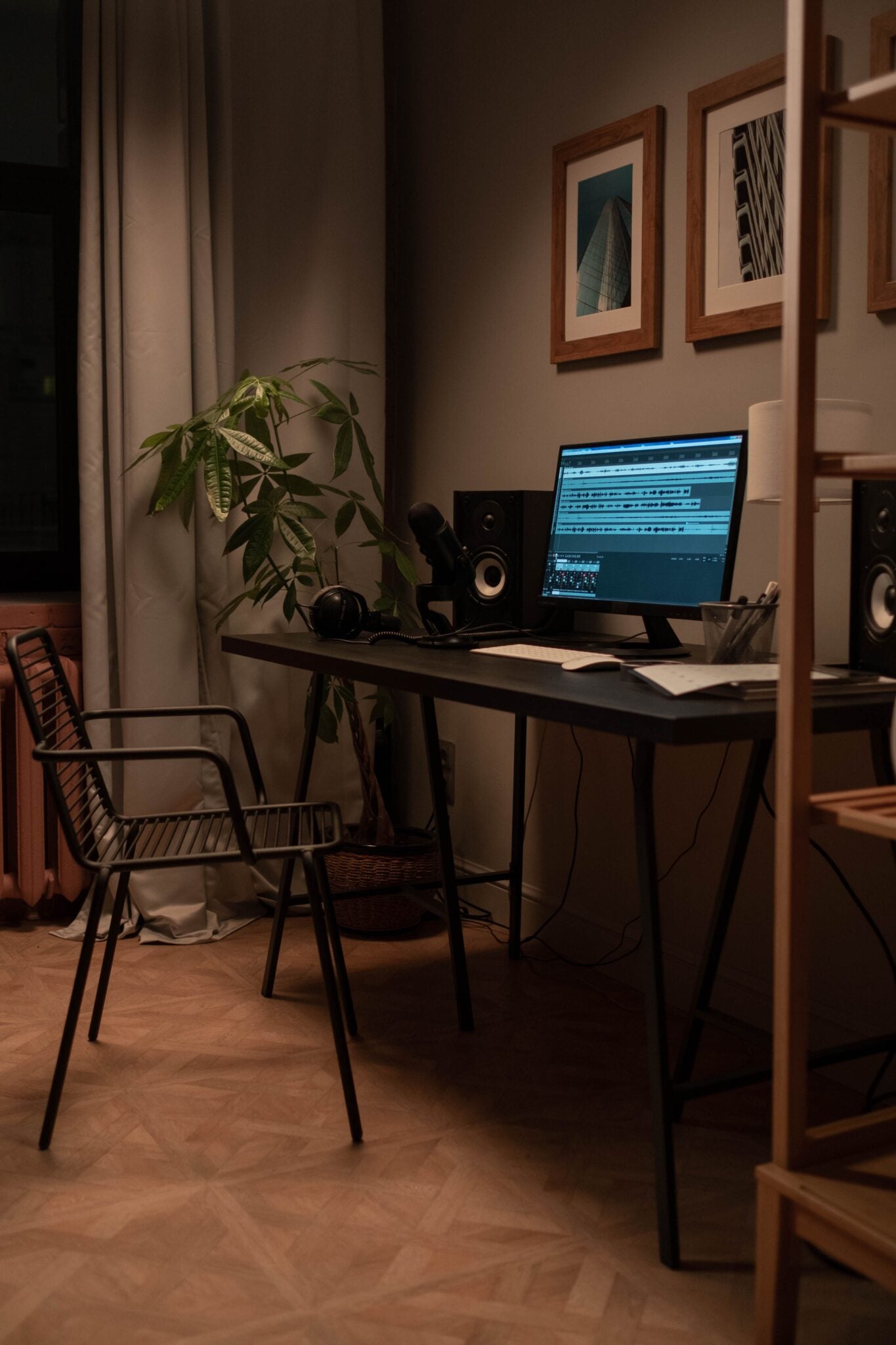
For casual recording, podcasting, voice work, or a home studio, thick curtains can be a useful part of the room setup.
However, a recording room generally needs more predictable acoustic control than curtains alone can provide. Different frequencies behave differently, and a room can still have problematic reflections or low-frequency buildup after a large window has been covered.
Curtains are especially practical when a recording space contains windows that cannot be permanently modified. They can also be opened or closed depending on the desired room response.
For more demanding recording work, the better approach is to treat curtains as one adjustable element within a broader acoustic plan.
What Soundproof Curtains Won’t Do
If the problem is traffic noise, loud neighbors, footsteps from an upstairs room, or sound passing through a shared wall, curtains should not be presented as a complete soundproofing solution.
Sound isolation depends heavily on mass, airtight construction, structural separation, and the weak points through which sound travels. A heavy fabric panel does not add enough mass to a window or wall to transform the isolation performance of the structure.
There is an important distinction between sound absorption and sound isolation.
Absorption reduces reflections inside the room. Isolation reduces the amount of sound passing from one space to another.
Curtains are mainly useful for the first problem.
For window noise, sealing obvious air gaps can be a more relevant first step. Depending on the building and window construction, options such as weatherstripping, secondary glazing, or a properly fitted removable window plug can provide a different level of isolation than fabric treatments.
How to Hang Curtains in a Listening Room or Home Studio
Find the Reflection Points
Sit in the main listening position and have someone move a mirror along the walls. When you can see a speaker in the mirror, that location represents a potential first-reflection point.
This method can help identify where acoustic treatment is likely to have a greater practical effect. A curtain does not necessarily need to be centered on a window if the important reflection occurs elsewhere.
Use Layers Where Appropriate
A window covering can combine different functions. A shade can provide light and temperature control, while a heavier curtain can contribute to acoustic absorption.
The two layers do not need to perform the same job. Separating their functions can make the overall window treatment more practical.
Use Curtains as Variable Acoustics
One advantage of curtains is that they can be opened and closed.
Open curtains leave more of the hard window surface exposed. Closed curtains introduce a larger soft surface into the room.
That makes them useful in spaces where the desired acoustic character changes between everyday use, conversation, music listening, and recording.
Avoid Over-Damping
Adding absorption everywhere is not automatically better.
A room with excessive high-frequency absorption but insufficient control of bass can sound dull while still retaining low-frequency problems. A balanced room usually benefits from treating the most important reflection and resonance problems rather than simply covering every available surface.
A Practical Way to Test Curtains Before and After Installation

You do not need specialized equipment to perform a basic before-and-after comparison.
Start from the same position and listen to familiar speech, hand claps, or music with the curtains fully open. Pay attention to how quickly reflections seem to disappear and how clearly voices or instruments are perceived.
Then close the curtains completely and repeat the test from the same location.
Listen for changes in the sharpness of reflections, the apparent decay of the room, and the clarity of speech or music.
This is not a replacement for professional acoustic measurement, but it can reveal whether the curtains are making an audible difference.
For more detailed analysis, a measurement microphone and room-analysis software can show frequency-specific changes that are difficult to identify by ear alone.
What to Check Before Buying Acoustic Curtains
The best curtain choice depends on the room and the problem being addressed.
First, consider the size of the glass area and whether the curtain can extend beyond the window. Then look at the fabric’s weight, construction, lining, and expected fullness.
Next, consider the mounting system. A high-quality fabric will have limited acoustic value if the installation leaves large sections of reflective glass uncovered.
It is also worth deciding whether the priority is echo reduction, speech clarity, reflection control, privacy, light management, or noise isolation. These goals can overlap, but they require different expectations.
For rooms where appearance matters, choosing a curtain that works acoustically while fitting the existing interior can make treatment easier to live with over the long term.
Where to Find Custom Curtains for Better Acoustic Coverage
Once the acoustic requirements are clear, custom sizing can be useful when a standard curtain does not provide enough width or height.
For example, a large window may benefit from a track that extends beyond the frame and a curtain that reaches close to the ceiling and floor. Standard ready-made panels may not provide those dimensions.
Velvet is one fabric option worth considering because its substantial pile and construction can provide useful absorption at mid and high frequencies. The actual acoustic performance still depends on the complete curtain construction and installation.
Blinds To Go offers custom drapery fabrics, including velvet options, and allows customers to select dimensions suited to their space. Free fabric swatches can also help when comparing the weight and appearance of different materials before making a final choice.
The important consideration is to select the curtain based on the room’s requirements rather than assuming that a particular fabric automatically makes a product “soundproof.”
The Bottom Line on Acoustic Curtains
Curtains can play a legitimate role in room acoustics when they are selected and installed for the right purpose.
Dense fabric, adequate fullness, broad coverage, and suitable mounting can help reduce reflections from windows and other hard surfaces. This can make a room feel less lively, improve speech clarity, and reduce some forms of flutter and harsh reflection.
Their limitations are equally important. Curtains are not structural soundproofing, and they are not a replacement for bass traps or other treatments designed for low-frequency problems.
Their biggest advantage is flexibility. Unlike permanent acoustic treatment, curtains can be opened or closed as needed while continuing to serve an everyday purpose as a window covering.
For rooms with reflective glass, that combination of acoustic usefulness, visual appeal, and adjustability can make curtains a practical part of a broader room-treatment strategy.


![How to Sample In FL Studio – A Complete Guide [Part IV/BPM, Piano Roll, Step Sequencer, & Playlist]](https://homestudiobasics.com/wp-content/uploads/2026/02/How_To_Sample_In_FL_Studio_4_Redo-768x432.jpg)

![How To Sample In FL Studio – A Complete Guide [Part I/Setup]](https://homestudiobasics.com/wp-content/uploads/2026/02/How_To_Sample_In_FL_Studio_1_Redo-768x432.jpg)

