
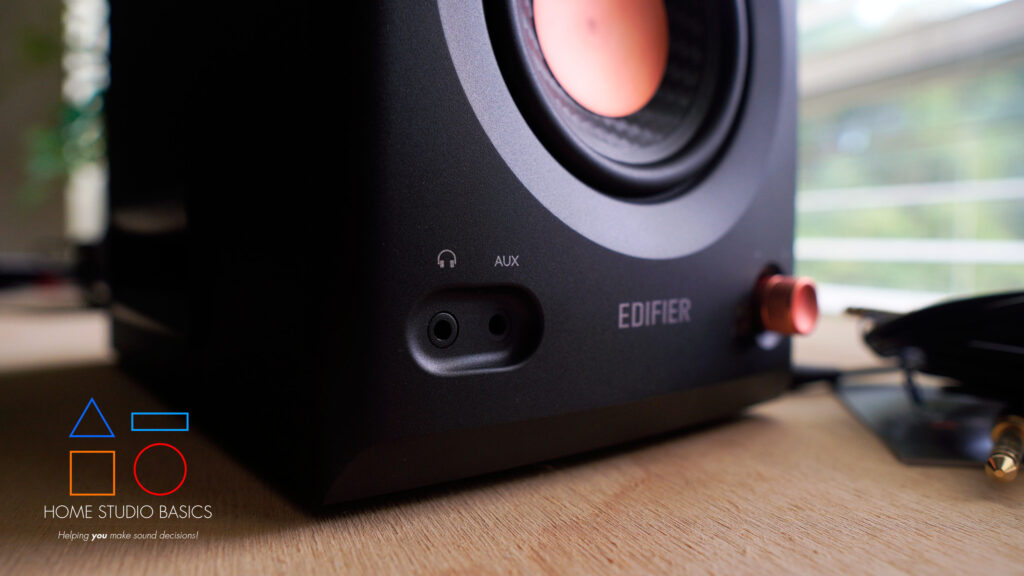
Edifier MR5 Review: Honest Sound, Outstanding Value
Greetings mate and Welcome aboard!
Stuart Charles here, HomeStudioBasics.com helping YOU make sound decisions, so…
Video Review
The Edifier MR5 is an affordable powered studio monitor aimed at beginners, content creators, and home studio enthusiasts looking for accurate sound without spending a fortune.
With balanced tuning, multiple connectivity options, and enough detail for casual mixing and music production, it occupies an interesting middle ground between consumer desktop speakers and traditional studio monitors.
After spending time with the MR5, I found it particularly appealing for smaller rooms and budget-conscious setups, though there are a few caveats worth discussing before you buy.
Build Quality & Design
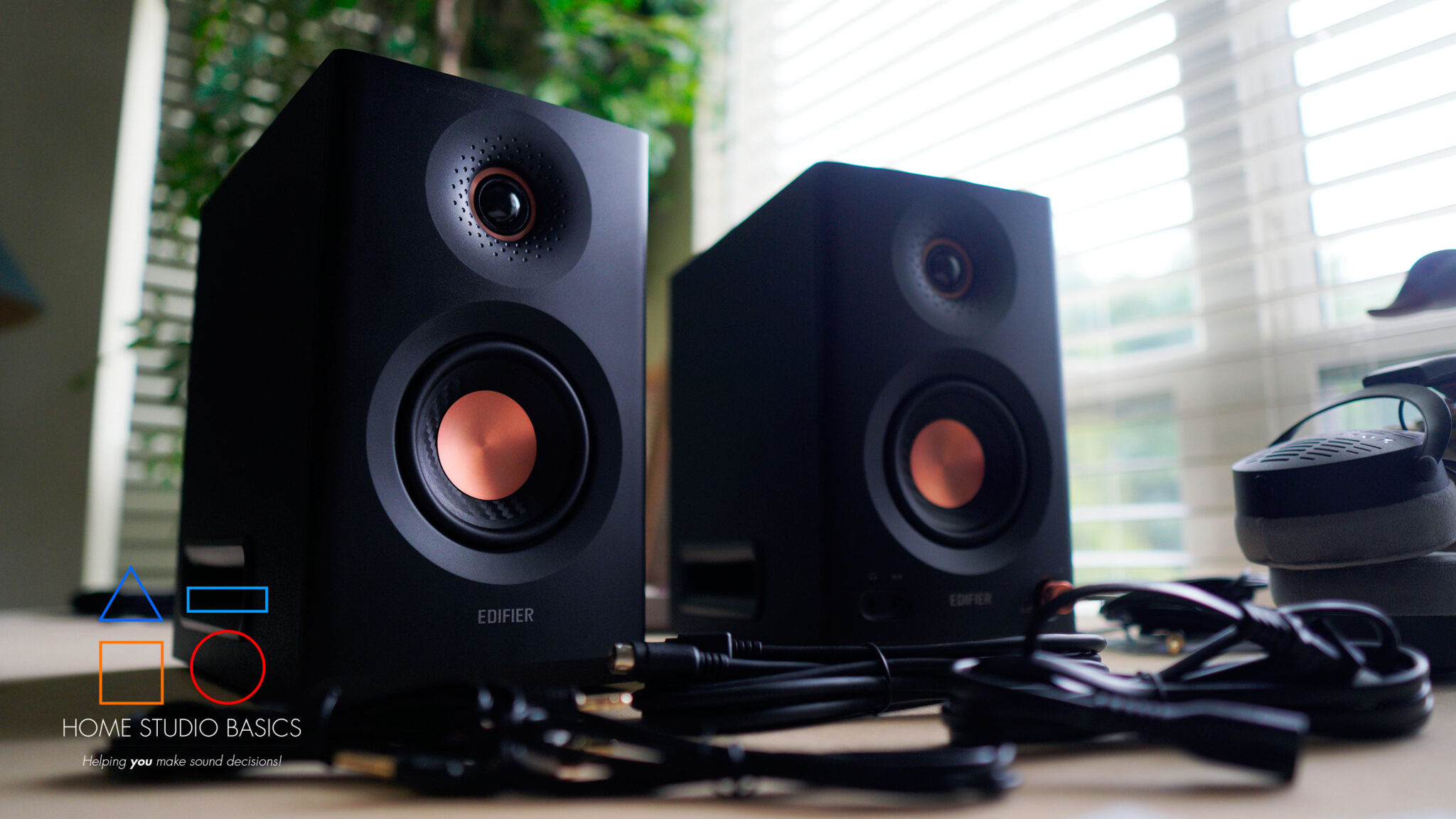
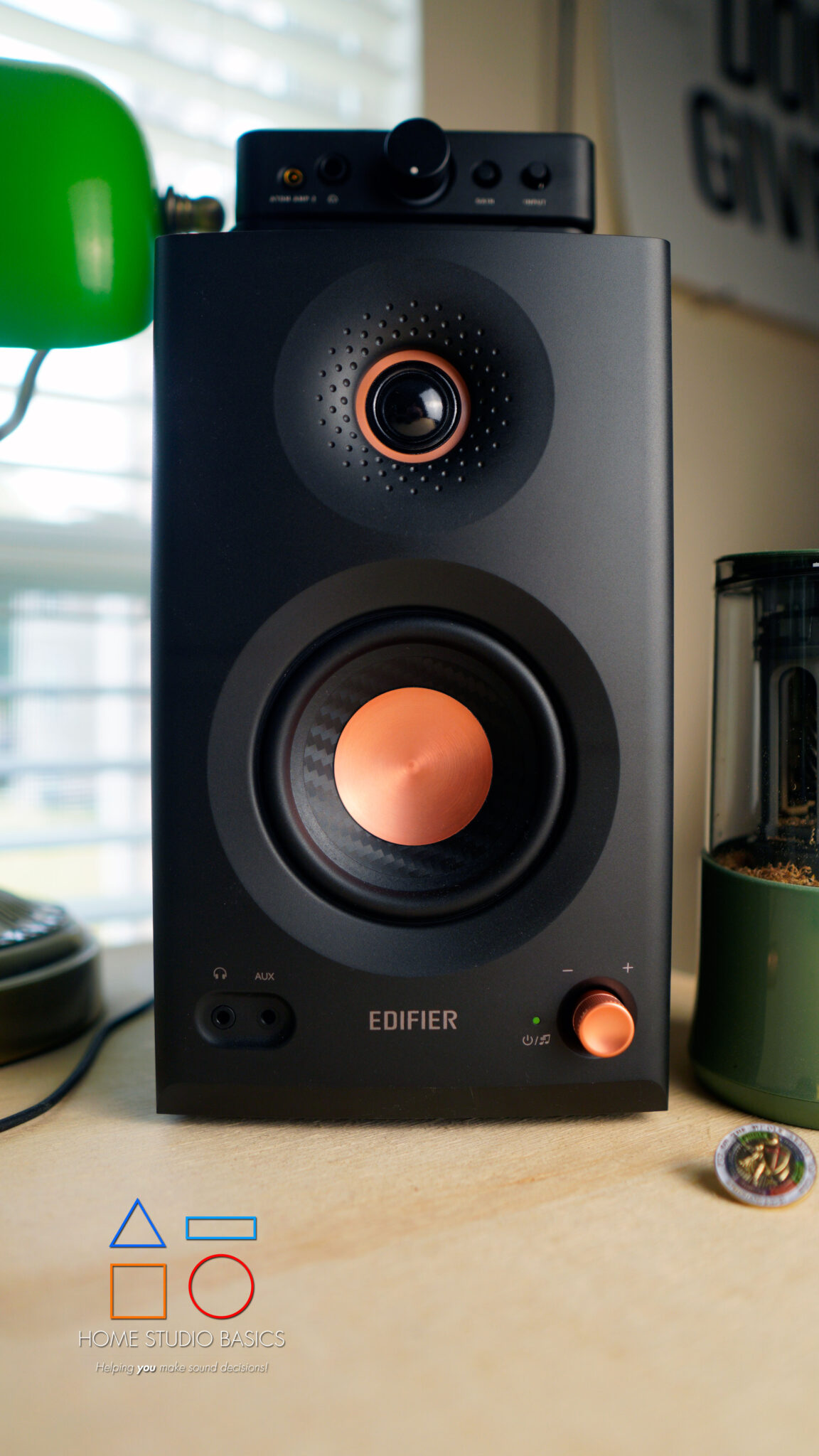
The MR5s are built very well and feel sturdy in your hands. They aren’t overly heavy or bulky, but they certainly function like a premium product.
Weighing in at around 11.5 lbs. each, they feel a lot more substantial in person than they look in pictures.
The MDF cabinets don’t feel cheap or hollow, and the added mass helps the speakers stay planted even at higher listening volumes.
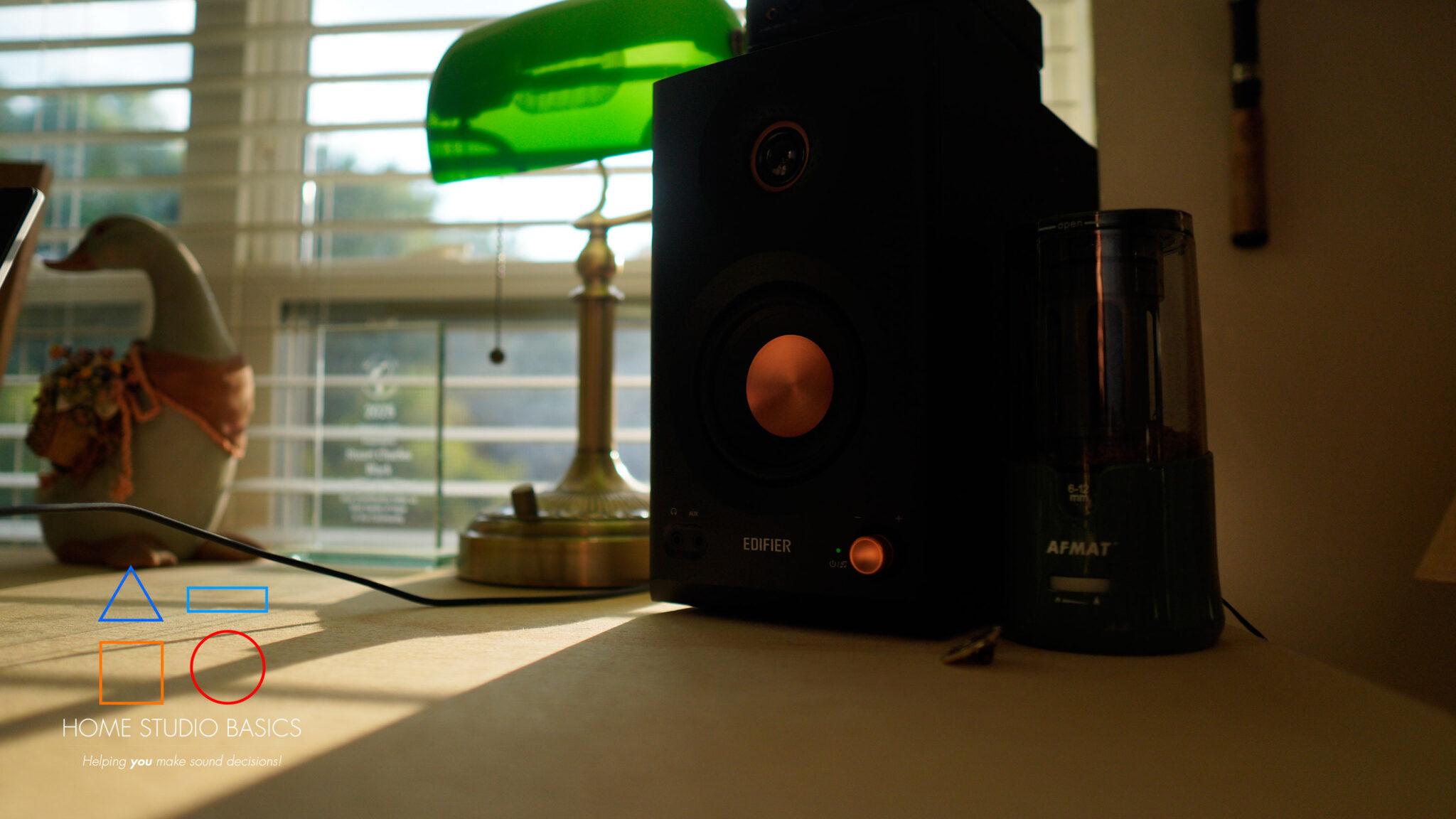
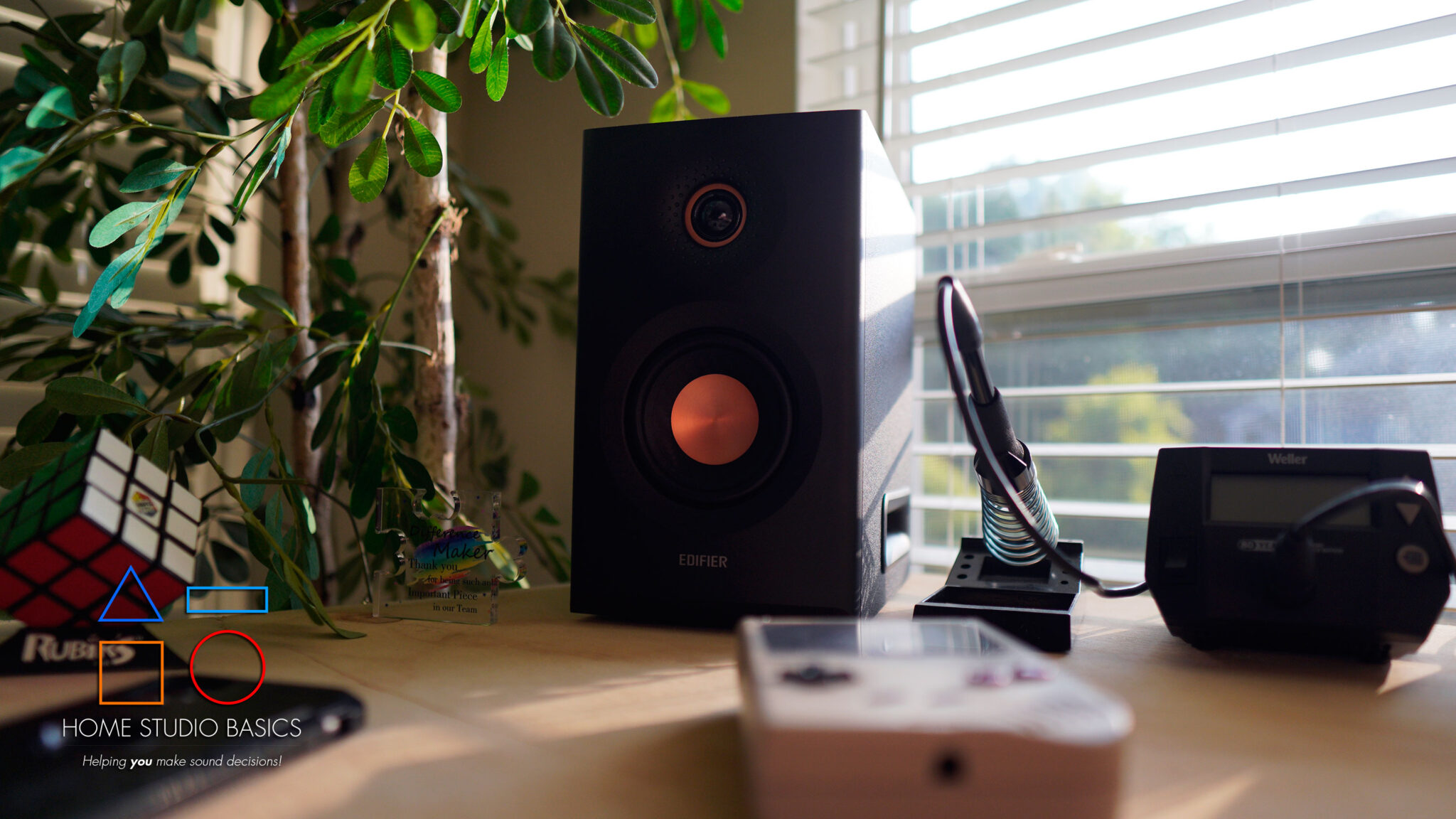
The all-black profile is fairly unassuming and goes well with the woofer’s bronze accents.
Overall, they’ll look nice in most setups, but they’re also small enough that you can integrate them into nearly any space and feel comfortable doing so.
Design
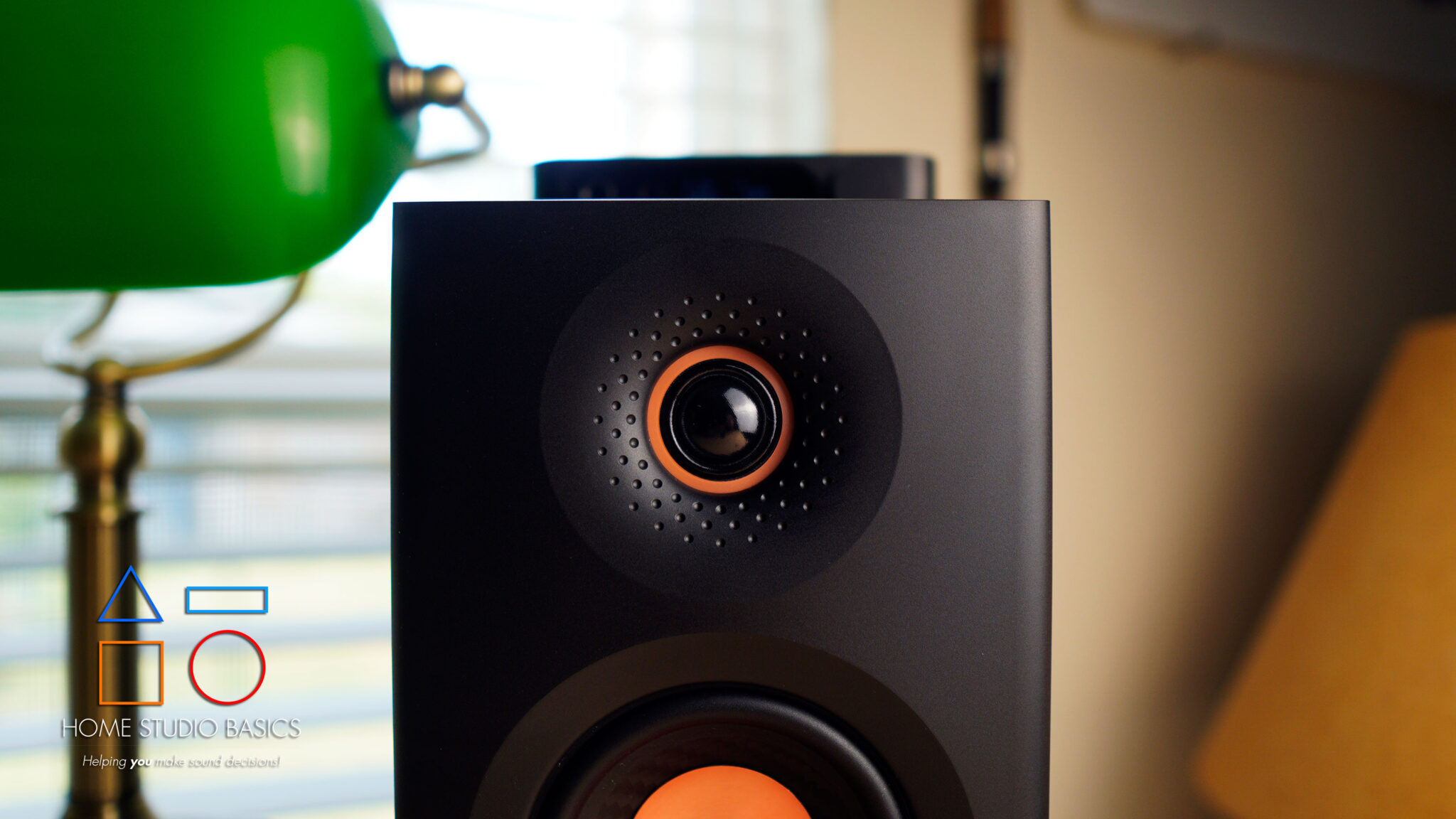
The overall system is a 3-way crossover with a 5″ long-throw woofer, 3.75″ mid driver, and 1″ silk dome tweeter.
In terms of frequency response, you’re looking at 46Hz – 40kHz. While they don’t go down quite as far as the HS7s or LSR305s, the difference is basically inconsequential in real-world terms.
For a budget monitor, the MR5 reaches surprisingly deep and will be just fine for 99% of users. More on sound in a bit.
Front Panel
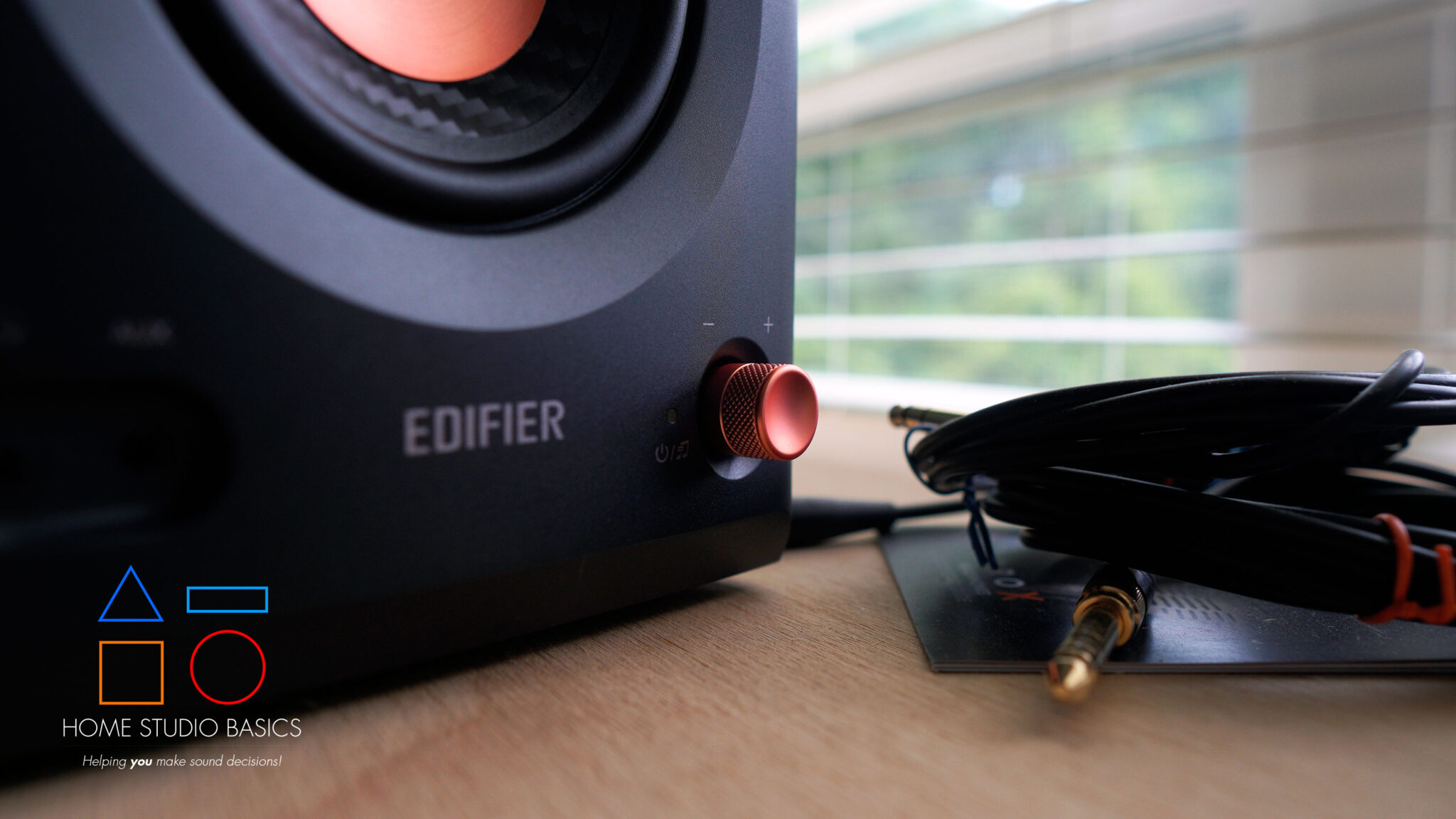
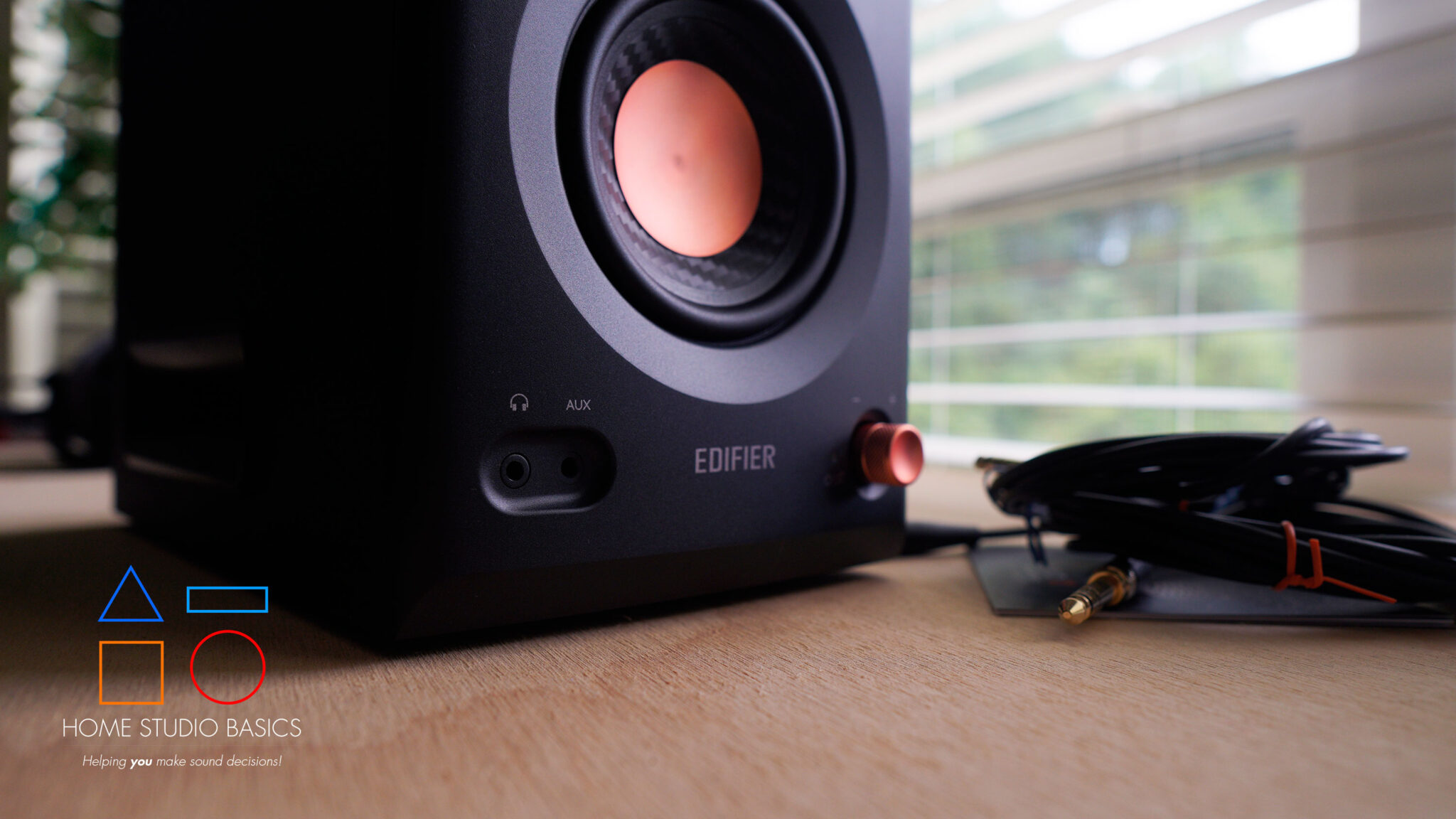
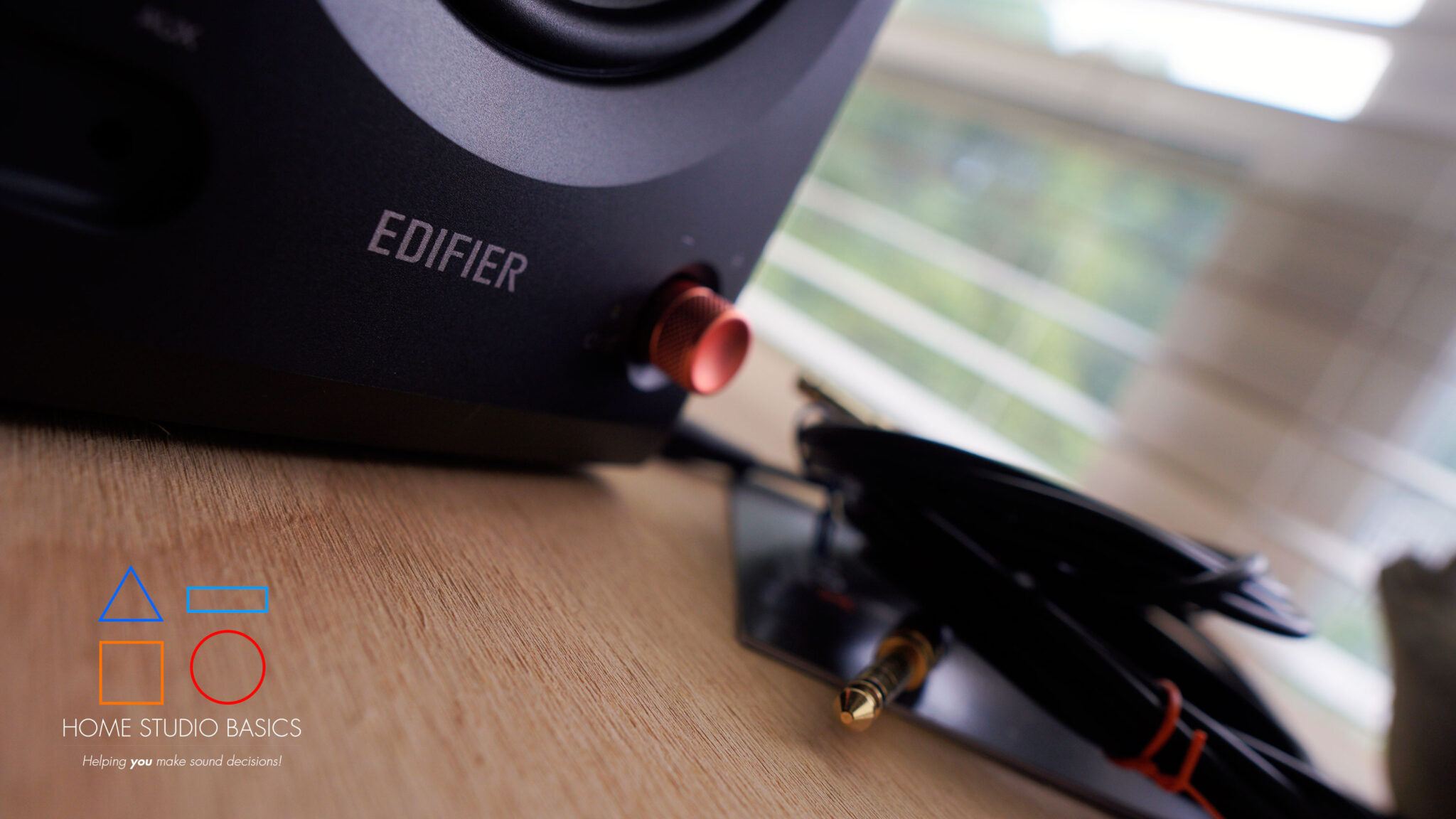
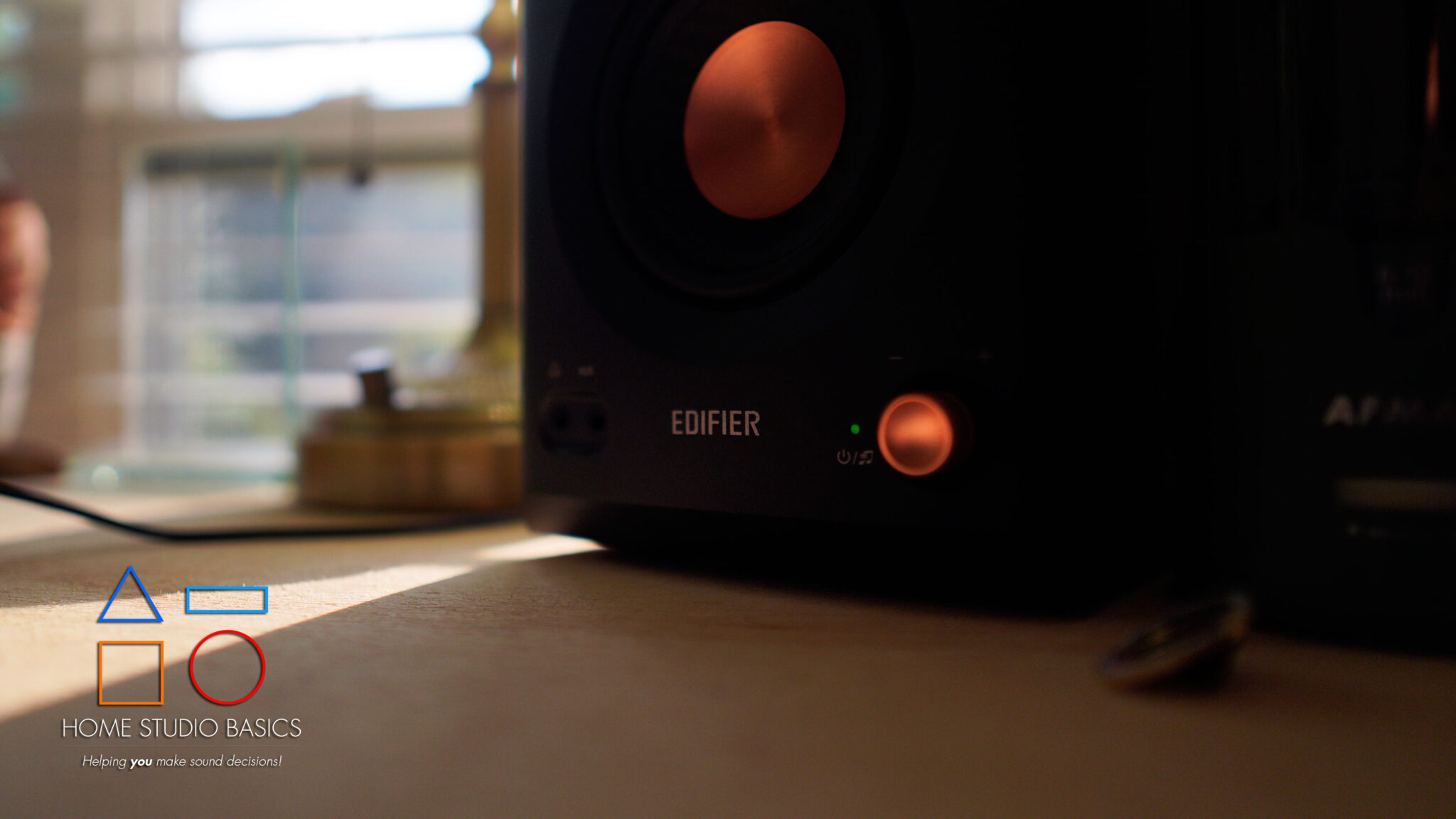
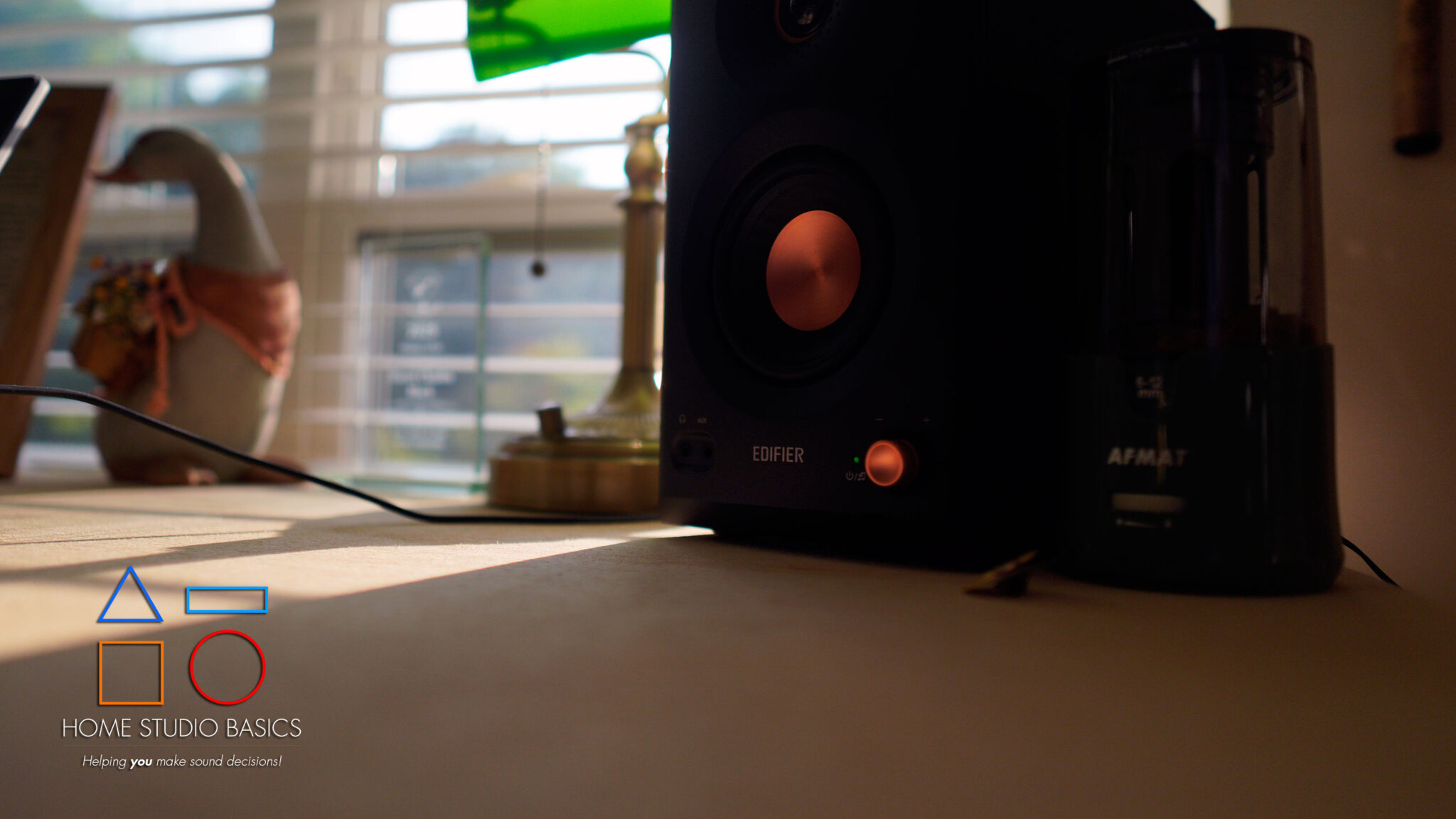
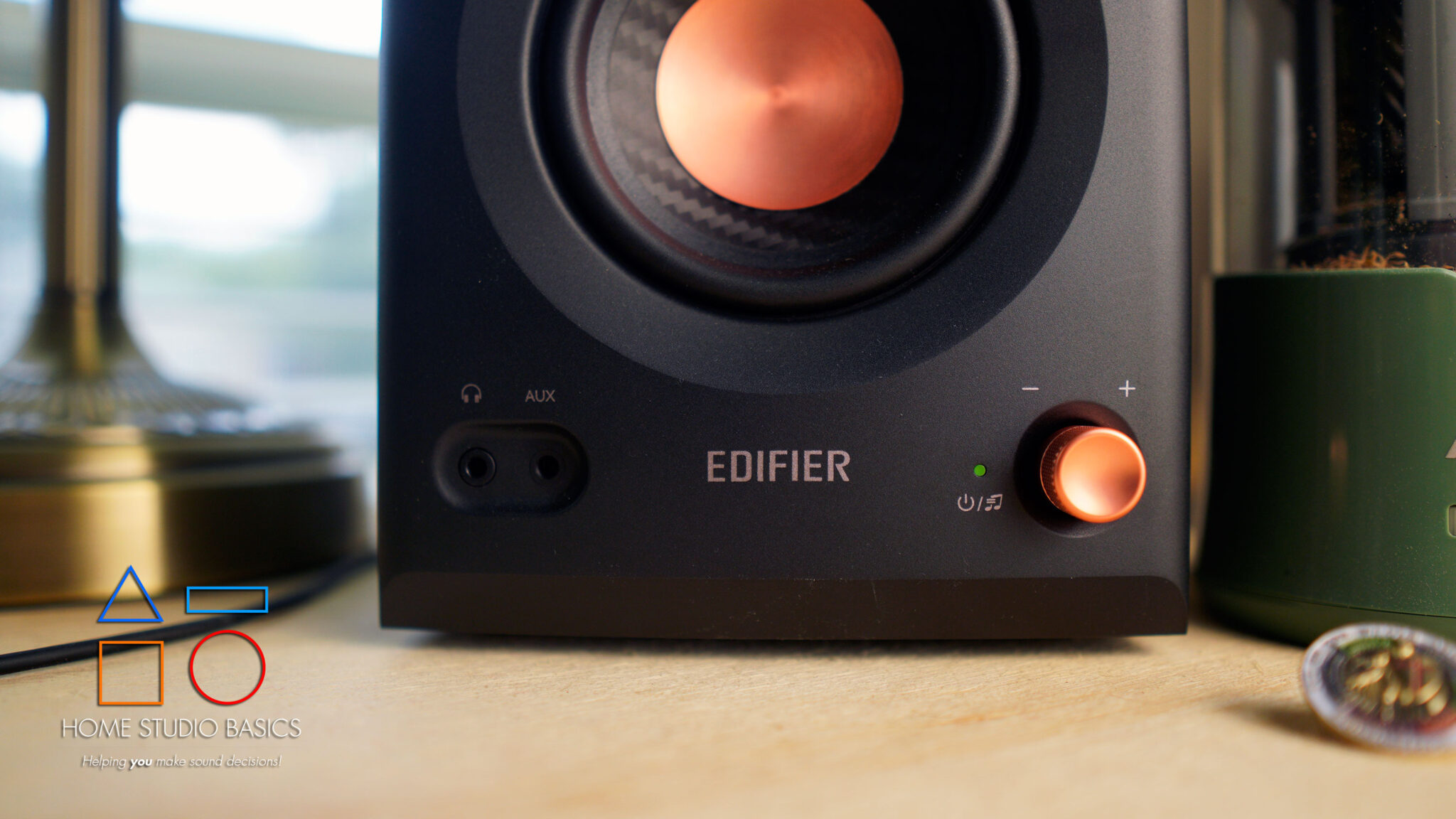
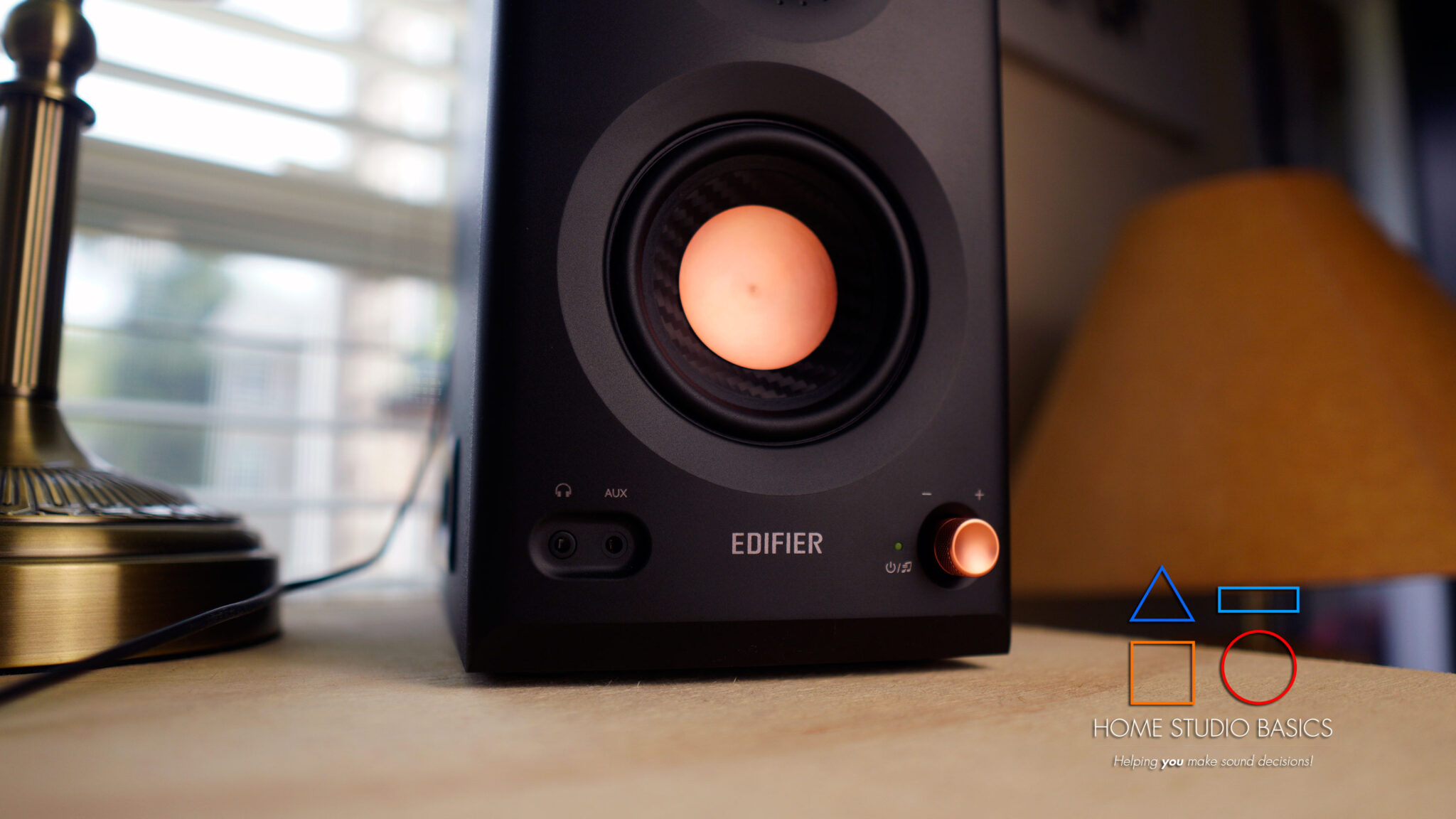
On the front, there’s a power/mode button. Press and hold to power on/off and short-press to cycle through monitor mode (neutral/reference tuning), music mode (slightly more consumer-friendly, enhanced presentation), and Customized Mode (your saved EQ/profile from the ConneX app).
To the left are an auxiliary input and headphone output. I would have preferred the aux input on the back, as front-facing connections tend to make cable management a bit messy.
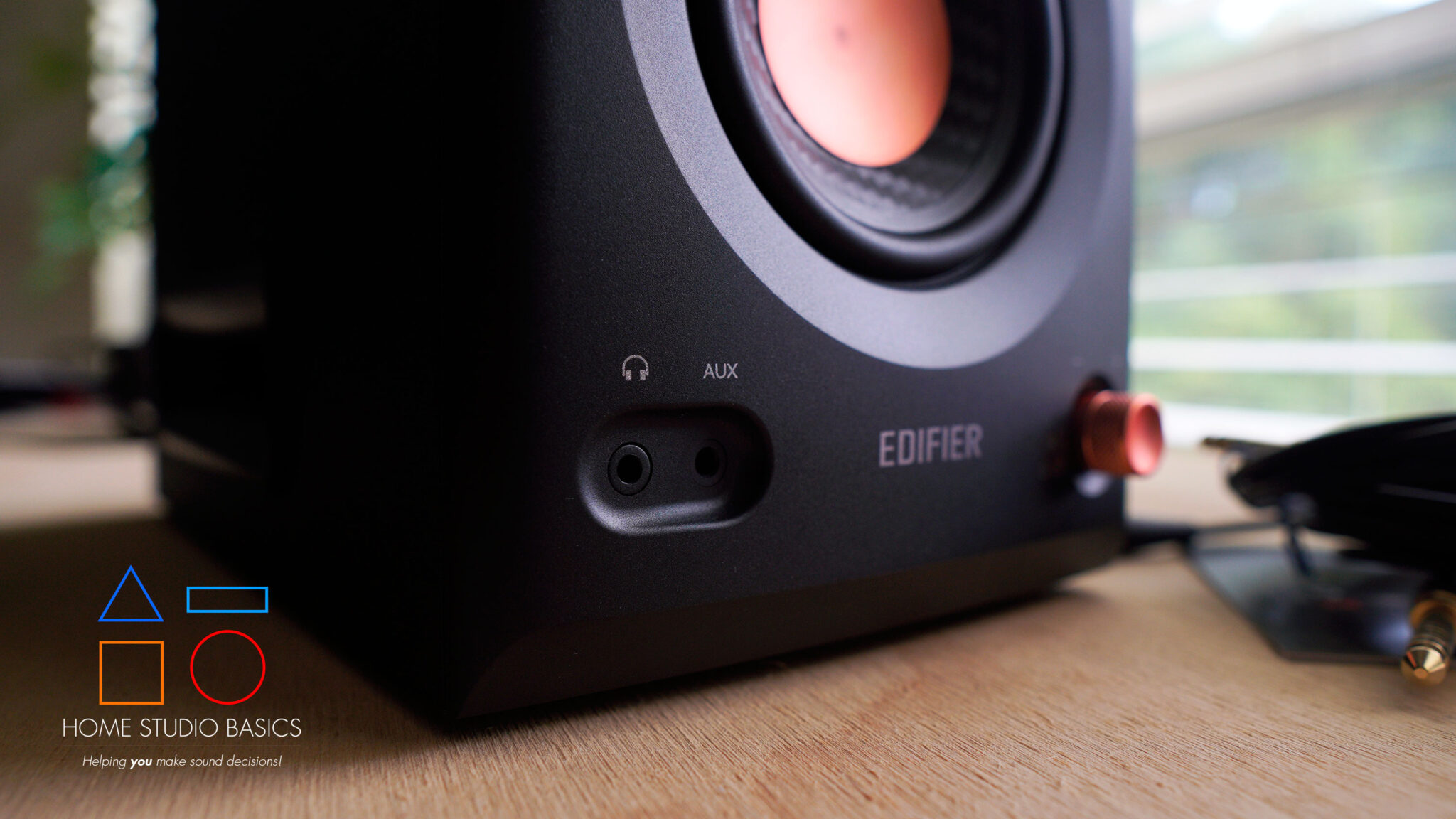
It’s certainly convenient for quickly plugging something in, but for a permanent desktop setup, I’d rather keep those wires hidden from view.
Back Panel
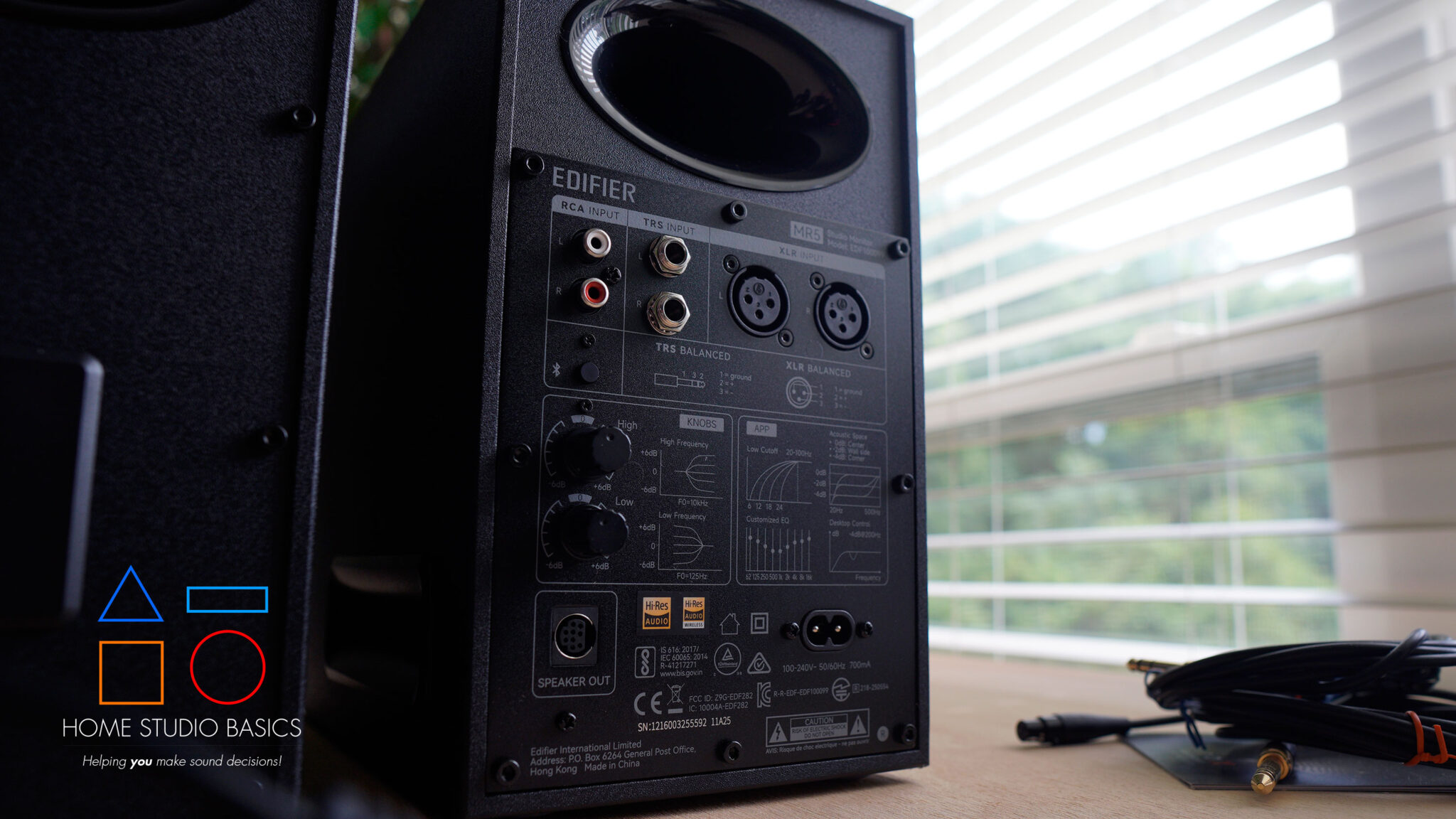
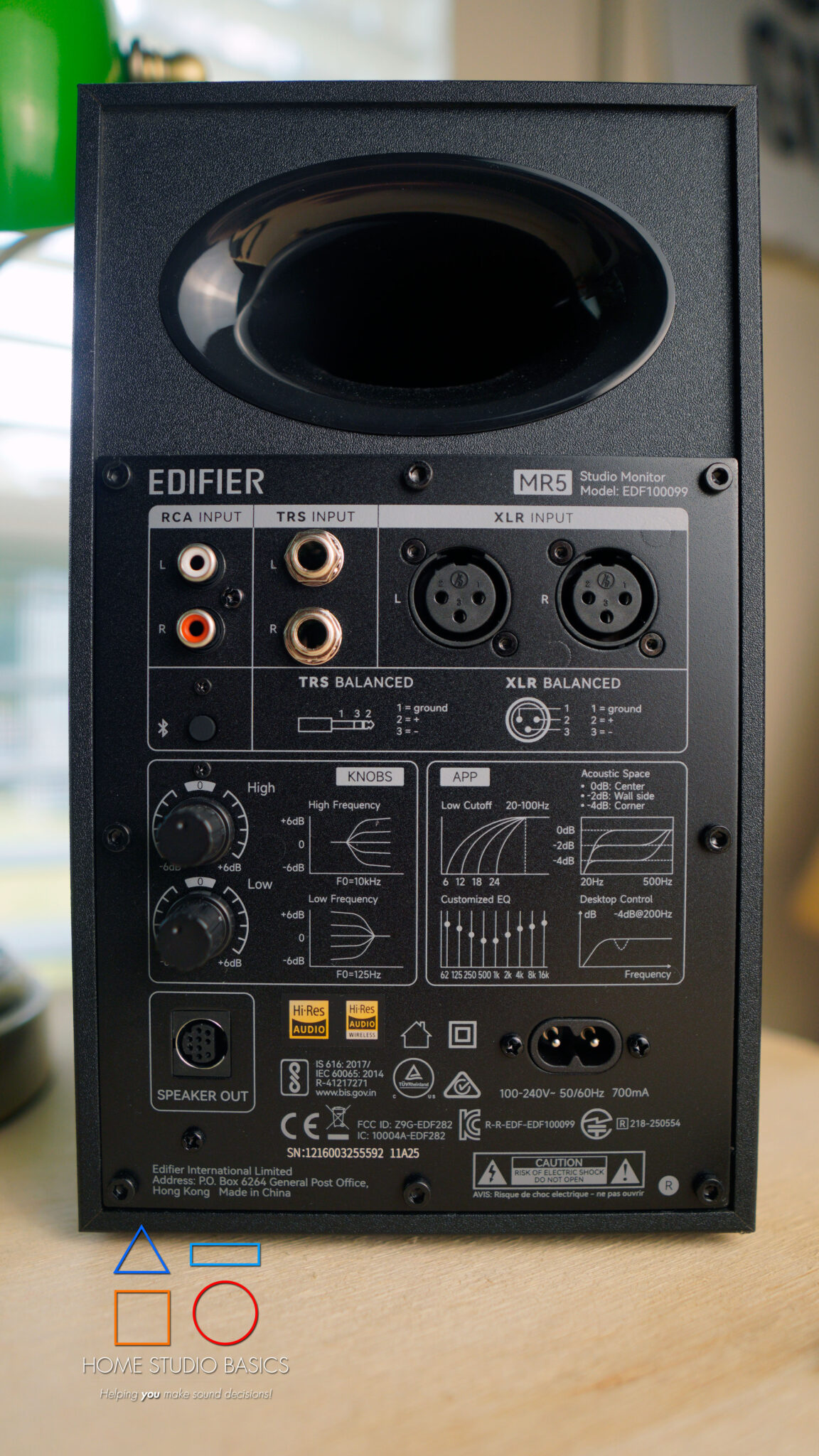
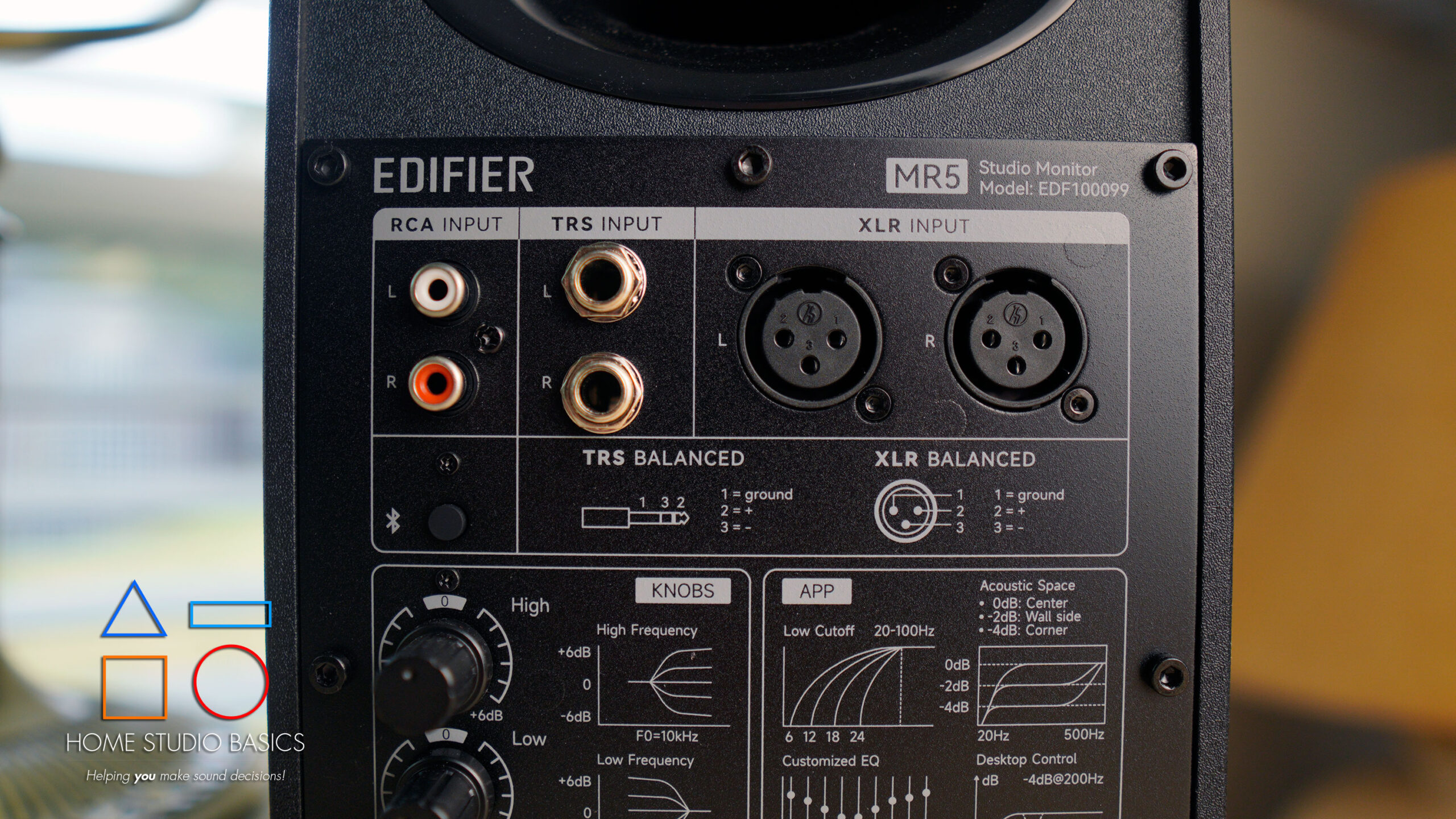
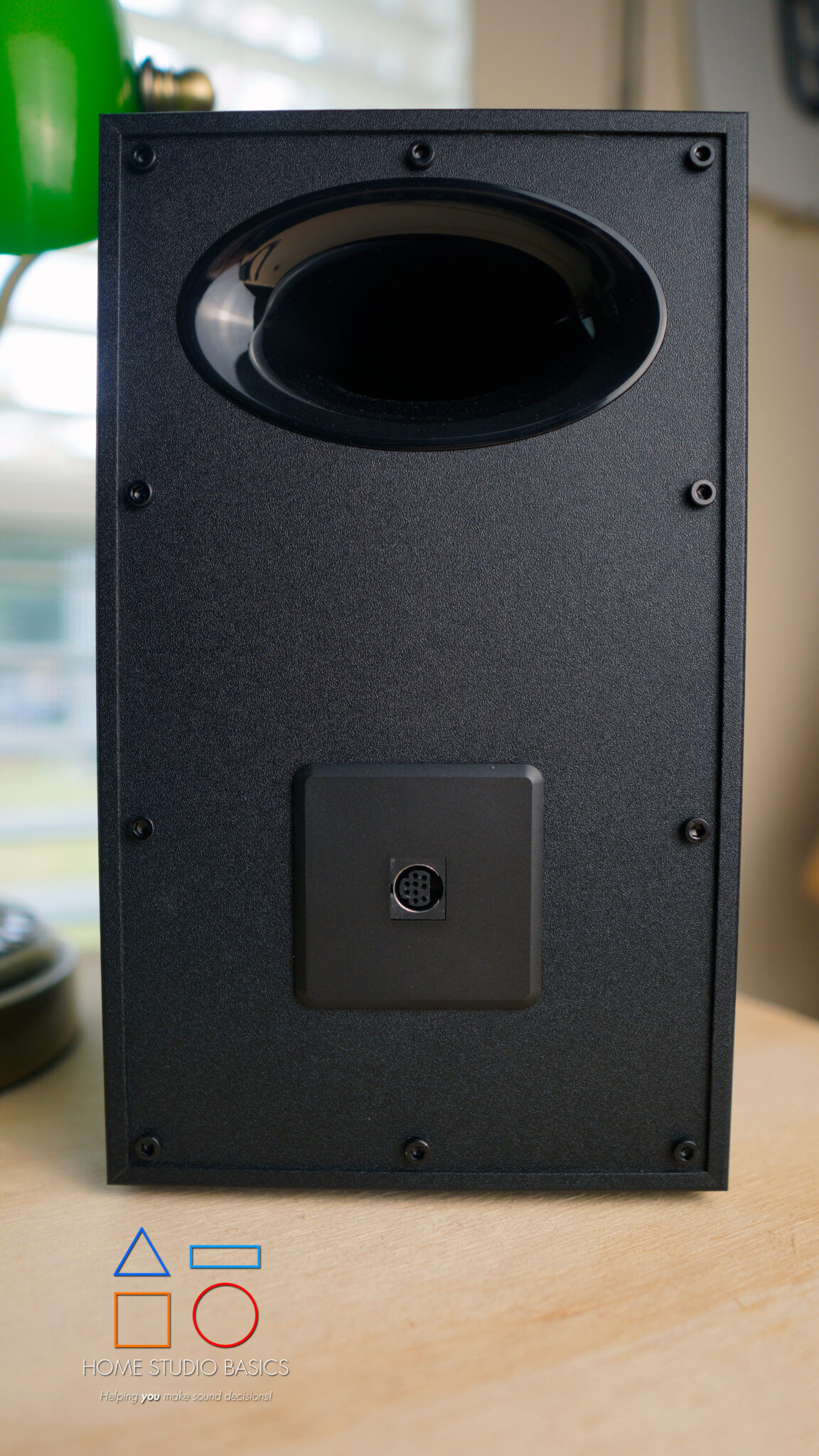
The rear panel houses the MR5’s primary inputs and controls, including balanced XLR and 1/4″ TRS connections, unbalanced RCA inputs, Bluetooth pairing functionality, HF and LF adjustment knobs, power connectivity, and the output used to connect the secondary speaker.
It’s a versatile setup that accommodates audio interfaces, mixers, computers, phones, and other common source devices without requiring additional adapters.
To pair with your phone, just press the Bluetooth button on the back. This enters pairing mode, and the green light on the front will blink. Now just go into your phone’s settings and “EDIFIER MR5” should appear immediately.
The monitors are also rear-ported, meaning low-frequency energy escapes from the back.
Because of this, it’s important to keep them as far away from the wall as possible. Placing some acoustic panels behind the bass ports can also help reduce unwanted reflections and improve overall clarity.
In addition to the rear ports, the MR5 features a distinctive cabinet design with venting integrated into the sides of the enclosure. Combined with the monitor’s overall acoustic architecture, the result is a surprisingly full and controlled low-end response for a speaker in this price range.
Room Correction & Acoustic Controls
One really neat feature at this price point is Room Compensation (Link here).
While it shouldn’t replace good technique, proper treatment, and correct studio monitor placement, it can help mitigate common issues with room variables and general inconsistencies in less-than-ideal studio spaces.
On the rear panel, you’ll find dedicated LF and HF adjustment knobs that allow you to fine-tune the bass and treble response based on your room and placement. This can be particularly useful if the monitors are positioned close to a wall, in a corner, or on a desk where reflections may alter the perceived frequency response.
While similar room compensation controls can be found on a number of studio monitors, it’s a feature I’ve personally spent the most time with on Yamaha’s HS7, a monitor I own and use daily for mixing. Seeing this level of adjustment available on the MR5 is a welcome inclusion, especially when you consider that a single HS7 costs more than a pair of MR5s. The value proposition becomes immediately apparent.
With the room controls dialed in and placement optimized, let’s talk about what matters most: sound quality.
Sound
- Playlist(s): Stay Sane, Hip-Hop 101, My Belle, & Crack Cocaine, Love Is Calling, Love Is Calling Pt. 2, The New Beach Playlist For Guys Still Named Brian 2026 Edition
- My Music: Here!
- Source(s): FLAC, Lossless
- Preamp Used: FiiO K11 R2R
Arguably the best “feature” of the MR5’s is their overall sound.
This is a true budget reference monitor in every sense of the word. It’s flat, neutral, and doesn’t unnecessarily hype frequencies; exactly what you want.
Bass
As alluded to earlier, the bass reaches down to around 46Hz, which will be more than enough for the majority of people.
Do keep in mind that while both the MR5 and HS7 have similar responses, the HS7 does have a larger woofer (6.5″), a bigger cabinet volume, and more headroom.
Still, the MR5 performs admirably. There’s excellent low-end impact without bloat, bleed, or hum, and bass lines have articulation and texture to them.
In other words, YOU sculpt the sound to your liking. This may seem obvious, but if you can believe it, there are companies out there that boost the wrong frequencies and then peddle their bullshit with the “reference” moniker. Shocker, I know.
Put simply, the response is basically ruler flat and thus very revealing, without unwanted coloration.
In terms of EQ, you’ll be able to make quick, correct decisions when arranging a beat or song.
Additionally, detail and resolution are good, allowing you to easily hear what’s going on in a mix very quickly.
The MR5 strikes a nice balance between detail and musicality. It resolves enough information to help with EQ decisions, arrangement work, and basic mixing tasks while remaining enjoyable for casual listening.
Instrument separation is solid, and low-level details are presented clearly without sounding forced or artificially boosted.
Mid-Range
You can expect more of the same with the mid-range. Vocals, sample chops, instruments, and other sounds come through as expected.
To be honest, it can be kind of ho-hum, but again, this is what you want when mixing. General listening still works, but these are monitors first. That said, they make for great easy listening speakers precisely because they are relatively flat.
This means they can work with a wide array of genres with ease and sound good with just about anything. When not EQing, I primarily listen to hip-hop, indie, pop, jazz, classical, and ambient.
The MR5 handles all comers very well, with a true-to-the-source representation of music.
The balanced mid-range also makes it easy to identify problem frequencies and make informed mixing decisions without much guesswork.
Treble
If there’s one small gripe I have with the MR5, it’s the treble. While not awful, you’ll notice a bit of a metallic, artificial flavor to them that supports the sentiment that they are indeed “entry-level.” This can be clearly heard when going back and forth between the MR5 and my HS7s.
Notes can sometimes seem almost papery in their presentation, and this observation can boil over into the overall sound, though it can be pretty subtle and does largely depend on the track.
Overall
In addition to the small treble issue, the overall sound can seem almost wooden, as if it’s missing a sense of lushness or density, instead resulting in a sort of “synthetic sheen”.
AND I’M NOT TALKIN’ ABOUT CHARLIE!
Where does this stem from?
I don’t believe this is caused by the tuning itself (which is admirably neutral) but rather from the limitations of the drivers and overall implementation.
Instruments generally sound accurate, and transient response is good, but compared to more expensive monitors, they can lack some of the natural timbre and organic texture that make music feel fully lifelike.
For instance, the HS7 sounds completely natural and effortless, with almost perfect timbre. The MR5 doesn’t quite reach that level of realism, but for the price point it’s to be expected on some level, I suppose.
Imaging & Soundstage
The speakers themselves image well, and place sounds accurately within the stereo field.
Monitors like the MR5 are going to reveal just how much of imaging and soundstage is producer/engineer dependent.
As much as I love Damu The Fudgemunk, his “Colorful Storms” has really bad imaging, almost as if everything was panned center. As you can well imagine, this creates a super closed-in, narrow sound that only seems like it’s directly in front of your head.
Conversely, a track like “Paid Homage” from Flying Lotus has very good panning and sounds much more expansive.
Likewise with Freddie Joachim’s “Was It A Dream.”
If you’re a producer, a good Soundstage is the direct result of solid, intentional panning decisions, stereo effects, reverb, delay, mic placement, phase relationships, arrangement choices, stereo recording techniques, and a willingness to experiment with placement.
Monitors like the MR5 only reveal the artist’s mixing prowess, or lack thereof.
Final Verdict
The Edifier MR5 strikes a nice balance between affordability, accuracy, and everyday enjoyment.
While it doesn’t quite reach the refinement and outright transparency of higher-end studio monitors like the HS7, it offers more than enough detail for beginner producers, content creators, and casual mixing work.
If you’re building your first home studio, upgrading from consumer speakers, or simply want an affordable monitor that can pull double duty for production and entertainment, the MR5 is easy to recommend.
More advanced engineers may eventually want something with greater resolution and mix translation capabilities, but for the price, Edifier has put together a surprisingly capable package with plenty of value.
Edifier MR5: Pricing/Box
Price: Check Amazon! | Check Edifier!
In The Box

Edifier MR5 Tri-Amped 5″ Studio Monitor Speakers (Black, Pair)
Speaker Cable
3.5mm to RCA Audio Cable
3.5mm Audio Cable
Power Cable
Limited 1-Year Manufacturer Warranty
Well that’s about it for today my friend! I hope you’ve enjoyed this Edifier MR5 Review and came away with some valuable insight.
Questions? Comments? Requests? Did I miss the mark on something? Please let me know down below or Contact me!!
If you love what I do here and want to support the blog and channel in a more personal way, check me out on Patreon and discover all the value I have to offer you.
Just want to make a one-time donation? Click here. Your support is greatly appreciated and helps keep this site running!
Does the MR5 seem like a solid investment to you? I would love to hear from you. Until next time…
All the best and God bless,

-Stu
[Xtr@Ba$eHitZ] > Now AudioFiles Anonymous
Can’t decide which headphones to purchase? Interested in a complete buyers guide outlining over 40 of the best options on the market? Click on over to the best audiophile headphones to learn more!!
Be sure to also check out my Reviews and Resources page for more helpful and informative articles!





![Yamaha HS80M vs. HS8 [In Depth Look]](https://homestudiobasics.com/wp-content/uploads/2016/04/HS80M_HS8-768x410.jpg)

