
Renting Out Your Home Studio by the Hour: What to Agree On
Before the first booking, settle seven things with every renter: the price and minimum block, the deposit, the cancellation rule, what the hourly rate includes, who pays for damage, who owns the session files, and who is allowed in the room.
A bedroom studio can earn money by the hour, but only if both sides know the terms before anyone hits record.
Pricing, minimum blocks and overtime
A minimum block is worth considering.
Setting up the room, checking levels, and resetting afterward take roughly the same amount of time whether a session lasts one hour or four. For that reason, a two- or three-hour minimum may make more sense, depending on how much preparation is involved.
Overtime needs its own line.
One option is to bill any half-hour started past the booked time, but an extra fee doesn’t give the renter a claim on the next person’s slot. Write the end time down, say when extensions are possible, and state that setup and teardown happen inside the booked block.
Deposits, cancellations and no-shows
A booking deposit holds the time and is usually credited toward the final bill.
A damage deposit is different: it stays untouched unless something breaks, and it comes back after the session.
Both can be collected as one payment, but the agreement should say which part is which, when each is returned, and how any deduction is explained, for example with a repair quote or receipt.
Cancellation terms work best as a simple window. For example, a full refund with 48 hours’ notice, a partial refund after that, and no refund for a no-show. The host’s side needs a rule too. If the host cancels, essential gear fails, or the power goes out mid-session, say whether the renter gets a refund, a new date, or credit for the unused time.
Rules on deposits and refunds differ from state to state, so check what applies where you live before setting the amounts. An attorney in your state can tell you whether deposit rules reach a studio booking.
What the hourly rate includes
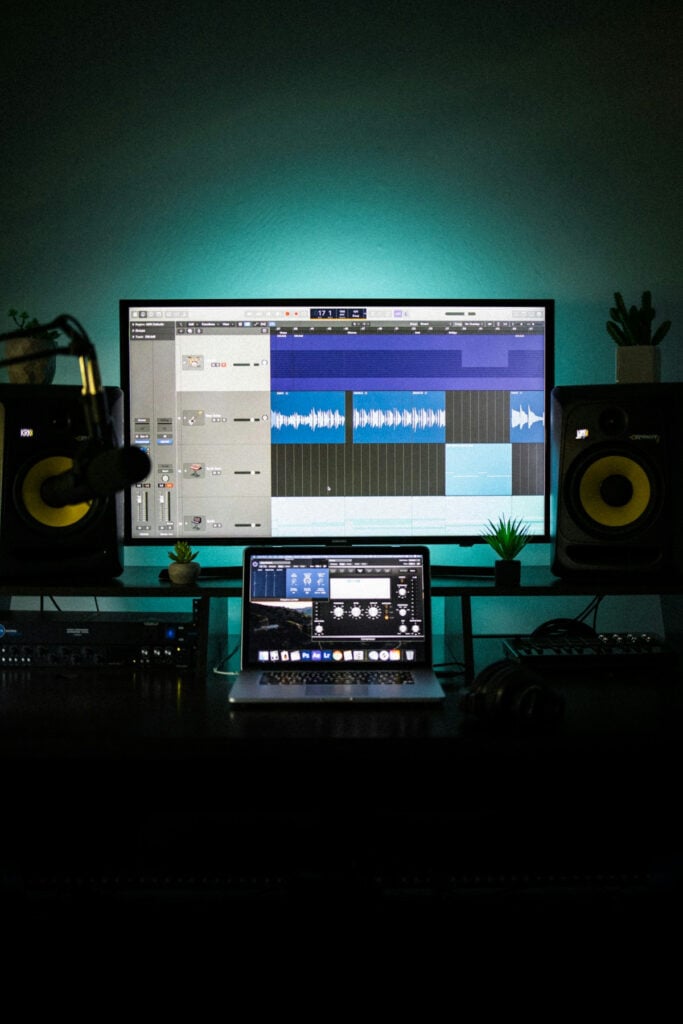
Photo: Elijah Merrell / Unsplash (Unsplash License)
List the gear that comes with the room: monitors, microphones, stands, headphones, the interface, and any outboard pieces. Then list what does not, such as a vintage preamp the host would rather not lend.
Engineer time is the item most often left vague.
Decide whether the rate covers a person running the session, or only the empty room with the host nearby. If an engineer is included, say whether mixing, editing, or tuning after the session is a separate charge.
Damage, gear liability and insurance
A short clause should say that the renter pays for repair or replacement of equipment damaged through misuse, and that normal wear is the host’s cost. Spilled coffee on a console is misuse; a fader that wears out after two years is not.
Check the host’s own policy before the first rental. The Small Business Administration notes that coverage added to a homeowner’s policy as a rider can protect a small amount of business equipment and offer liability coverage for third-party injuries, which suggests that a basic home policy may not do either for paying guests. Ask the insurer directly how paid rentals are treated, and keep the answer in writing.
Session files and who owns what

Photo: Cytonn Photography / Unsplash (Unsplash License)
Delivery and ownership are two separate questions.
For delivery, name what the renter receives: a stereo export, individual tracks, or the whole DAW project, which are not the same thing. Add the formats, the deadline for sending them, and how long the host keeps copies, since “not a backup service” means little without a date.
Ownership depends on who contributed what and on what the people involved agreed to in writing. The U.S. Copyright Office explains that a sound recording and the music in it are two distinct works, and that the author of a recording is generally the performer, the producer who captured and processed the sounds, or both. So the renter who wrote and performed the song may hold rights in the music and the performance, while a host or engineer who shapes the sound creatively may have a claim connected to the recording itself.
A sound recording may qualify as a work made for hire if it is created by an employee within the scope of employment. A specially commissioned recording may also qualify in certain circumstances, such as when it is created as a contribution to a collective work or compilation, and the parties agree in writing that it will be treated as a work made for hire.
Written agreements are how people make their intentions clear.
A split sheet records who wrote what and what share each person holds. A producer agreement can set out the producer’s fee, any points on future income, and whether the producer receives credit.
A studio agreement should state that renting the room does not transfer any ownership in the renter’s songs to the host, and that the host keeps whatever rights they already hold in material in the room.
For presets, loops, and templates bought from third parties, those rights are usually a license to use the material, not ownership of its copyright. Contributions from guest performers are easier to handle when their rights, permissions, and pay are agreed in writing before the session.
Guests, house rules and the neighbors
Decide how many people can be in the room. A renter may bring a vocalist, a friend, or a small crowd, and every extra person adds noise, wear, and risk.
A cap with advance notice for more keeps things manageable. House rules can stay short: no drinks near the desk, no smoking, quiet at the door.
Two different problems get mixed up here. Absorbing reflections inside the room is one job, and curtains help with echo but not with sound isolation. Keeping bass from reaching neighbors depends on mass and airtight construction, so a volume limit and quiet hours for tracking sessions do more for neighbors than fabric on the walls.
Liability when clients visit your home
Once strangers walk through the house, the host is responsible for more than the gear. Look at the route from the front door to the studio as a visitor would: loose cables, a dark stair, a stool that wobbles, a dog that may jump. Taping down cords, adding light, and putting pets in another room costs little compared with an injury claim.
A booking agreement can ask the renter to follow house rules, to be responsible for the guests they bring, and to report any accident or broken item before leaving. Some hosts add a release of liability. How much weight a signed release carries varies by state and by the facts, and it generally cannot cover everything, so have a local attorney read it before relying on it.
Zoning, HOA and lease limits
Charging strangers to use a room in a home can run into local rules. The SBA explains that zoning laws are typically controlled at the local level and that ordinances can restrict or even ban specific kinds of businesses in an area. A home-based business may face fewer restrictions, but they can still apply.
A city may require a home occupation permit or a business license, a zoning code may limit customer visits or parking, and a noise ordinance may set quiet hours no matter what the zoning says. The city or county planning office is the place to ask, and it is better to ask before the first paid booking than after a neighbor calls.
Tenants should read the lease, and owners in a homeowners association should read the covenants, since some prohibit customer traffic or commercial use. A landlord’s or HOA’s consent should be in writing.
Putting the terms in a written booking agreement

Photo: Annika Wischnewsky / Unsplash (Unsplash License)
Everything above can fit on a few pages, and sending it before the deposit is requested keeps the first conversation simple. A written agreement should name the parties, the date and time, the rate, the deposits, the cancellation window, the equipment list, the file and ownership terms, the damage clause and the house rules.
Hosts who do not want to draft this from scratch can start from service agreement templates and adjust the wording to the room’s own rules before it goes to a renter.
An invoice shows the amount due and does not by itself confirm payment, which comes from a receipt, a payment record, or an invoice marked as paid. It also does not set the booking terms, so the signed agreement and the invoice should stay separate documents.
Payment, receipts and taxes
Name one or two payment methods in the agreement and take payment before or at the start of the session. A short receipt for every booking shows the date, hours, rate, and amount paid.
Rental money is income, but how it is taxed depends on the specific arrangement. The IRS says real estate rentals generally go on Schedule E, while substantial services for the tenant, or a business renting out personal property such as equipment, belong on Schedule C.
The correct reporting can depend on whether the arrangement involves real-property rental, equipment rental, substantial services such as engineering, or some combination of those activities, and state and local taxes can add further questions.
A tax professional can look at the actual setup, including how often the room is booked and which costs can be deducted. Keep receipts and a simple log of bookings so that conversation is quick.
Before the first booking, hand the agreement to a friend and ask them to explain it back. Wherever they hesitate, the wording needs fixing.
Legal disclaimer
This article offers general information about contracts, copyright, liability, insurance, zoning, and related topics for home studio owners in the US.
It is not legal, tax, or insurance advice, and it does not create an attorney-client relationship. Laws and local rules vary by state, county and city, and they change, and the right answer depends on the facts of each situation.
Before you rent out your studio, sign or rely on an agreement, or decide who owns a recording, consult a qualified attorney licensed in your state.