

The Best Portable Headphone Amps & DACs
Greetings mate and Welcome aboard!!
Stuart Charles here, HomeStudioBasics.com helping YOU make sound decisions leading to a beautiful audio experience that will make you fall in love with music (NOT gear) all over again, so…
Video Discussion
Don’t forget to leave me some love and subscribe! Also, keep in mind that the article here has updated options, while the video is what it is. 🙂
Before we get into the Best Portable Headphone Amps & DACs, grab some snacks, kick back and relax because…
I’m Here to Help!!
I’m going to list out the DACS I think you should focus on and then give an explanation of why I chose so few towards the end.
I’ll also include my Criteria for choosing as well as my main specs to focus on with each recommendation.
#5
FiiO KA11
Price: Amazon! | eBay! | B&H! | Official Review: Here!
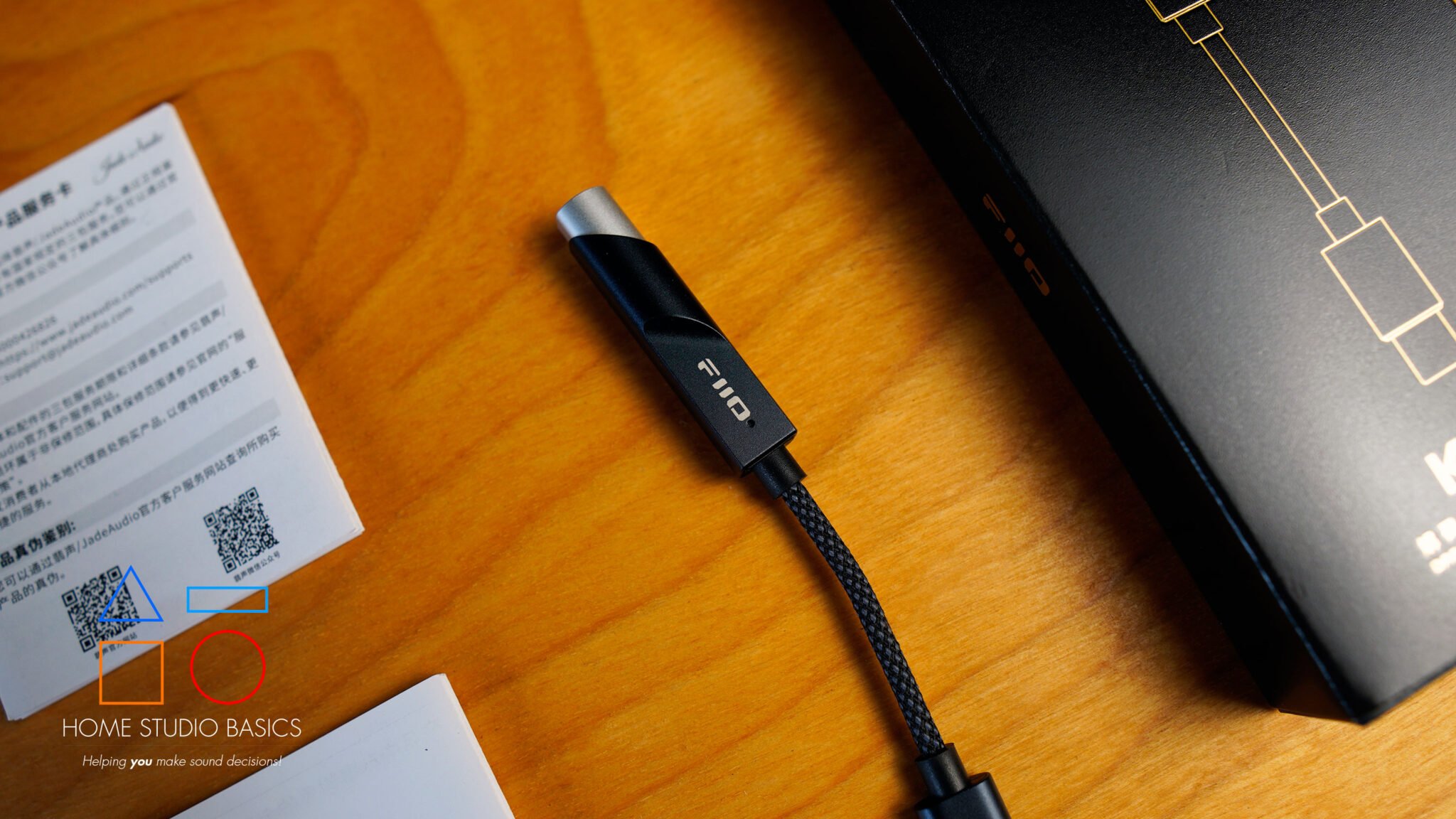
- Connection(s): USB Type-C
- Bluetooth: No
- Line Out: Yes. This simply means you can hook it up to separate speakers like the Presonus Eris e3.5
- Balanced: No.
- DSD: Yes, up to 256
- Support: 32-bit/384kHz
- Signal-to-noise Ratio: ≥125 dB (A-weighted, 32Ω)
- Output Power: 200mW @ 32Ω, 22mW @ 300Ω (Single-ended)
This tiny cheap DAC packs quite a lot of power and replaces the Go Link as the #5 option on this list.
Honestly, it could be #1 if you don’t care about any other features, as it provides an incredibly convenient option at a seriously great price.
I keep one around for those late-night sessions on the couch when I’m chillin’ with some music, and it really delivers like Papa John’s.

- Hi-Fi Audio Performance: This USB C to 3.5mm audio adapter delivers high-fidelity audio performance with a Hi-Res DAC chip that provides excellent and stable decoding performance. It supports a maximum sampling rate of 32bit/384Khz, which is higher than most other USB C headphone adapters available on the market.
- [DAC Chip for Hi-Fi Sound Quality]: Built-in with high-peformance DAC CS43131 and op-amp allows the KA11 to effortlessly produce great Hi-Fi sound.
- [Lightweight but useful and powerful]: The tiny USB DAC KA11‘s body size is only 44×9.7×10.5mm, and it is just about 8.5g. It is convenient and portable for you to take it anywhere. The power can reach 245mW at 16Ω load and 200mW at 32Ω load, which is enough to drive most headphones.
- High-standard circuit components are supplemented by multi-layer immersion gold circuit board design, with strong decoding ability and better detail control. THD+N: <0.0006% SNR: 125dB Noise: <1.7uV
- [Multi-playing ways and portable]: KA11 amplifier with a USB Type-C/Lightning connector, you could use it on Android/iOS phones and tablets or to Windows and Mac computers to get a high resolution sound for listening music, playing game, doing chatting, doing living when you are at home or at office.
#4
Hidizs S9 Pro
Price: Check Amazon! | Check Hidizs! | Check eBay! | Official Review: Here!

- Connection(s): USB Type-C
- Bluetooth: No
- Line Out: Yes. This simply means you can hook it up to separate speakers like the Presonus Eris e3.5
- Balanced: Yes, 2.5mm
- DSD: Yes, up to 512
- Support: 32-bit/768kHz
- Signal-to-noise Ratio: 120dB
- Output Power: 200mW @ 32Ω (Single-ended), 400mW @ 32Ω (Balanced)
The Hidizs S9 Pro is a DAC that I’ve come to absolutely adore, if only for the simple fact that it’s a much better value than both the DragonFly Red and Cobalt – the former of which I recommended for quite a few years on this blog, and the latter of which I NEVER recommended.
Why?
It was overpriced when it came out and is still overpriced now.
The S9 Pro essentially gives you the same 9038Q2M DAC chip found in the Cobalt for 1/3 of the price.
Read that again:
The S9 Pro essentially gives you the same 9038Q2M DAC chip found in the Cobalt for 1/3 of the price.
And as much as I loved the DragonFly Red, I think it’s still overpriced in today’s climate, whereas a few years ago, it wasn’t. It has come down by around $50 @ $149 (Subject to Change), but still not worth it.
The DragonFly Red doesn’t have a balanced jack, and that’s typically how I listen nowadays. You probably will, too.
Remember, we’re always looking for the best value when it comes to DACs.
The S9 Pro is just that – a fantastic value and perfect for users on the go or at home.
It feels very light (and admittedly a bit cheap) but happens to be incredibly durable, and I’ve had no issues since receiving one in 2022.
If you’re so inclined, it supports up to 32-bit/768kHz and DSD512.
Even though the newer Martha version exists, the original Hidizs S9 Pro still remains an excellent portable DAC/amp with plenty of power, a compact form factor, balanced output, and clean overall performance.
If you’re looking for the updated model, be sure to check out the newer Hidizs S9 Pro Plus Martha as well:

- Professional Circuit Architecture: The Martha USB C DAC features the ES9038Q2M chip, supporting a maximum 32-bit/768kHz PCM sampling rate. This ensures perfect sound reproduction with a high signal-to-noise ratio (SNR) of up to 128 dB and ultra-low total harmonic distortion plus noise (THD+N) of -120 dB, providing an unparalleled audio experience
- Elegant and Powerful Sprite: The Martha portable DAC delivers exceptional performance with 138mW+138mW at 32Ω through the 3.5mm single-ended output and 180mW+180mW at 32Ω through the 4.4mm balanced output. This ensures it can properly drive a wide range of IEMs, including hard-to-drive planar and low-impedance IEMs, earbuds, and headphones. It also offers outstanding desktop-class performance, making it a versatile and powerful audio solution
- Low Noise, Low Distortion: The Martha dongle DAC ensures exceptional audio quality with ultra-low distortion. In the 3.5mm single-ended (SE) output, the distortion is as low as 0.0019%, while the 4.4mm balanced (BAL) output achieves an even lower distortion of 0.0008%. The Signal-to-Noise Ratio (SNR) is outstanding at 123 dB for the SE output and 120 dB for the BAL output, providing a pristine and immersive audio experience
- Compatibility for All Platforms: The Martha portable DAC amp features a standard Type-C data interface, ensuring seamless compatibility across a wide range of devices, including Windows, Mac OS, Android, iOS, and Harmony OS. For optimal connection, please ensure the plug with the logo side is facing up. This versatile design makes it easy to integrate into your audio setup
- Six Filter Effects: The Martha headphone amp offers six filter options for an unparalleled hi-res music experience. By simultaneously pressing both buttons, you can cycle through the six filter effects, each accompanied by distinct RGB lighting visual effects. This feature allows you to tailor the sound to your personal preferences, ensuring a premium and customizable audio experience
#3
iFi hip-dac
Price: Check Amazon! | Check B&H! | Check eBay!
Official Review: Here | hip-dac 2 Review: Here | hip-dac 3 Review: Here

- Connection(s): USB Type-C (charging), USB Type-A (listening)
- Bluetooth: No
- Line Out: Yes
- Balanced: Yes, 4.4mm
- DSD: Yes, up to DSD256
- Support: 32-bit/384kHz + full MQA decoding
- Signal-to-noise Ratio: Not specified
- Output Power: 400mW @ 32Ω (Balanced), 280mW @ 32Ω (Single-ended)
Originally, this article featured the original iFi hip-dac as the #3 recommendation, but since it’s no longer widely available, I’ve shifted the spot to the newer iFi hip-dac 3.
While the overall platform hasn’t changed dramatically over the years, the series still offers a compelling mix of portability, build quality, & useful features.
There are still several reasons why the iFi hip-dac 3 remains a solid portable option despite the relatively modest evolution of the series over the years:
- Features like XBass and PowerMatch continue to be genuinely useful, particularly for listeners using harder-to-drive headphones or headphones that benefit from a little extra low-end presence.
- iFi’s build quality has consistently been excellent throughout the entire hip-dac lineup. The aluminum chassis feels durable, premium, and well-suited for portable use.
- Despite being larger than a typical dongle DAC, the hip-dac remains reasonably portable and pairs well with phones, tablets, and laptops for on-the-go listening.
- The balanced 4.4mm output is still a welcome inclusion and provides additional flexibility for users with balanced headphone cables.
- While the hip-dac 3 doesn’t completely reinvent the formula established by the original model, it does refine and modernize the platform enough to remain relevant in today’s portable DAC/amp market.
That said, much like the hip-dac 2 before it, the third iteration feels more evolutionary than revolutionary.
The core experience remains largely the same, so existing owners of earlier models likely won’t feel compelled to upgrade unless the newer features or connectivity improvements specifically matter to them.

- Enhanced Design and Functionality – The hip-dac 3, now available in a Titanium Shadow hue and encased in a sleek Aluminium frame, is not only visually striking but also encompasses a range of updated features and circuit enhancements, such as new metal film capacitors and an updated GMT circuitry, to elevate your audio experience.
- Advanced Connectivity and User-friendly Controls – Equipped with two USB-C ports for simplified cable management, the device facilitates clear and high-quality audio playback and allows simultaneous charging. Furthermore, user-friendly controls such as a switch to activate iFi’s iEMatch technology and LEDs that indicate the format and sample rate of the incoming audio are integrated.
- Optimized Audio Performance – A true balanced circuit design, the hip-dac 3 guarantees optimal performance and pure sound by minimizing signal distortion and efficiently driving a wide range of headphones with up to 400mW into a 32-ohm headphone load.
- Versatile Audio Support and Playtime – The hip-dac 3 provides extensive audio data support, including hi-res PCM and DXD up to 384kHz, DSD from 2.8MHz to 12.4MHz, and full decoding of MQA. It also offers a notable 7-10 hours of playtime with a 2200mAh battery and comes with a USB-C OTG cable and a USB-A to USB-C cable to ensure a smooth and lasting user experience.
#2
Fosi Audio DS2
Price: Check Amazon! | Check eBay! | Check Fosi! | Official Review: Here!

Image: FiiO FT1 paired with the DS2
- Connection(s): USB Type-C
- Bluetooth: No
- Line Out: Yes
- Balanced: Yes, 4.4mm
- DSD: Yes, up to 256
- Support: 32-bit/384kHz
- Signal-to-noise Ratio: 130dB
- Output Power: 128mW @ 32Ω
If there’s one thing constant in change, it’s life.
Strike that, reverse it.
Before the Go Link got bounced from the #5 spot, it held at #2 and was a DAC I recommended after not recommending new DACs for a long time. I liked it because it was cheap and drives most headphones just fine.
But it’s now outclassed.
Enter Fosi Audio’s DS2, a similar dongle Amp/DAC at an almost identical price with a balanced 4.4mm jack.
Seems pretty obvious to recommend it over the Go Link, yeah?
It’s built well, comes with a USB-C to USB-C cable, USB-C to USB-A adapter, and drives all of my headphones much more easily on desktop.
After comparing the 2 side by side, I found that each provides roughly the same power output through my phone, but the DS2 seems to be more powerful through my PC. With it, I’m at about 40/100 for a comfortably loud signal with an AKG K702, but the Go Link requires 70+.
The only downside is compatibility. If you have an iPhone older than 15, you’ll need some sort of adapter or aftermarket OTG cable, as Apple is phasing out the Lightning connection. Super annoying, but hey, I’m a Dinosaur with an iPhone 11.
As mentioned previously, iFi has since come out with the Go Link Max in an effort to stay relevant, but I haven’t tried it.

- Upgraded Version: A new generation USB-C portable headphone DAC and amplifier, supporting up to DSD256 and PCM 32bit/384kHz decoding for a high-resolution sound reproduction. It delivers a powerful drive of up to 170mW@32Ω each channel, effortlessly powering high or low-impedance headphones with 3.5mm single-ended or 4.4mm balanced connections, immersing you in the exquisite world of music
- Flagship Chips: Featuring two next-generation Cirrus Logic CS43131 DAC chips, the DS2 delivers superior system-level audio performance without draining your mobile source device’s battery life. With its ultra-low 1μV noise floor, minimal 0.0001% THD, high 130dB SNR, and excellent 109dB SINAD, it enables you to enjoy pure sound
- Easy to Use: Connect it to your audio source and enjoy high-quality music without any complicated settings. The device features independent 60-step volume control buttons, providing you with a seamless, stepless volume adjustment experience and supporting volume memory function
- High Compatibility: Fully supports a wide range of mainstream audio source devices. Not only can it serve as a portable DAC and headphone amplifier for iPhone 15, 15 Plus, 15 Pro, iPad Pro, and Android phones, but it can also function as an external sound card for your computer, laptop or Mac, decoding high-quality music for you
- Exquisite and Dual: The DS2 is crafted from solid metal using CNC machining and shock-resistant. Its sleek design offers a smooth and comfortable grip, providing a refined tactile experience
#1
FiiO BTR17
Price: Check Amazon! | Check B&H! | Check eBay! | Official Review: Here!

- Connection(s): USB Type-C
- Bluetooth: Yes, BT 5.4
- Line Out: Yes
- Balanced: Yes, 4.4mm
- DSD: Yes, up to 512 native
- Support: 32-bit/768kHz
- Signal-to-noise Ratio: ≥126dB
- Output Power: 560mW @ 32Ω, 62mW @ 300Ω (Single-ended, desktop mode), 1,300mW @ 32Ω, 250mW @ 300Ω (Balanced, desktop mode)
FiiO’s BTR17 represents the best in the BTR series, and after recommending the BTR5 for a long time, I do think this is a better all-around product. It’s also the most useful here, combining everything you need into one package: Bluetooth (wireless) with a phone, wired with a phone, or wired on your desk. Moreover, it’s a preamp as well and can be connected to separate speakers like the FiiO SP3.
- Required Reading: FiiO’s BTR Series
Differentiating itself from the others in the BTR series, it adds a combo volume knob + button (used to navigate the menu), loads more power (560mW into 32Ω), a better, larger display with gorgeous fonts and great readability, the unit itself is larger and more intuitive to use, and it comes with a nifty leatherette carrying sleeve.
It’s not so tiny that it becomes annoying to use, but not overly bulky to the point of not being portable anymore.
While the BTR13 and 15 were largely underwhelming to me and, at most, sidegrades, the BTR17 is a clear upgrade in my opinion and a perfect companion for those needing a portable, versatile, well-built DAC.

- Equipped with Qualcomm’s new-generation flagship Bluetooth chip, the QCC5181, the UTWS5 2025 supports Bluetooth 5.4, complies with the LE Audio standard, and offers a bandwidth transmission capability of up to 2.1Mbps. It also supports the Lossless specification in the aptX Adaptive system, as well as audio codecs like LDAC and aptX Adaptive at 96kHz/24bit.
- When enabling desktop mode and using the BTR17 to connect to a smartphone as a tail DAC/amp, you can connect the dedicated power input to an adapter. In this case, the battery will be fully powered by USB, preventing overcharging and overdischarging. The device also delivers a powerful 650mW output capability while not consuming the smartphone’s battery.
- With lower latency, more stable transmission, and better compatibility than regular USB chips, the device supports 768kHz/32bit, hardware decoding for DSD512, and full MQA decoding. It also features PEQ developed on this platform, allowing adjustments via both the app and web interface, with support for high-definition PEQ at a sampling rate of up to 192kHz.
- The BTR17 is equipped with two ESS flagship dual-channel DACs, the ES9069Q, based on the fourth-generation 32-bit HyperStream architecture. This allows for enhanced performance and lower power consumption. Additionally, it further reduces digital noise within the DAC, achieving a dynamic range of 130dB and total harmonic distortion of -120dB. The result is a richer musical experience with a purer sound background.
- The BTR17 features a convenient and user-friendly three-mode switch (PC/BT/PHONE), allowing for seamless one-click switching between computer soundcard, Bluetooth DAC/amp, and smartphone tail DAC/amp modes. It automatically optimizes the power supply status based on the connected front-end device, offering versatile usage and greater peace of mind.
With that in mind, what are some good criteria you should look out for when deciding on the best portable headphone Amps & DACs?
Criteria
Power Output
It’s important to know how much power is supplied to various Impedance loads.
If you have a 300 Ohm headphone like the HD600, you’ll want to make sure to purchase an Amp that outputs enough power into that load.
That said, all of the above options supply plenty, and I’ve never had an issue with them.
Features & Versatility
We’re looking at portable options, but do you need some extra features with your purchase?
Things like bass boost, gain, Bluetooth, line-out functionality, etc. are all things to keep in mind.
Phone Compatibility
Do you intend to use it with your phone?
If so, you’ll want a combo Amp/DAC since there’s only one piece of equipment to worry about.
Buying an Amp and DAC separately makes for a much more difficult time.
A Bluetooth DAC provides extra convenience, hence why the BTR17 is first on the list.
With that, what does Portable actually mean?
I looked up the term out of curiosity.
Portable – Adjective.
- Able to be easily carried or moved, especially because being of a lighter and smaller version than usual.
- synonyms: transportable, moveable, mobile, transferable, easily carried, easy to carry.
So, what’s my recommendation today?
Recommendation & Final Word

If I had to choose one Amp/DAC on this list for portability, it would most certainly be the BTR17.
It perfectly fits the description of what we’re looking for.
It can be used on your desktop or with a phone via wire or Bluetooth, it’s the most portable Amp/DAC on this list, its sound is phenomenal, it’s super easy to use, and it’s priced well.
Interested in my top portable option?
Learn More:
Note: Please ignore the ^negative reviews (Gearzilla most notably) talking about its “sound.” DACs don’t have a sound lol. Video on that towards the very end of this article.
👉Looking for more dac/amp recommendations? Be sure to check out the complete Headphone Amp & DAC Guide for additional portable options, desktop setups, gaming DACs, budget recommendations, and more in-depth buying advice.
My Reasoning & Philosophy
- Read my Ethos here.
Even just a few years back, there weren’t nearly as many Amps & DACs as there are today.
In fact, there are way too many at this point.
I’m almost completely done with them at this point, and I’ll tell you why.
I’ve demoed 85+, and the differences, while generally apparent, are incredibly subtle.
So if you’re reading this, you’re in the right place.
The DACs listed in this article are the only ones you’ll need to consider.
Think of DACs like pencils: there are millions of pencils in the world, but they all serve one purpose and one purpose only: to write shit on paper.
OK, fine. 2 purposes. To write and erase. Writing is the main one, though.
DAC/Amps are very similar in that they also serve 2 main purposes.
- They provide a digital-to-analog conversion.
- The amp portion amplifies the sound so you can hear it.
That’s it.
- Related: What is a USB DAC?
Are some pencils better than others? Yeah, probably.
Are some DACs better than others?
That’s highly debatable.
99% of the differences you hear from track to track have everything to do with the way it was recorded, mixed, and mastered, and very little to do with the DAC.
Those are basic sound engineering principles that will never change.
Headphones also play an important role, but I’d say the song itself is the main indicator of how music will sound to you.
Here’s a great explanation I received years back from Stephen Mejias of AudioQuest:
It’s important to keep in mind that these differences are pretty marginal and probably won’t be caught by anyone except people like me who have many on hand to vigorously go back and forth with!
What varies a lot more?
Output Impedance and Power Output are of paramount importance.
Why is that?
It’s because headphone Impedance and Sensitivity ratings are different from headphone to headphone.
If you are unfamiliar with these terms, don’t fret! Here are a couple of great articles I wrote on the matter.
Some headphones will work better with certain Amps simply because the Amp in question provides plenty of Power for the headphones’ Impedance level.
Output Impedance is also pretty important, as DACs with a lower number generally = a more neutral representation of music.
The SINAD Standard
But, the main consideration and something you should always keep in the back of your mind is SINAD (signal-to-noise and distortion).
As far as DACs are concerned, this is arguably the most important aspect, but one that’s not quite as complicated as you may think.
Generally, anything above the 90dB standard is more than enough for a phenomenal listening experience, and in reality, most DACs advertise numbers way above this.
What it means is that as long as the DAC has a Signal-to-noise ratio above this number, you can expect there to be a completely clean signal, free of distortion.
Watch this video to understand why it’s so important:
Closing Thoughts

This article used to be littered with options, but over the years, I’ve whittled it down more and more.
Why?
My extensive experience with DACS (now 85+) has taught me that they are almost irrelevant to your musical experience.
They’re just tools used to complete a task.
In this case, converting digital information into the analog sound that your brain comprehends.
Nothing more, nothing less.
I also started noticing an alarming trend in wildly varying price points for an array of different DACS: They all sounded the same.
That’s right; you heard me correctly.
$329 Go Bar? Yup, sounds the same as something in the $100 range. You’re basically paying for the “newness factor” or “Shiny object,” which quickly fades when another DAC comes out.
The cycle then repeats. Once a company feels their “new” DAC is becoming “old” (meaning no one is talking about it anymore, a new one comes out).
In reality, it’s probably already been in the works for some time.
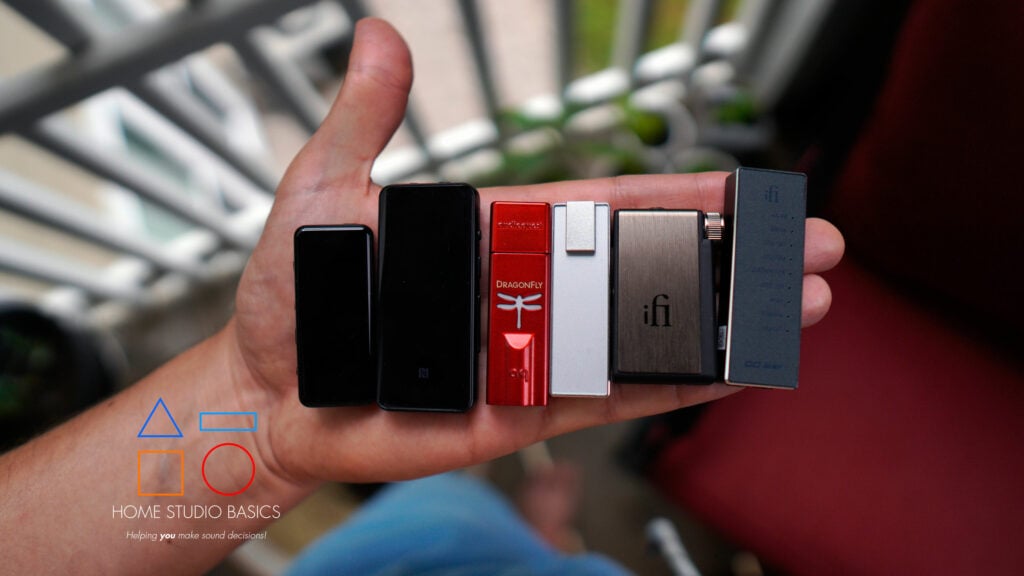
And the “sound”? It’s all a bunch of bullshit.
In other words, their “unique sound signature,” as people like to put it, had absolutely no effect on how my music sounded. Put simply, it doesn’t exist.
And I listen to A LOT of music.
This is why I’d rather you just save money and get the one with the best overall value – i.e. the most sensible price point for the features you’re receiving.
Right now, it’s the BTR17 until something better comes along. If you don’t want to spend that much, I understand. Just get a DS2 or KA11.
I sincerely hope you’ll keep these things in mind the next time a new DAC comes out (in like a week lol).
Well, that’s about it for today my friend! I hope you’ve enjoyed this article on The Best Portable Headphone Amps & DACs.
Questions? Comments? Requests? Did I miss the mark on something? Please let me know down below or Contact me!!
If you love what I do here and want to support the blog and channel in a more personal way, check me out on Patreon and discover all the value I have to offer you.
Just want to make a one-time donation? Click here. Your support is greatly appreciated and helps keep this site running!
Which of these are you most likely to go with? Do you have any to add or take away from this list? I would love to hear from you. Until next time…
All the best and God bless,

-Stu
Can’t decide which headphones to purchase? Interested in a complete buyers guide outlining over 40 of the best options on the market? Click on over to the best audiophile headphones to learn more!!





I’ve hit your site a couple times after seeing your YT videos. Currently wondering if I should get a FiiO K3 or an ifi Zen DAC v1 from ebay. I doubt there’s a right answer for me, both should be a DAC upgrade and let me get better headphones.
Hey Steve! Yeah, the differences there will be fairly marginal. Both do balanced but the K3 is 2.5mm vs. 4.4 for Zen so almost a wash as well.
FWIW, I use the Zen pretty much every day whereas I don’t use the K3 nearly as often. I’d go with a Zen and if you do any console gaming, get the V2.
Hope that helps! Let me know.
Hey Stu ! Thanks for this I went with the Dragonfly Red. I’ve literally had it for two hours. It sounds great, that said I do feel like I need to adjust a bit like my ears aren’t used to hearing this much on my phone. LOL! Thanks agian!
Haha my pleasure man! Yeap, that’s exactly what happens with the DragonFly. Very eye-opening indeed like a cold shower!! It’s good you like!
Hey Stu. What are your thoughts on the following setup: smartphone – Fiio Ka1 – Topping NX7 – Hifiman Arya. Sound quality wise, is the Ka1 the weak link in this setup, or is it up to the task.
Hey Hennie! Haven’t heard the Ka1 or NX7. Arya isn’t terribly hard to drive. Do you know the output power on those dacs?
Any thoughts on the Hidizs DH80s? Really curious on your take since that offers more power in the off chance you need to power something less efficient.
Haven’t heard that one, but I will reach out to them about it!
Hello,
I’ve recently bought HD660s headphones and listen to music on my laptop.
I would preferably buy a portable dac/amp such as iFi Hip-dac 2, but I wonder whether FiiO K5Pro or FiiO K7 would be much better choice in terms of sound quality and sound features. What are your thought.
Hey man!
Yeah, my top 2 for desktop entry-level/mid-level are FiiO K5 Pro or ATOM. So if you think you’ll be doing a lot of listening at your desk, I’d look at those first.
Keep me posted!
_Stu
Hi Stuart, great reviews and I really appreciate them. My question, and I don’t have much technical knowledge when it comes to this subject, ..I recently ordered a HD600, stepping up from a ATH-M50. I’m in need of an amp/dac combo that’s portable. Mainly because I don’t always have a powerpoint near me in the house. What is you’re best recommendation (on a ‘budget’) for a portable amp/dac that, if it has the option of a balanced connection, can power the headphone without using the balanced option (yet). I’m in Australia and the Hidizs S9 Pro doesn’t seem very available here. Also, I mainly use it to listen music on my iPad, but might connect it to my old Pioneer AVR in the future as my cd player and turntable are all hooked in to this as well.
Thanks in advance and keep up the good work!
Jeff,
Thank you for your kind words! I would say the FiiO BTR5 is pretty great as it’s powerful enough unbalanced but you sill have the option for a balanced connection later. You can also use it via Bluetooth if you want.
Keep me posted with questions.
Cheers,
-Stu
Hi Stuart
Amazing review and thanks for it!
I saw in your presentation about Hidizs S9 Pro, mentioning something about Presonus Eris e3.5..
My question :D, its Hidizs S9 Pro powerful enough to use it for Presonus Eris e3.5 and also for MEZE 99 classics?
I have a pair of Presonus Eris e3.5 bot no amplification added and I would like to buy in the future a pair of Meze 99 Classics, which also needs a DAC, its Hidizs S9 Pro enough for both? 😀
Thanks again and good day,
Bogdan
Bogdan,
Thank you for the kind words! Yeah, S9 Pro is just fine!
As for amplification, yeah, you could do that. Since you have the 99 Classics which don’t need much, I think it’s perfectly fine.
One option that’s tempting for me to recommend to you is the JDS ATOM Amp + ATOM DAC which acts as both a preamp and headphone amp. The difference here is you just press a button to switch + it’s made for desktop while the S9 is more of a portable DAC.
That said, do you plan on buying more headphones? i.e. have you gone down the rabbit hole yet? If you haven’t, maybe I should spare you. xD
-Stu
Thanks Stu for your fast answer 🙂
Initially I was thinking about Focusrite Scarlett Solo 4th Gen, but after I ve got the 99 classics I figure out that I could also take take them with me and listen on my phone, but for that I need a portable DAC and when I saw on your review that S9 works with both Presonous and 99 classics, I said perfect! 😀
But yeah, the JDS ATOM Amp + ATOM DAC doesn’t sound bad, unfortunately aren’t too portable 😀
Regarding more headphones, I have also a pair of Audio-Technica ATH-M50xBK and switched to 99 classics (another world) :O
Best
Bogdan
Bogdan,
No problem! Yeah man, if you need portable + desktop, S9 Pro is great and I love it. Do keep in mind it is pretty light. You may be taken aback by this as I was, but it’s a great product and I’ve had no issues with it. It also drives the K702 easily so you won’t have to worry if you ever upgrade to less efficient/higher impedance headphones. I forgot to ask this, but what phone are you using?
-Stu
Stu,
I m using right now an Iphone 13, but I m thinking to switch to an Google phone or Samsung galaxy 😀
Best
Bogdan
Got it. That’s the one thing. Yesterday I tried using the Go Link’s USB-C to lightning adapter with the S9 Pro and my iPhone 11 and it didn’t work for whatever reason.
Today I tested some other DACS I have here including the Go Bar, BTR15, and DragonFly Red.
They all work perfectly fine with the same iPhone and either USB-C to USB-C with the USB-C to lightning adapter, or a USB-C to lightning cable. The only explanation I have is that Hidizs made the S9 Pro proprietary which is hugely irritating. They could have at least included their own version of the USB-C to lightning adapter in the package.
Because of that, you may want to bypass the S9 unless of course you get a new phone as you mentioned. Just make sure it has USB-C. I think most do nowadays.
-Stu
Hi Stu, one glaring missing portable dac/amp/peq example is the Korean-made Qudelix 5K. It’s $99 on Drop or $109 on Amazon. It’s got the technical chops, dual chips, plenty of power and most importantly excellent BT and parametric EQ. AutoEQ is included as well. XFeed too, something I’ve not read you write about. Way back in the late ’90s I had a Jan Maier analog headphone amp with multiple crossfeed circuits to choose from…I’ve never left home without it since.
It’s hard for me to overstate the freedom of good wired headphones in wireless mode with the Qudelix. I use an iPhone 13 with Fiio BT11 for LDAC connection. The Qudelix clipped to my collar and phone in my pocket. Bliss.
I encourage you to give it a spin sometime.
Brett,
I’ve heard rumblings about the 5K! And even though I’m pretty burnt out on DACs, just for you I will see if I can give it a go. No promises, but I’ll write it down 🙂
I have an iPhone 11 and my current DACs include the Go Link, BTR13/15 (as I’m testing those). I also still use a DF Red from time to time, but I have endless amounts of dacs here lol. I actually have the BT11 and need to get started on the demo/review.
What are your thoughts on iPhones?
-Stu
I agree with your basis that DACs themselves are much more a like than not. The surrounding implementation matters so much more. That said, my 2-channel has the HoloAudio May DAC at it’s core 😉 It’s fantastic…but that’s a story for another day/forum.
The 5K really shines in that it’s like 26g! and has 20 slots for custom PEQ. I find that depending on my mood or energy level I’ll use a different curve for the same headphone not to ‘fix’ but to ‘spice to taste’. The app included with the 5K is as good as it gets. Their ‘propreitary’ XFeed is is quite good too with 0-50 variability.
Re: iPhone; My (former as of 2 weeks ago, retired at 57 years young) employer of 30 years has issued iPhones since they were a thing so that’s what I’ve always used. Sucks that Apple feels that 250k AAC is good enough…but the truth is it is good enough for 99.9% of the ‘listening’ population.
The BT11 opens up all the aptX and to my ears even better LDAC. Currently fixed at 660kbps but in a couple weeks the next fw version is purported to include 330k and 990k selectable. I have zero dropouts as I carry the phone with me and the 5K about 2′ away on a short 0.5m balanced cable clipped to my collar. Freedom to roam the compound! Only the 15 and 16 have USB-C so I have to use the Apple dongle with USB-A adapter for the BT11 but dang the extra bandwidth is so worth it.
I struggle to decide if I like 2V or 4V driving Ananda Stealth with the 5K. 4V recesses the mids a touch but controls the bass ever so slightly more firmly. Easy to (P)EQ either to match. Of course, 4V burns through the battery faster. Oh and 2V is slightly higher gain. Noise is a non-issue. I’ve never been able to hear any noise/hiss from the 5K.
On another related note. I’ve run Roon since they were fresh out of the gate, ~8 years. It’s pretty solid now but I also know it quite well. Compared to the EF600/400, the EF499/500 both have Ethernet ports and thus act as network streamers. Roon-ready (RAAT), upnp/dlna. Add a $20 wifi bridge to make it wireless.
Should I get an email when these discussions are updated? I’ve yet to so far.
Hey man!
What iPhone are you using the BT11 with? I have an iPhone 11 with lightning port and using it with a USB-C to lightning adapter and this is the buggiest POS I’ve ever used lol. I don’t even know where to begin.
It’s currently working by some stroke of miraculous dumb luck after me trying to get it to connect for an hour. I literally asked God to make it work. xD
First it wouldn’t enter pairing mode through the FiiO Control App, then it did randomly, then it wouldn’t, then I rebooted my phone (dozens of times), unplugged/replugged, disabled BT, enabled, deleted the device from FiiO Control (dozens of times), added it, cleared pairing, then it connected through the App and I saw it in my BT settings even though no music would play, then it disappeared, then it connected even though it said Connection failed, I reset to factory settings which worked once and then never again, then it showed a pulsing light indicating connected but didn’t work, then it was somehow flashing blue and red even though it showed it was already paired, then it was paired and playing music but no sound, and on and on. That’s most of it.
Right now it’s working and transmitting through the BTR15 to my FiiO FT1, but it doesn’t even appear in the Bluetooth list. Apparently FiiO is still ironing out some major kinks with it. Just unplugged it and plugged it back in and it’s still working thankfully. What a strange experience. I guess the good news is that once it finally decides to work properly, you don’t really have to worry about it. FiiO also says it may not be compatible with iPhones that have a lightning port (mine), but I read other people had no issues. It’s incredibly finicky and temperamental for sure. I will definitely NOT be re-pairing it ever even though sometimes the Control App doesn’t work properly either as far as registering commands and what not.
Going to do some A/B testing with it vs. just a standard BTR15 connection on its own and report back. Also going to test some BT headphones and see if there’s a difference.
As for the email, yes I will reply here or email you about the HIFIMAN stuff. Thanks for reminding me as I’m going to work on that next week (hopefully Monday).
Gotta head out in a bit but I will get to your other comment soon so no worries.
-Stu
I’m using iPhone 13 so also Lightning port however I’m using Apple lightning to usb and pass thru charge dongle with the bt11. I’ve read about the struggles you encountered but I’m happy to say I had no issues with setup, pairing or use.
I understand the BT11 was designed for iPhone 15/16 with usb-c port. Android is problematic as is older iPhone.
Brett,
Interesting. Yeah I read that too about iPhone 15/16. I feel like FiiO should just make it compatible with all iPhones no questions asked. It finally started working yesterday as mentioned but now it’s basically a vegetable and won’t even pair anymore. It’s essentially stuck in pairing mode and won’t do anything except flash blue and red. Oh well. If you were curious, I did hear a pretty significant difference with the LDAC codec vs. BTR15 using AAC which I thought was pretty neat. So I think it could be a great product with a firmware update. Right now it’s basically unusable. Review coming soon so stay tuned for my complete thoughts.
Hey can you link me to the HFM article you were referring to that needs an update? Is it this one? Lmk..
-Stu
Hello and happy new year ☺️ Can you recommend an amplifier for the akg 702 bluetooth up to €100? I want to make headphones portable and the fewer cables for me the better. I have a bluetooth receiver and I was surprised because somehow it works as an amplifier much better than on my PC. Also explain to me, the more output power the better or is that not true? The akg 702 have less power, the treble is stronger and with the k11 it is more controlled in the treble and much better in the bass but there are no headphones that can have very strong bass or very strong treble if they have a lot of power and with less, are they better? Thanks
Roberto,
Great to hear from you! Happy New Year! I still have 10 hours to go heh.
I’m really digging the BTR17. Lots of power and yeah, I’m not a power whore like some people who whine and complain a lot, but it’s nice to have some headroom and the BTR17 easily provides the most out of the lineup.
Not quite sure what you’re asking in that second part. The 702 doesn’t have “power” it does need some since it’s pretty inefficient, but it’s still not all that hard to drive.
“the treble is stronger and with the k11 it is more controlled in the treble and much better in the bass but there are no headphones that can have very strong bass or very strong treble if they have a lot of power and with less, are they better?”
Again, the K11 has no bearing on the 702’s treble at all. We’ve discussed this many times with regard to what DACs are and aren’t. 🙂
As for the last part of your question, I’m not quite sure what you’re asking! Please clarify.
Anyway, talk soon man! I will be away for part of the day tomorrow (1/1/25) but will be back in the later portion.
-Stu
Last question haha
What is the difference in terms of sound between the fiio btr15 and the fiio k11? They say one is more colorful and the other more neutral, but according to you, they are all neutral, right? Is there any difference when using akg? Thanks
Roberto,
How many times have we discussed this, and you’re still asking the same question about “sound” differences in DACs for the last 6 months now. No. One isn’t more “colorful.” DACs DO NOT have a sound signature. HEADPHONES do. For the millionth time. What do I have to do to convince you to stop listening to all the BS? Respectfully, I’m losing my patience at this point.
What do you think about ibasso dc04 pro and fiio k17
Haven’t heard the former but I’m currently demoing the K17 actually. Don’t really have a verdict yet but it’s likely overpriced.
Hi Stu, thanks for the detailed and honest reviews!
What would you recommend for Arya stealth between Fosi ds2 and dragonfly red – would i notice any significant difference? And would it be worth skipping either for a Fiio BTR17? To add, I am running arya steath thanks
Ammo,
Hey man thank you so much! I consolidated your other comment about the Arya Stealth into this one.
I still have a DF Red, but I don’t recommend it anymore because it’s overpriced now considering it doesn’t have the features of newer generation portable dacs. Don’t be surprised if AQ comes out with a new one in an effort to keep up. You won’t notice any “sound” difference if that’s what you’re alluding to, so def don’t worry about any of that.
The BTR17 is certainly a great product and my top choice in the BTR series as of this comment, but unless you want the extras/polish, the DS2 is a fantastic DAC at an even better price. And using that link, you’d be helping me out a bit as I get a small kickback from Fosi.
As you have probably gathered from this article, my tolerance for DACs has gone down considerably, but every once in awhile a company comes out with something that makes complete sense to me. The DS2 is one of those products.
Hope that helps! If you haven’t already, check out my DS2 review and let me know what you decide on.
Best,
-Stu