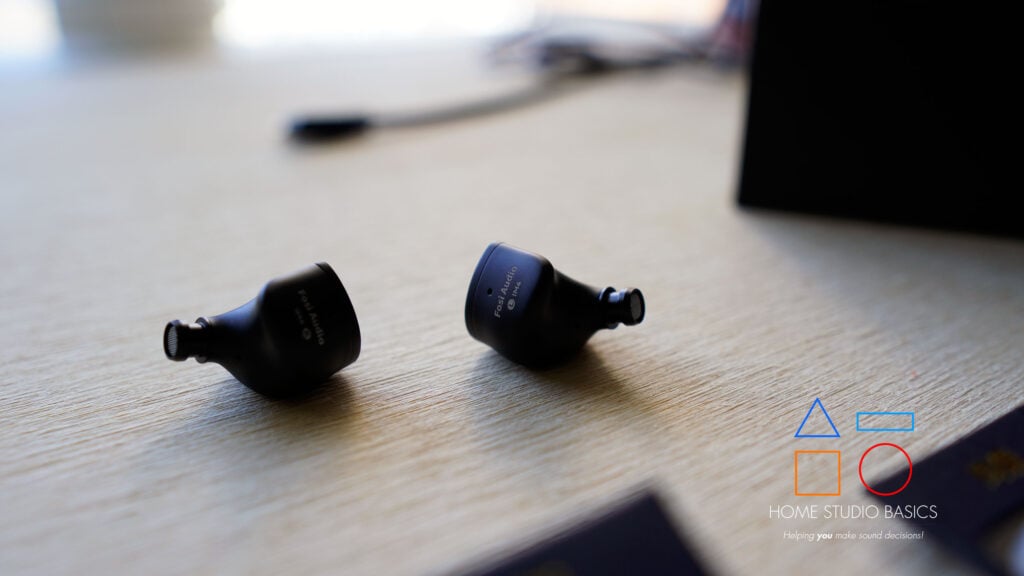
Fosi Audio IM4 Review: Big Resolution On A Small Budget?
Greetings mate and Welcome aboard!
Stuart Charles here, HomeStudioBasics.com helping YOU make sound decisions, so…
What’s the deal with Fosi Audio’s IM4?
Does it sound good? Is it built well? Should you buy it?
Today we’ll review it and find out. By the end of this article, you’ll know if it’s worth a purchase. If it’s not, I’ll point you in the direction of something that is.
Note: All specs, box contents, and pricing toward the end!
Video Discussion
Packaging, Build & Comfort
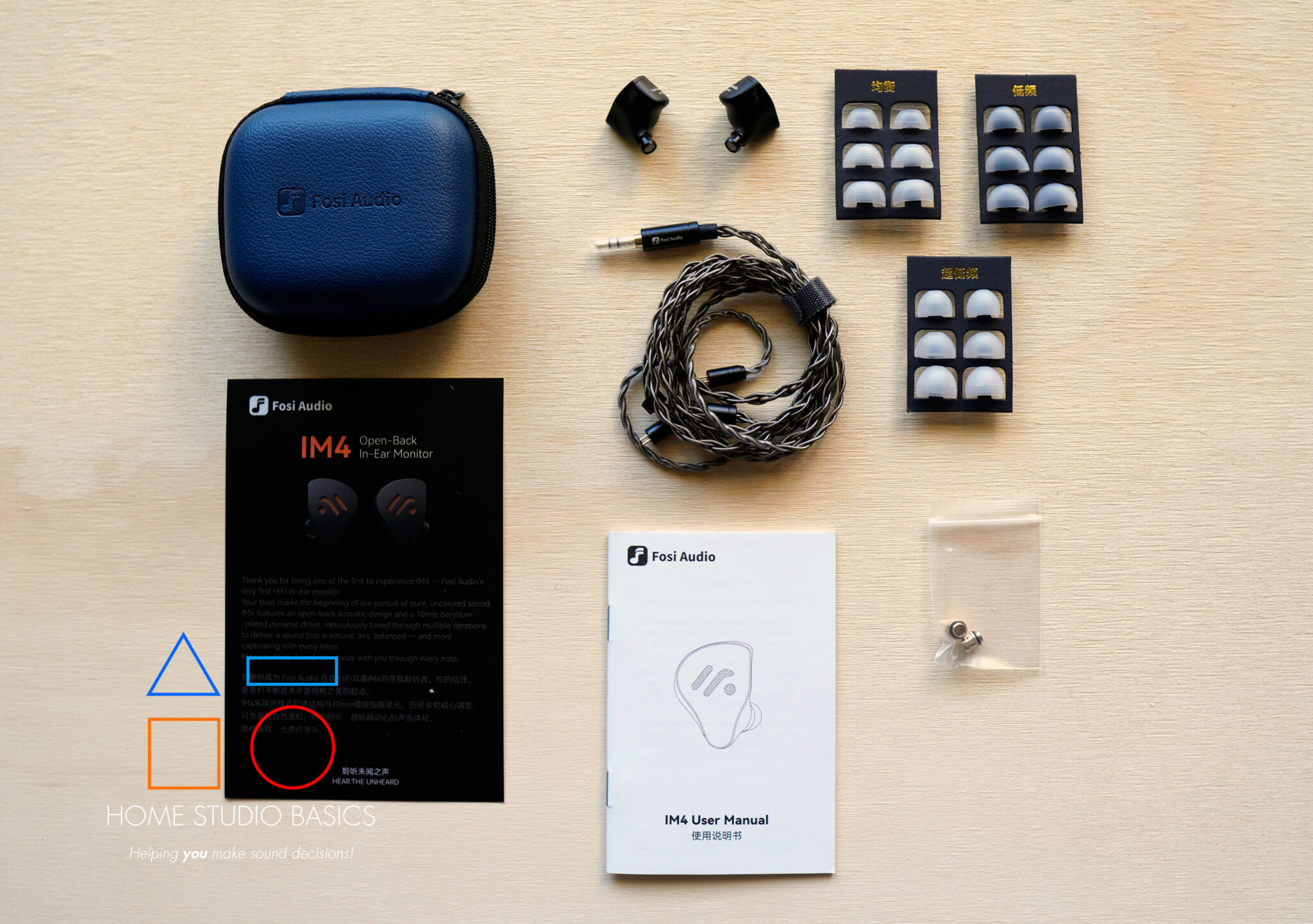
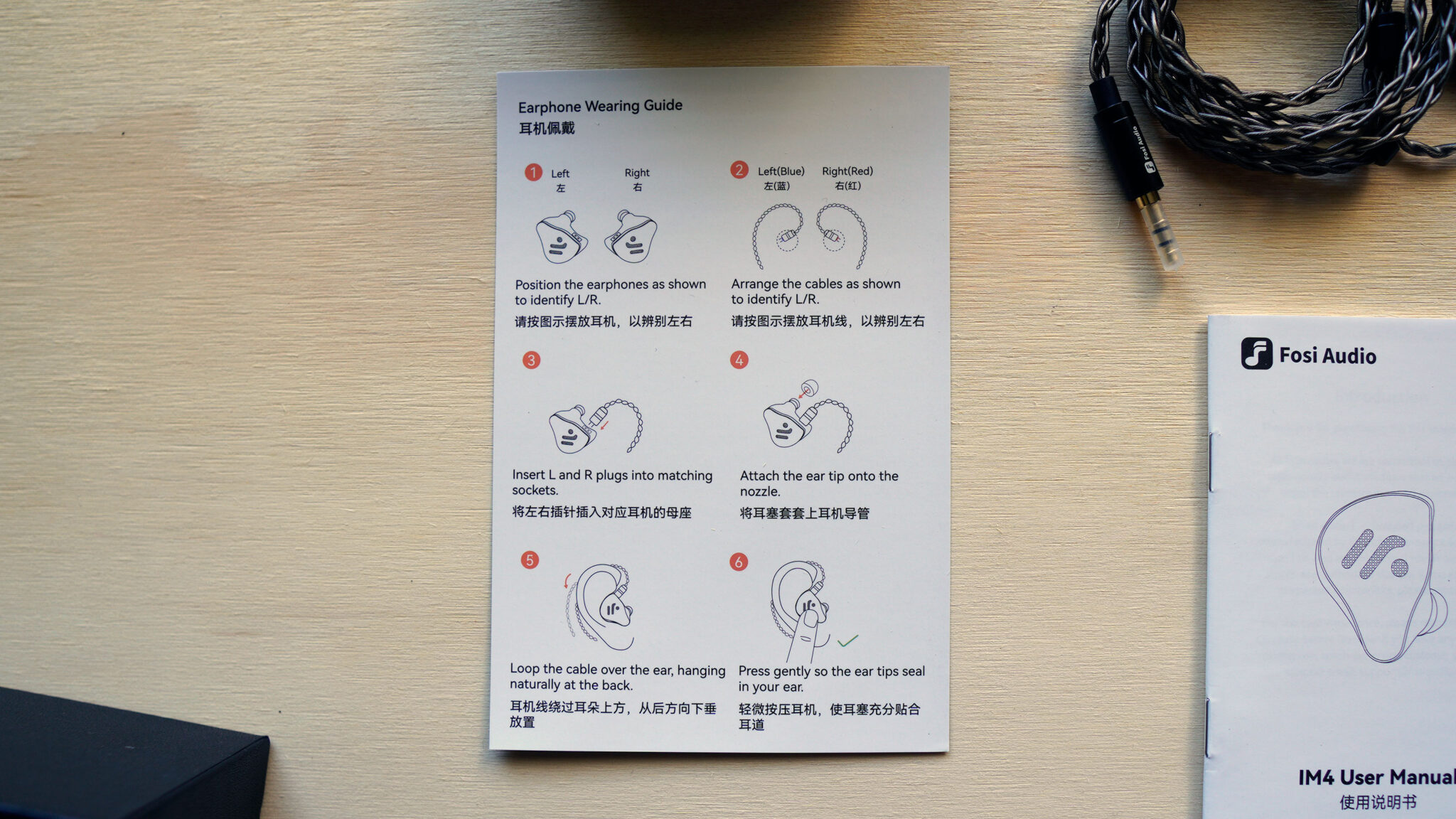
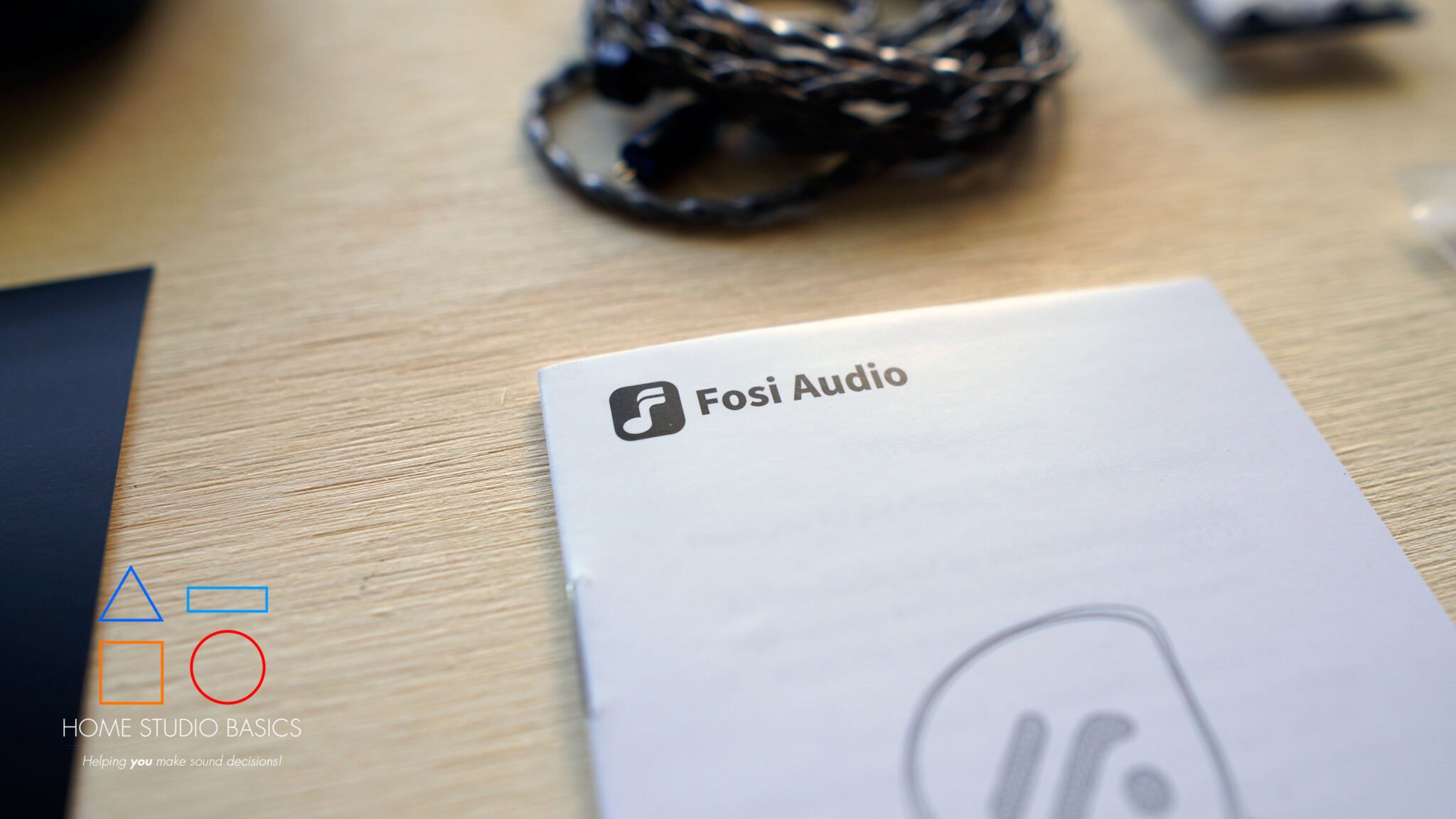
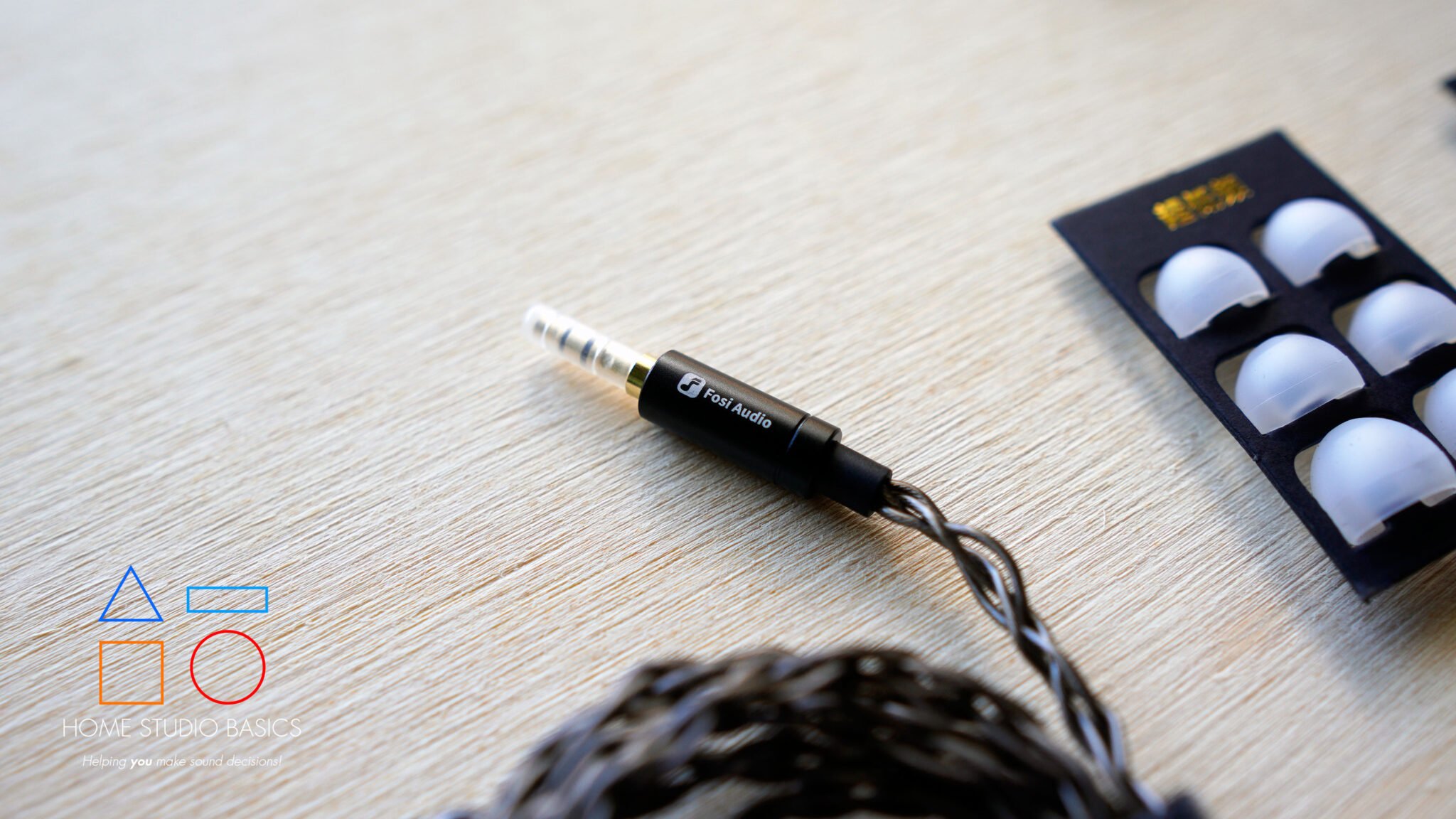
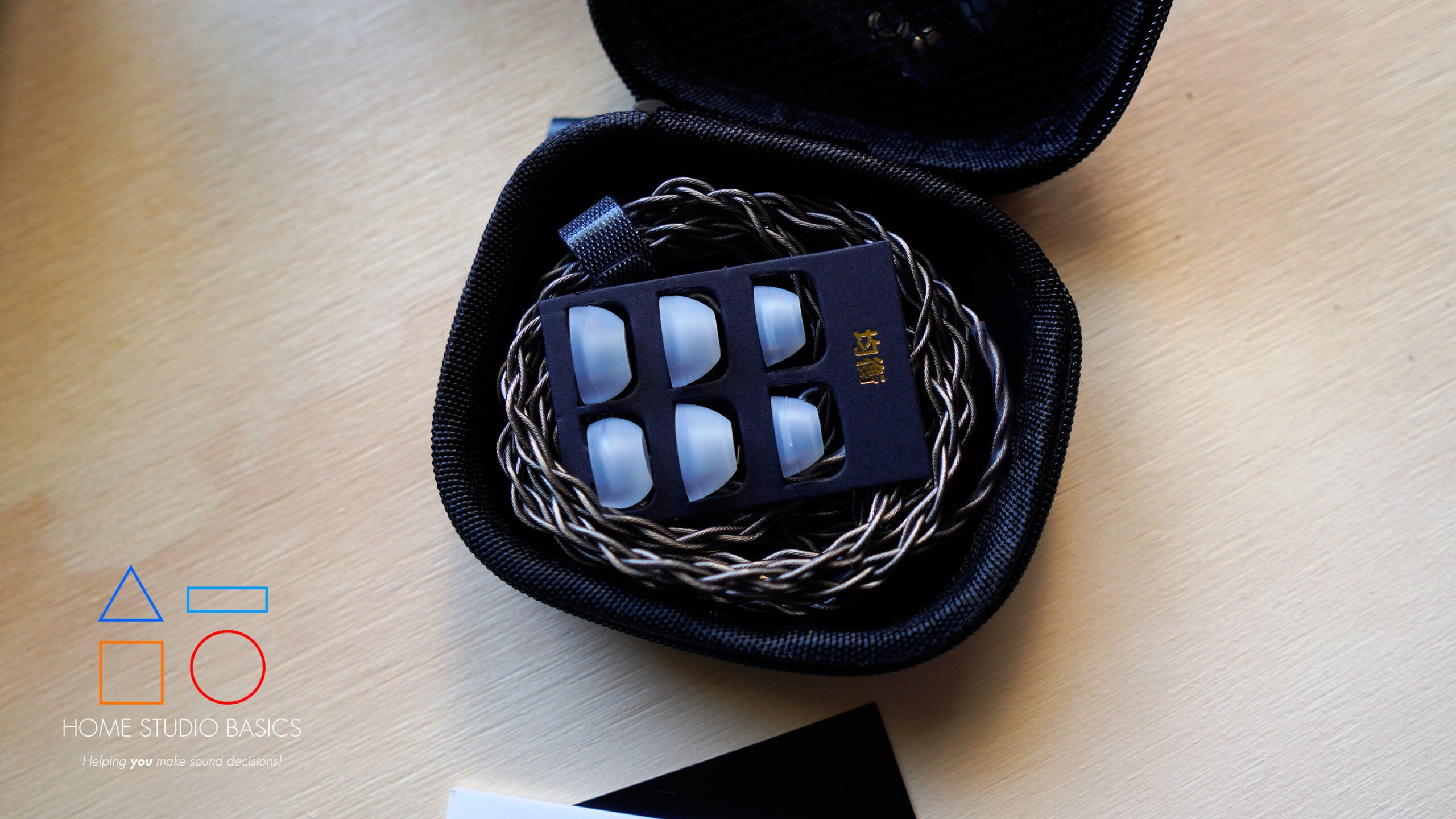
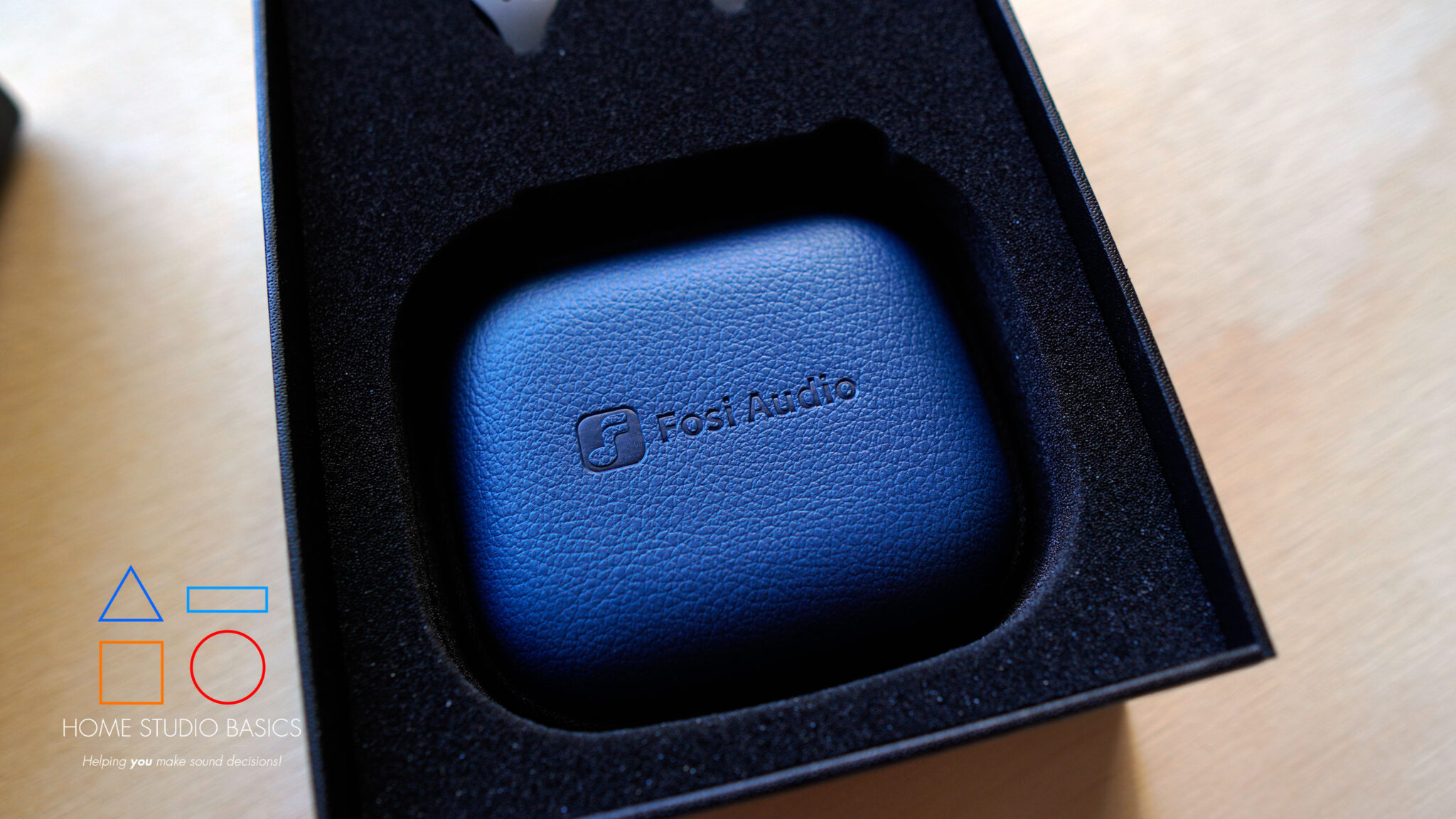
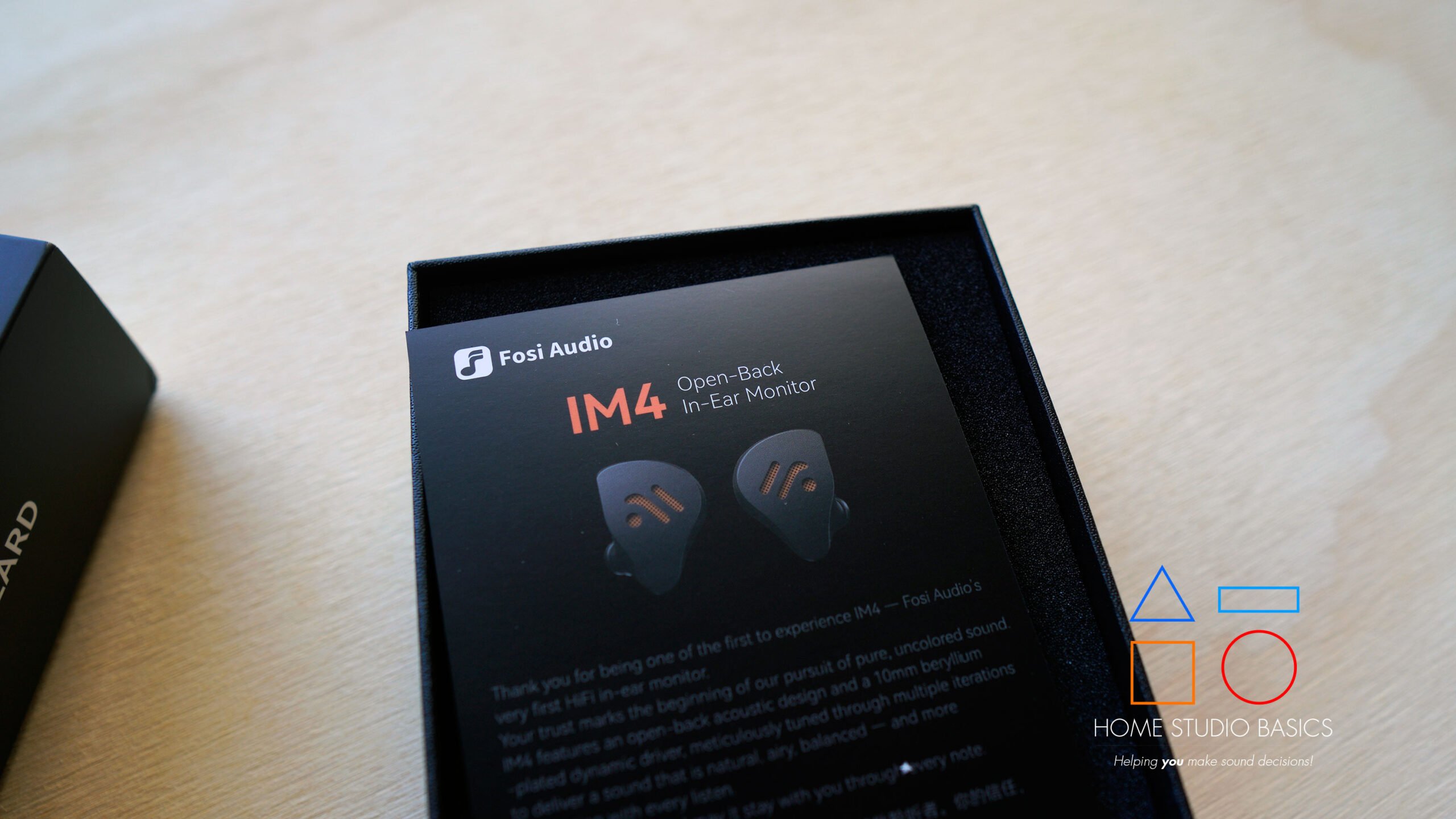
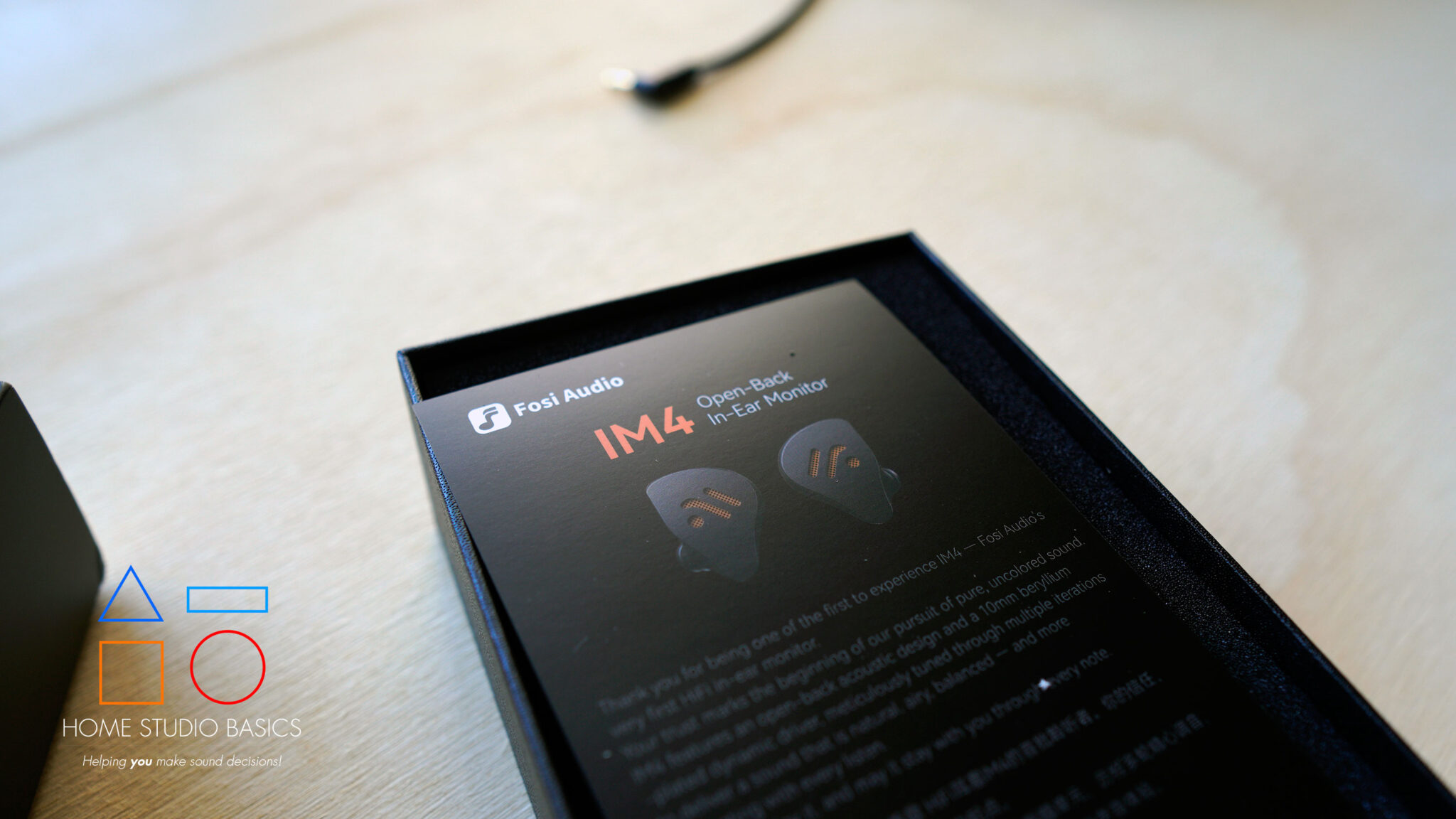
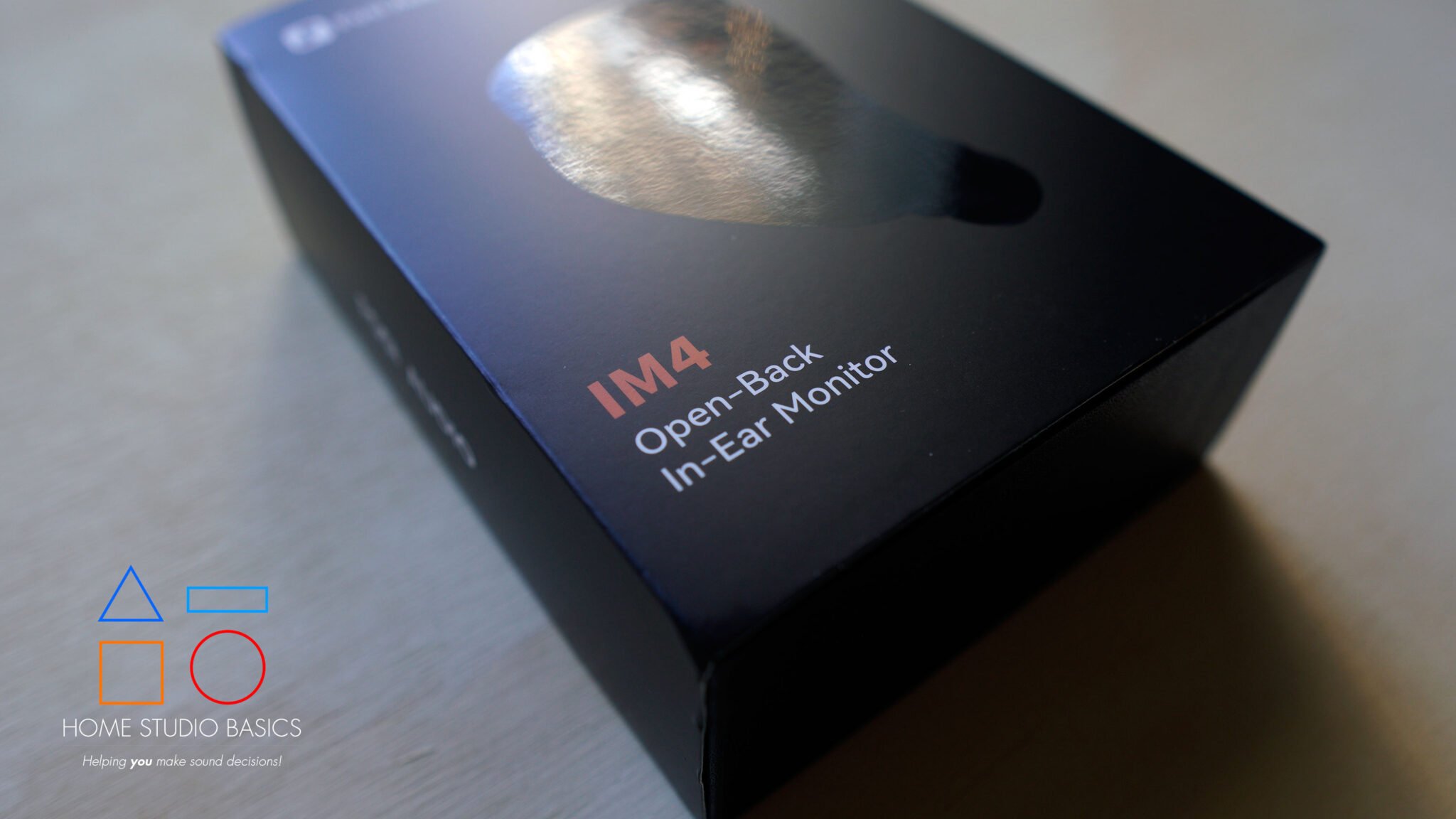
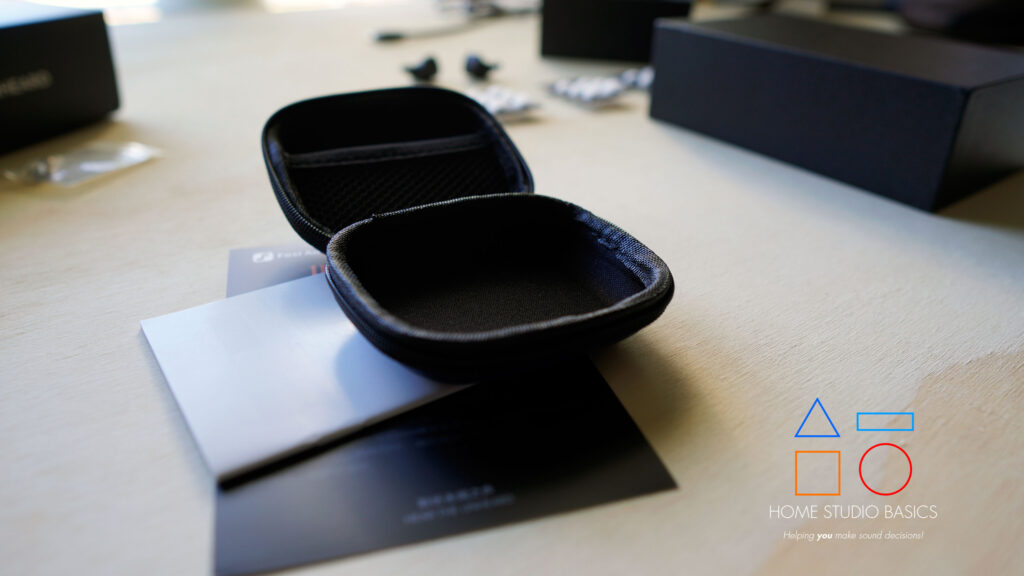
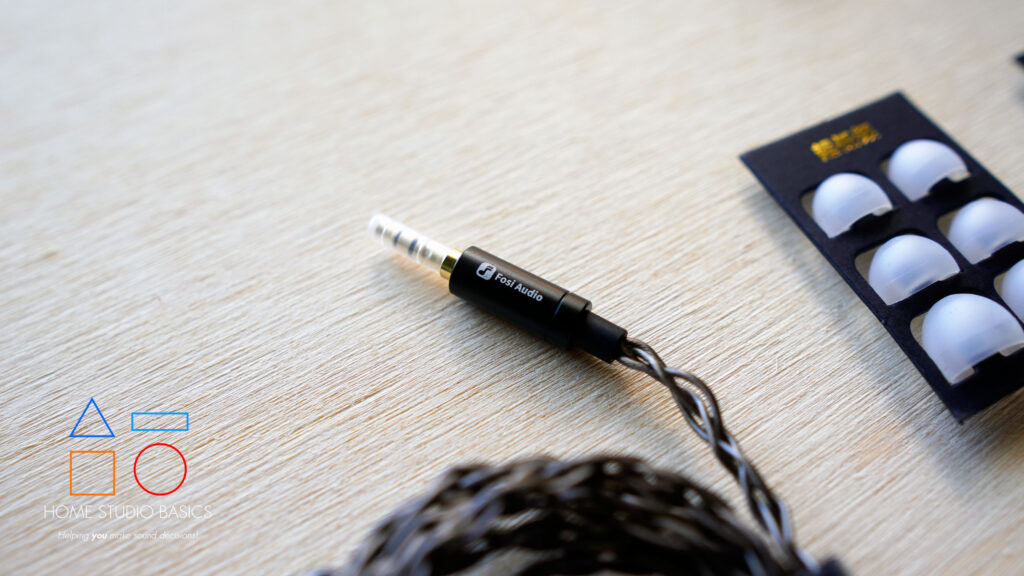
Kicking things off, the IM4 comes with 9 sets of tips, a braided detachable cable terminating in a 3.5mm jack, a user manual, earphone wearing guide, brass nozzle, and carrying pouch.

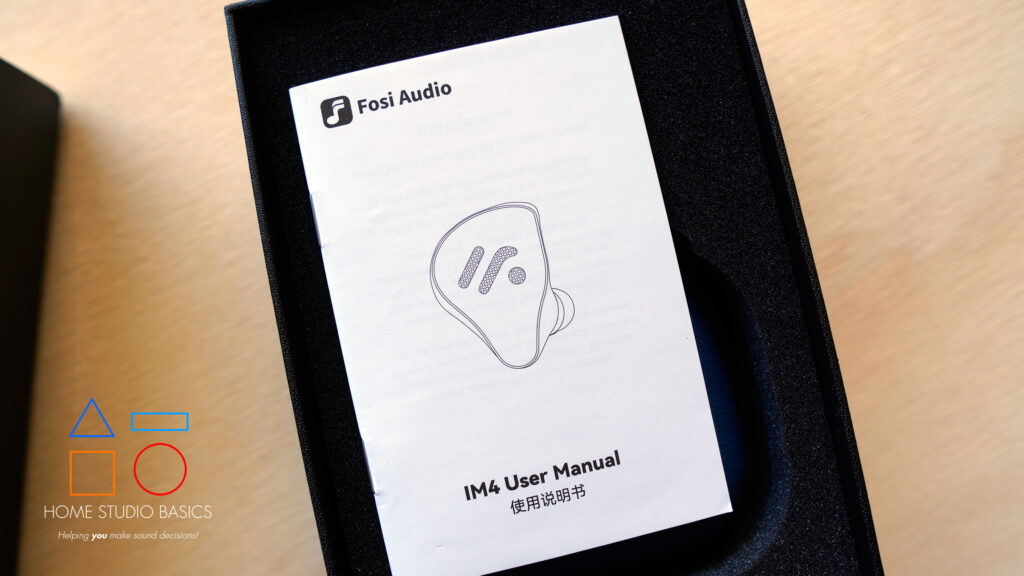
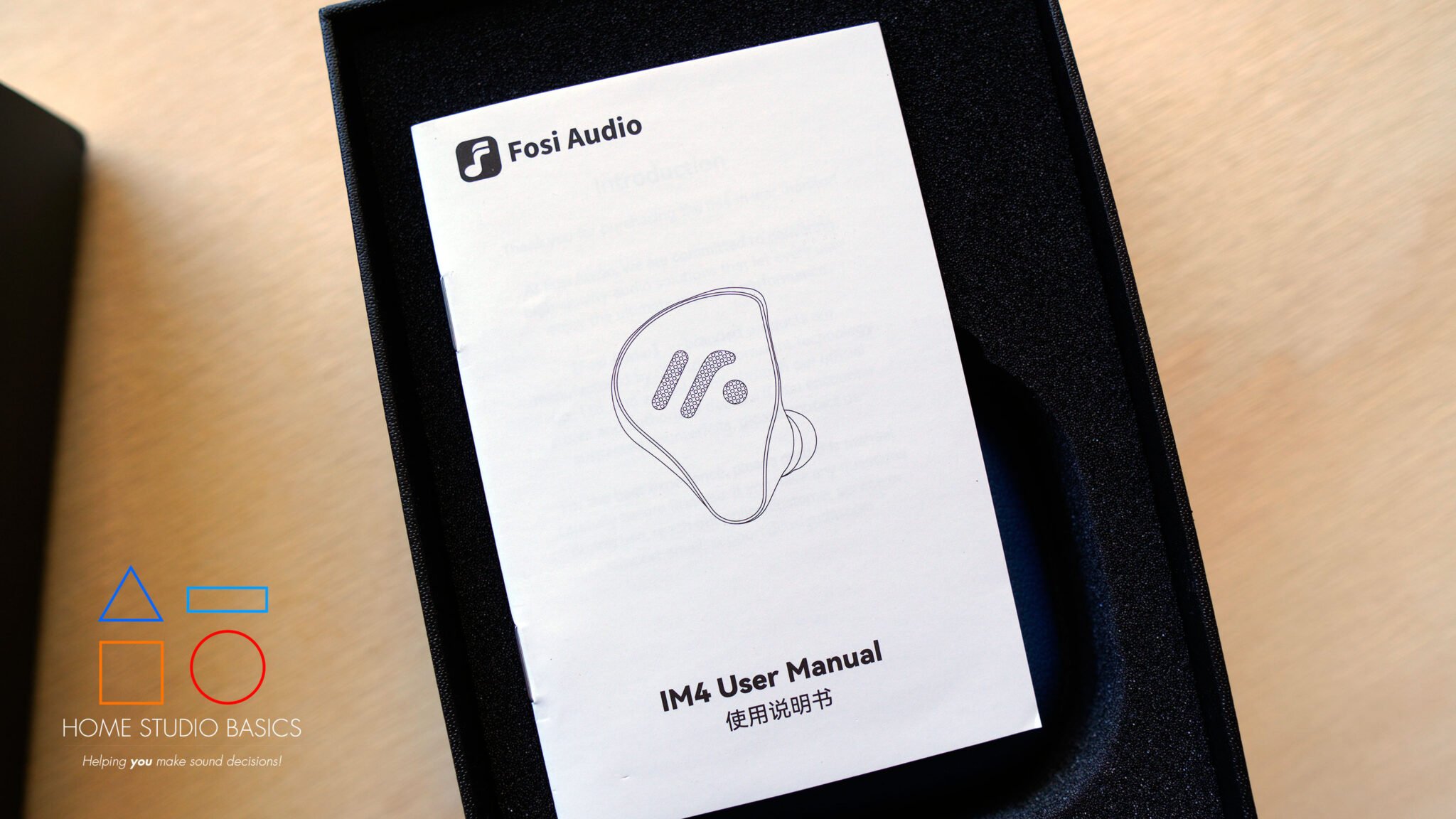
I love that the user manual is a booklet and not something resembling a road map. Many products come with fold-out booklets, and it’s incredibly annoying like a screaming baby.
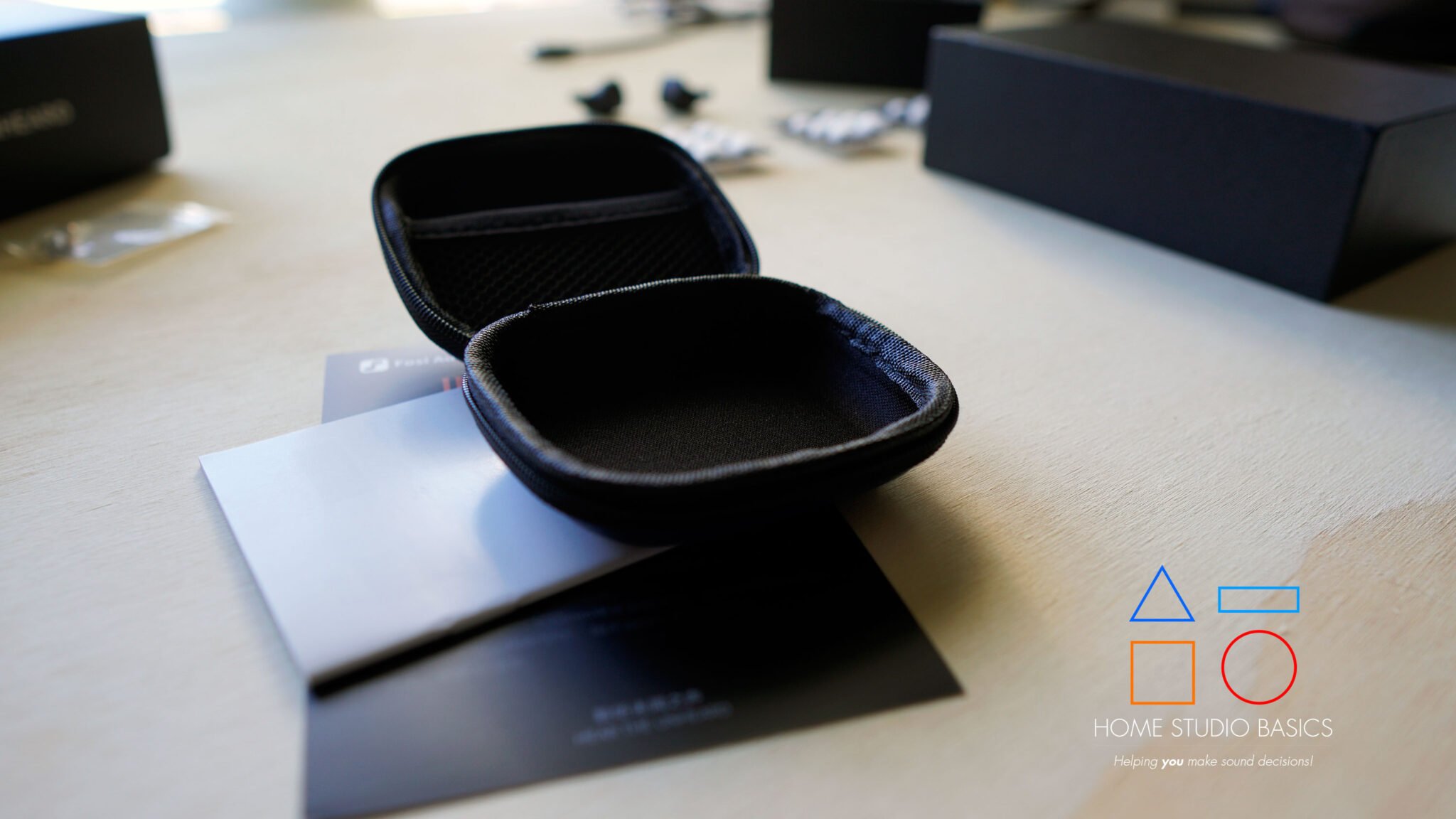
The zippered carrying pouch also feels very premium, allowing you to store the IEMs when you’re on the go.
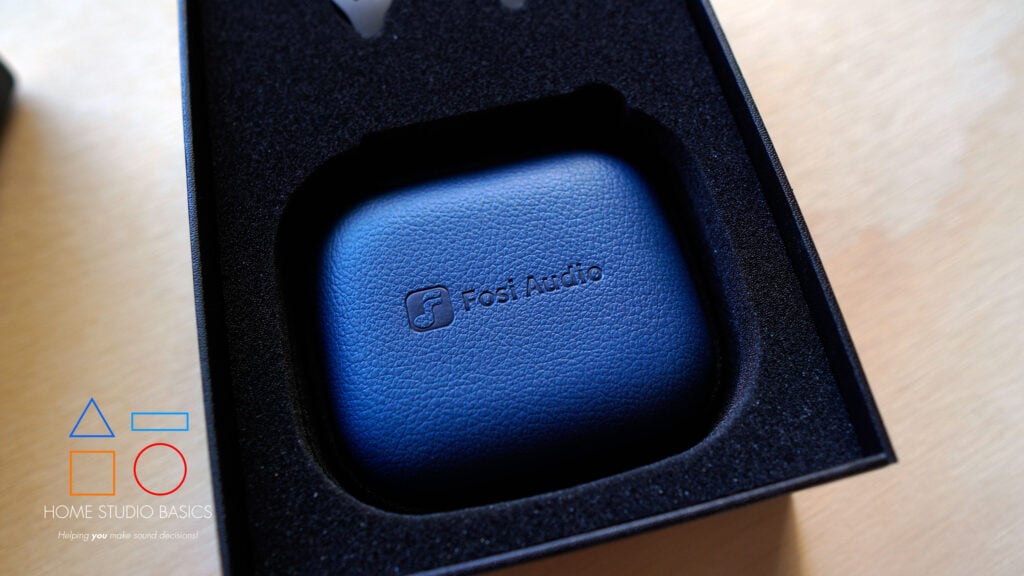
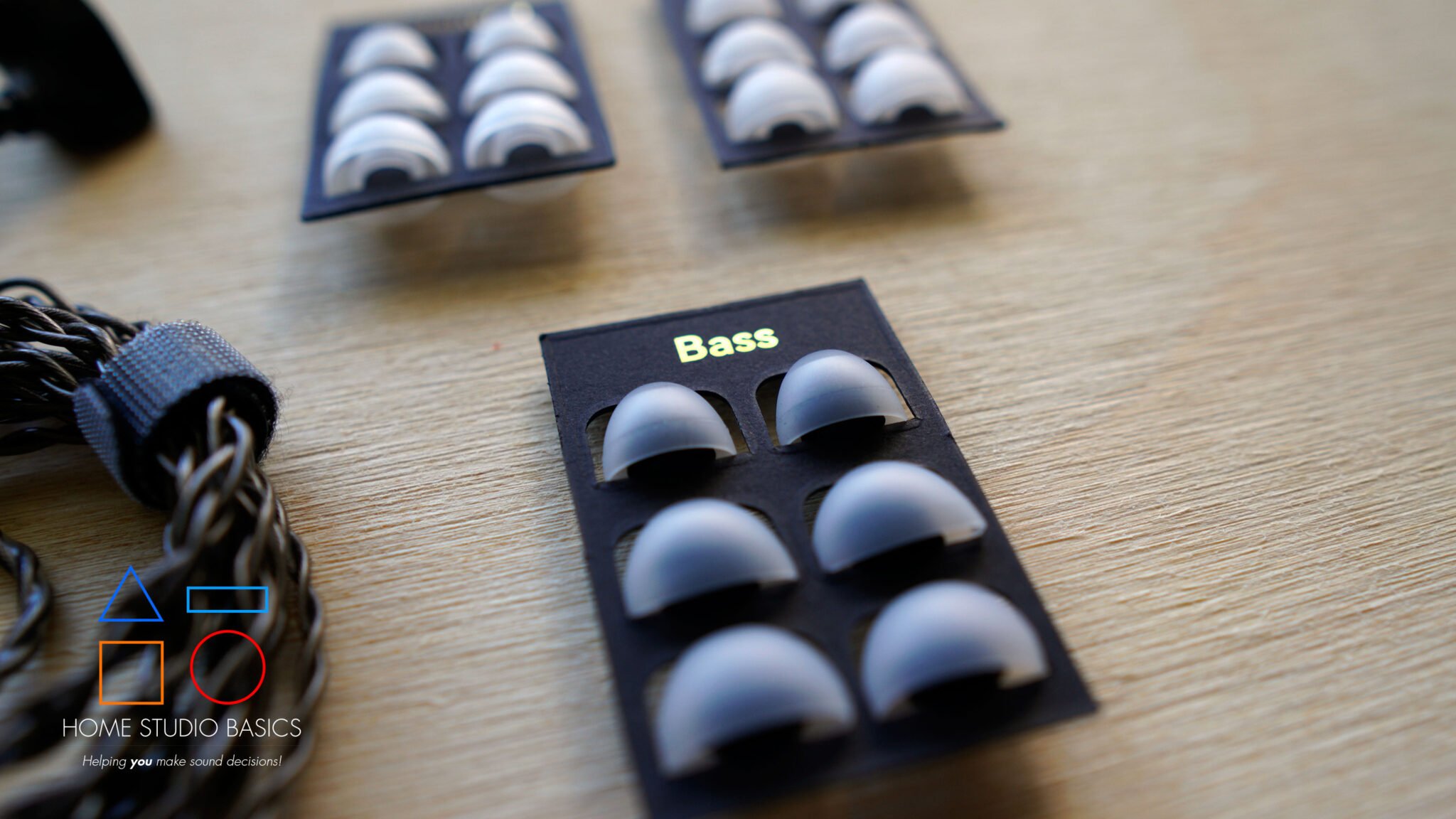
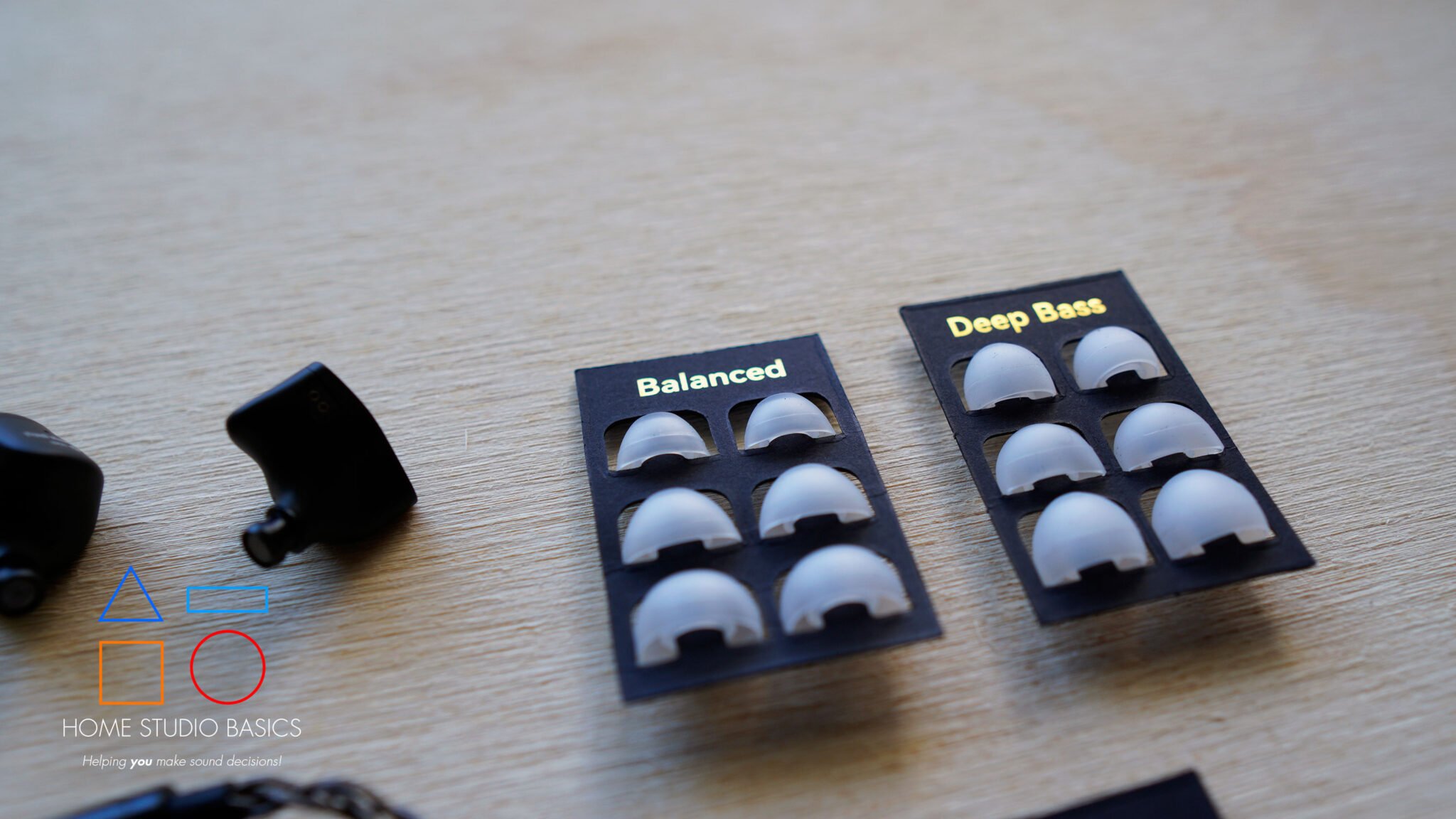
The ear tips come in 3 sets of 3: Bass, Deep Bass, and Balanced. We’ll get into that more in the sound section.
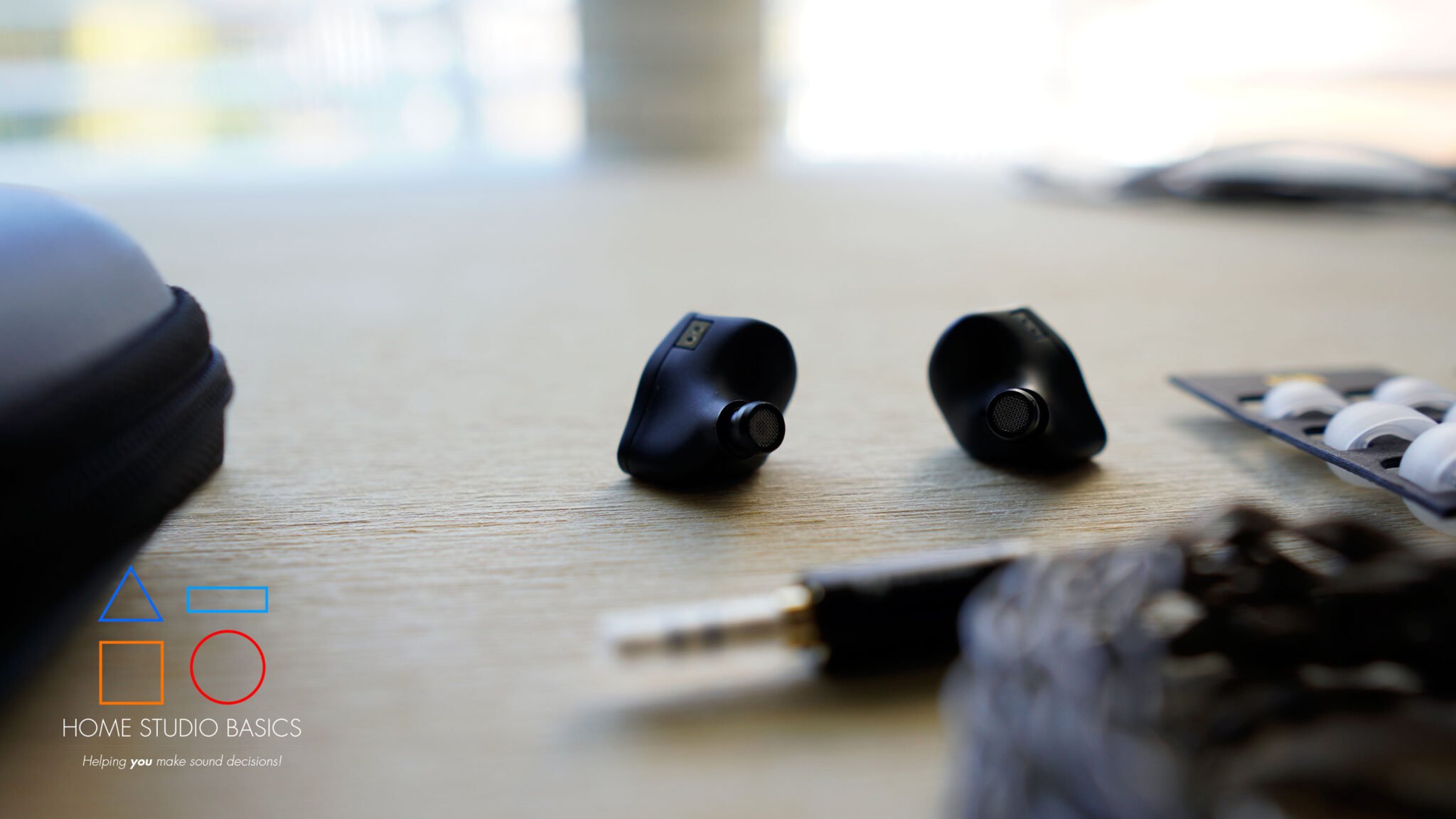
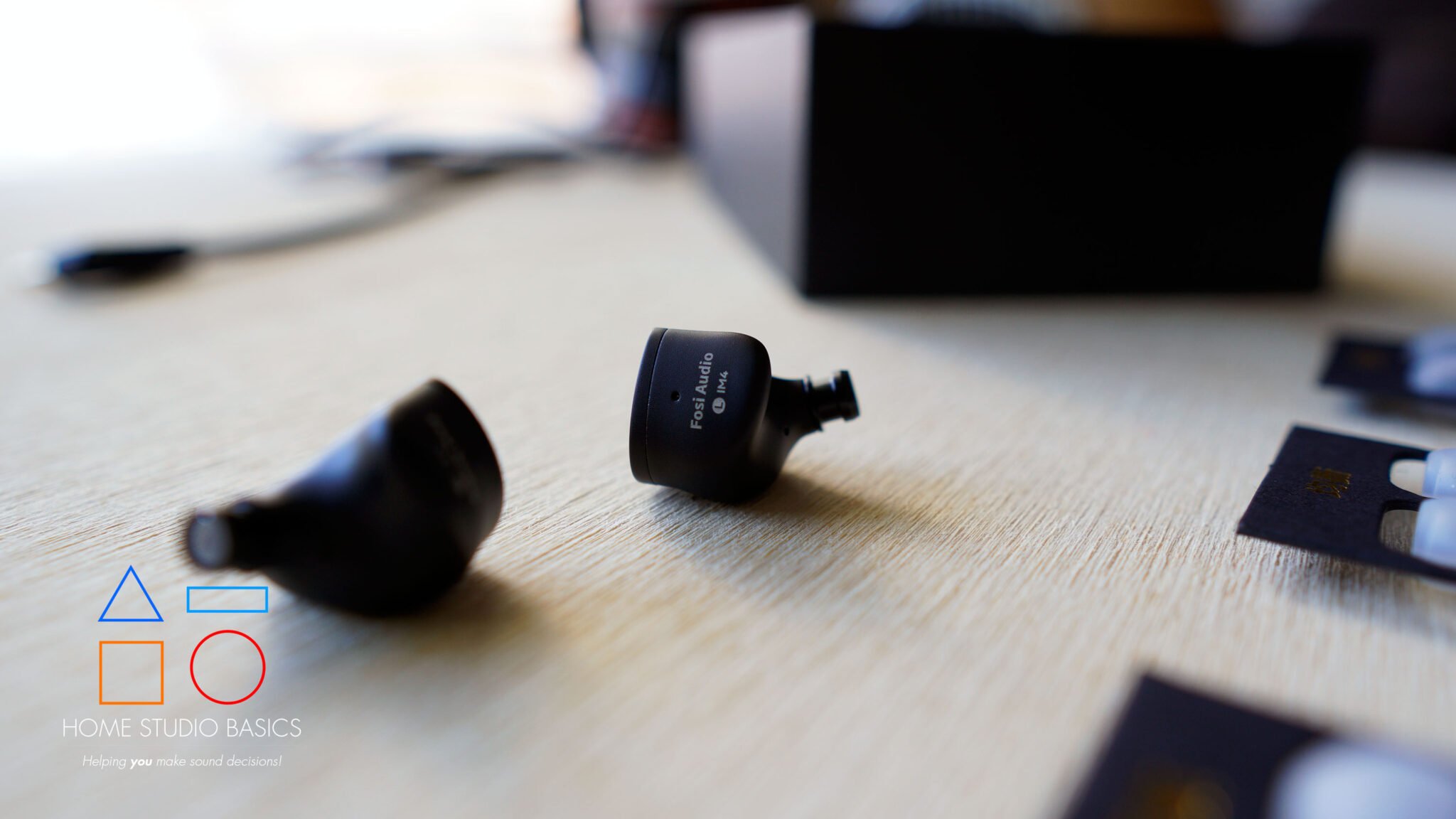
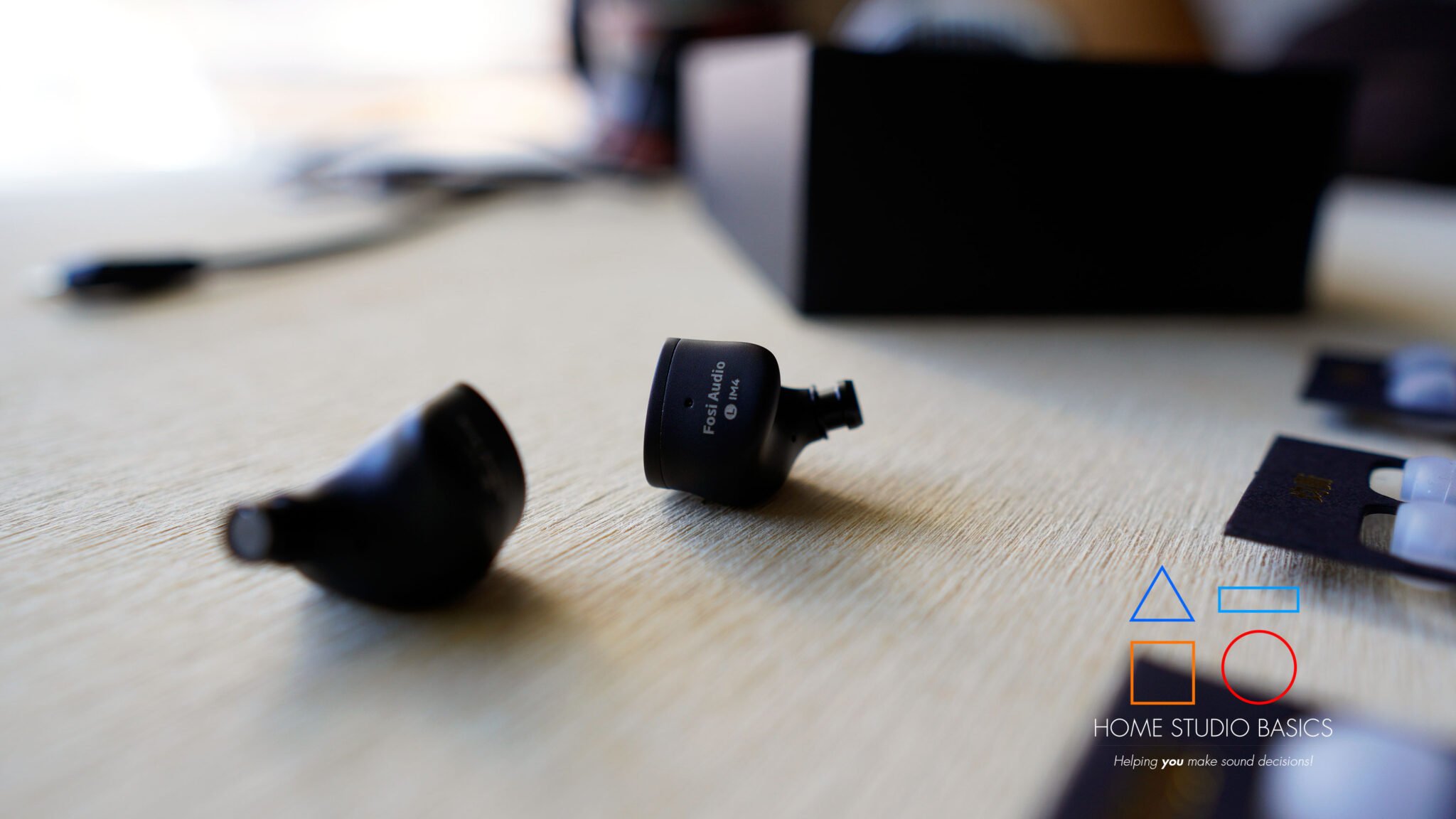
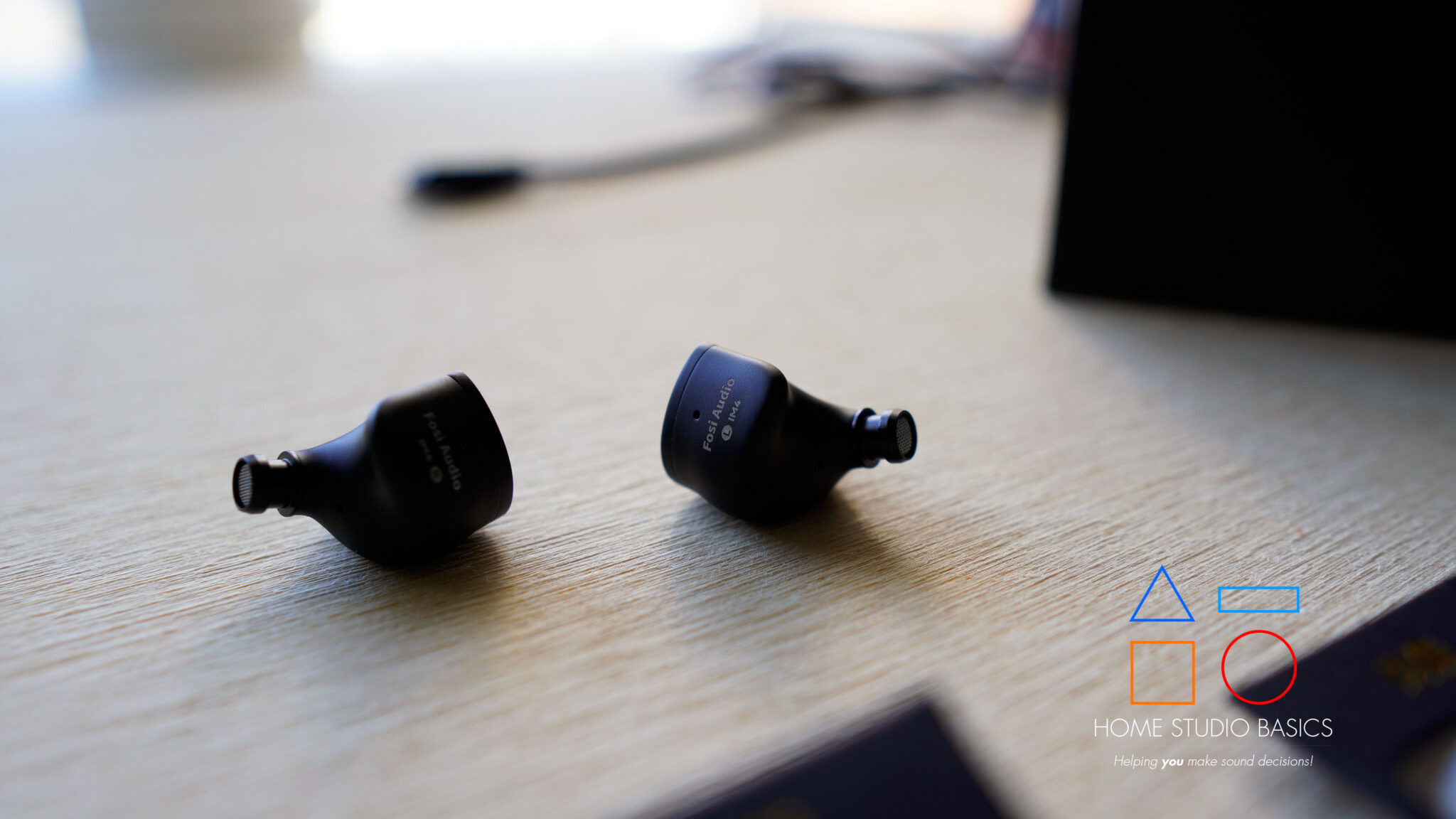
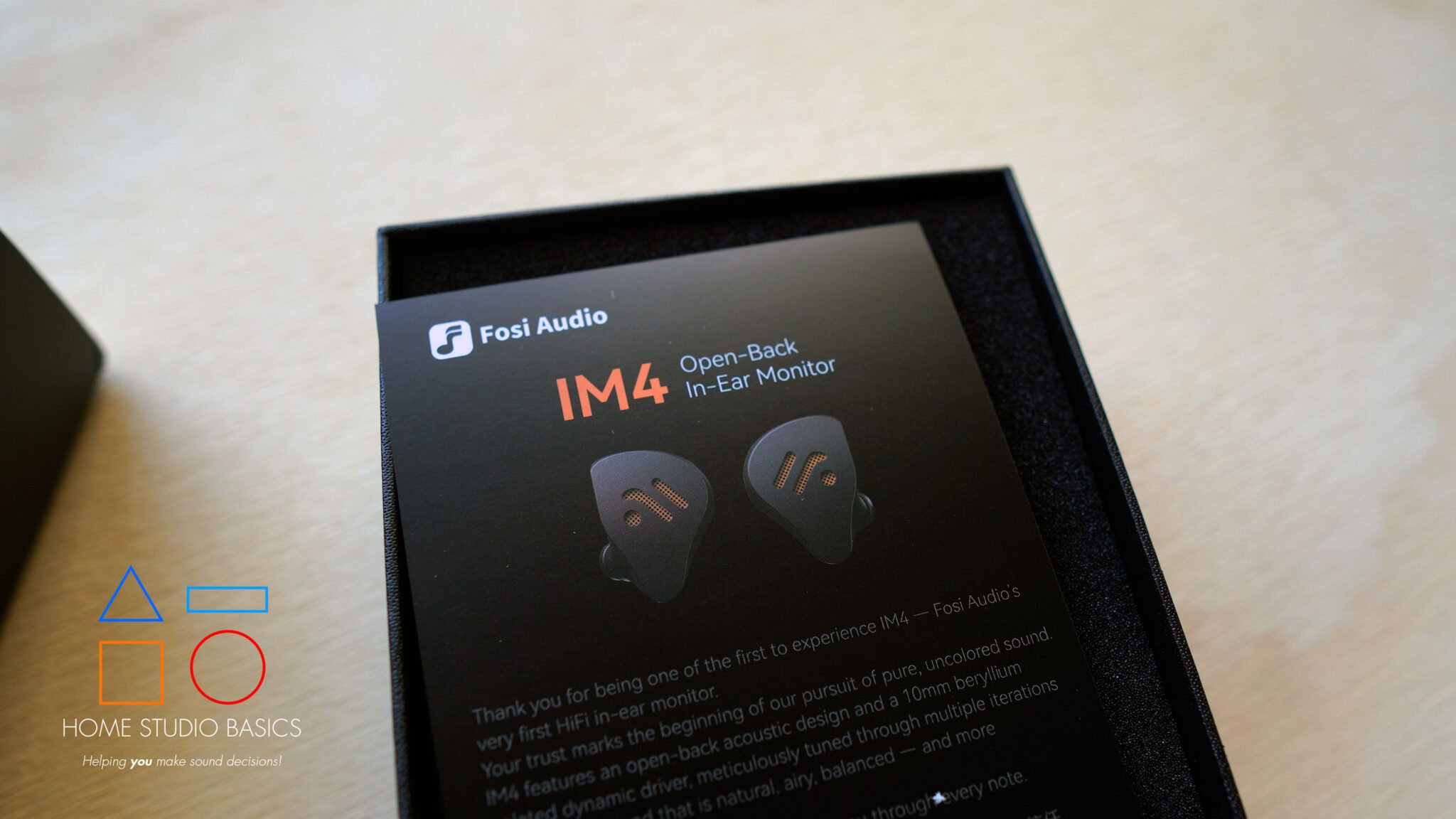
Overall build feels excellent, as the IM4 dons a sleek, elegant matte black finish with an open design. The material used here is 6063 CNC Aluminum Alloy, and it feels great to the touch.
Be sure to read the instructions upon fitment, as they wrap around your ears and should be pointing downward.
Comfort is about what you’d expect out of an IEM. I’m never doing backflips over the comfort of any earbuds, but they’re adequate enough for long-term listening without too much hassle.
For instance, you may be making slight adjustments from time to time, but they fit decently well into the ears and feel satisfactory for the most part.
Sound
- Playlist(s): Here!
- Source(s): FLAC, Lossless
- Amps & DACs Used: FiiO K11, Universal Audio Volt 2, FiiO K7, more to come.
- Aluminum Alloy Nozzle: Standard, out of the box.
- Brass Nozzle: Mids and treble a bit sharper

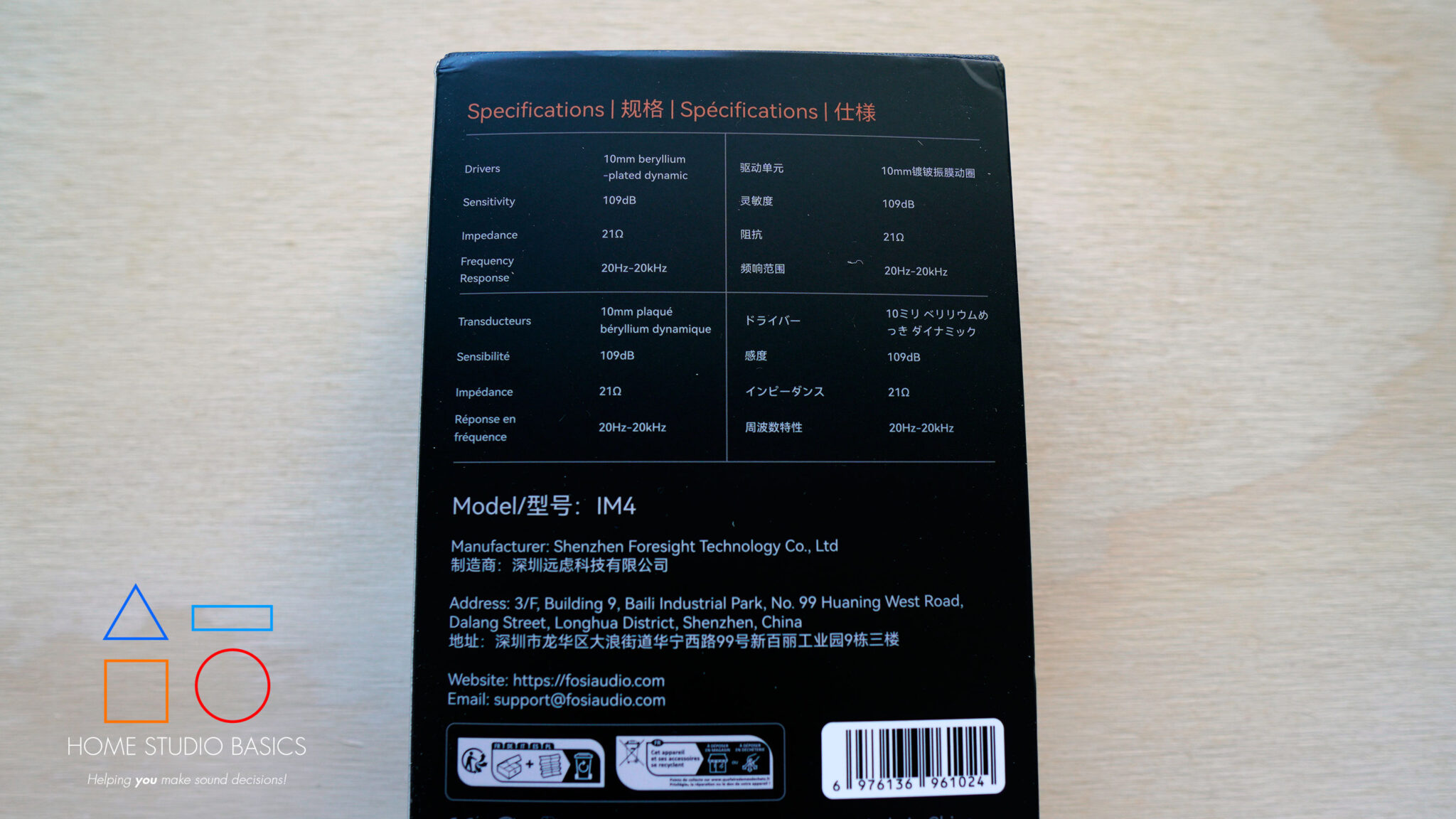
Boasting 10mm N52 dual-magnets, dual-cavity dynamic drivers, and a PU beryllium-coated diaphragm, the IM4 delivers improved transient response, tighter bass control, and enhanced overall clarity across the frequency range. Do these things ring true?
Let’s get into the blues.
Bass
Kicking things off, the bass of the IM4 is clear, well-defined, and elevated. It does an excellent job of providing impact while also staying out of the way of the other frequencies. Fosi, like few other companies, understands that to make bass sound full and correct, certain areas should be boosted while others need to be cut.
Unless you want to feel like you’re hearing music inside an enormous VAT of chocolate pudding, we’ll need to cut the areas around 200-300Hz; the region that most companies, for whatever reason, decide is completely OK to destroy.
The IM4 bucks this trend, follows an excellent trajectory, opting for a tasteful sub-bass shelf moving into the impact/slam regions of 60-90Hz, followed by a mud cut around 200-300. This is one of THE recipes for a successful low-end fidelity, and Fosi understands it well.
There’s no bleed, hum, fuzz, or mud, and bass notes strike with authority without sounding flabby like man boobs on a guy who doesn’t work out.
NOW YOU HIT THAT GYM HARD, BUSTER!!
Still, tracks like “Mindreader” from Anieszka, jsilos are almost laughably boosted, but that’s more a result of the song and how it was engineered rather than the earbuds themselves. Most songs are going to sound just about right, providing enough excitement to keep you coming back for more.
A perfect example of someone who knows what they’re doing is Apollo Brown on a track like “Time Goes.” The bass slams like no other, sounding pitch-perfect and hitting extremely hard in the right areas. There’s impact and weight, but it never sounds sloppy. This track specifically helps showcase what the IM4 is capable of when the beat matches.
Mid-Range
The mids are equally impressive, showcasing clear, present, and accounted for vocals, crisp instrumentation, and true to the source timbre.
One thing I think could use a bit of improvement is the lower mids. You may listen and feel like there’s something slightly “off.”
Fosi compensates by elevating the presence regions quite considerably, and if I’m being honest, it feels a little unbalanced here at times, especially on tracks like Kllo’s “Predicament”. Her vocals soar, almost to a fault, and it makes for a somewhat awkward-sounding presentation. Keep in mind I’m nitpicking, but it’s definitely noticeable.
Still, her vocals are incredibly clear, with exemplary resolution and micro detail. The instrumentation as a whole also feels very natural despite the dip, but there’s also a very honest, raw, visceral quality to the IM4.
Consider “Virus (Hudson Mohawke Peaches and Guacamol Remix)” from Björk, a song with some strange synthesizers (or whatever they are) that stand out considerably, much more than I previously remembered.
Part of this is likely because we are indeed listening to an IEM. And, if you weren’t aware, IEMs provide a lot better resolution than headphones. I’m fully convinced of that after being a headphone WHORE for the vast majority of my life. It’s just true, and I can’t deny it like an MJ fadeaway.
That grainy, fuzzy synth (or whatever it is) grinds with reckless abandon, and it makes you realize that with headphones (or even speakers), you sometimes miss out on the little things that make a track really go hard like Peter North in his prime.
Still, if I could nitpick a sec, it does stand out a bit much, in effect drawing some attention away from yet another wonderful vocal performance from the weirdo (read: genius) herself (Bjork). This is, again, a running theme with the IM4.
Treble

Treble is about what you’d expect out of this harman-y type of tuning.
It’s crisp and accurate without waxing strident/sibilant, providing just the right amount of sparkle (in my opinion), without being overdone like your mom’s meatloaf.
Hats, cymbals, crashes, and other high-end information are rendered faithfully, and sound natural without veering into darkness territory as, say, something from the Audeze line.
Resolution

One of the best things about an IEM like this is certainly resolution, and I’d like to discuss it more in depth.
If you can imagine being able to follow a bass line, synth, pad, or instrument and hearing every note that plays, that’s what you’re getting here. It sometimes causes you to focus on one particular aspect of the song, and that’s certainly good news for people who love bad news.
It’s arguably the most fun aspect of listening to music if you’re a hardcore music nerd, but everything feels more fully fleshed out, complete, and full.
“Great Gig In The Sky” from Pink Floyd is a great example. At 1:55, Richard Wright’s organ almost screams for attention, sounding incredibly dark and coming through with astonishing clarity.
It almost sounds like he’s out of key for a second, as he becomes lost in the otherworldly jam session while providing some incredibly strange textures and allowing his organ to shimmer and talk like I’ve never heard before in other headphones. *deep breath*
Bonus: you can also hear her say at 3:32, “I never said I was ready to die” much clearer.
There are countless examples here, from the backing vocals on “Even If It Hurts,” to all the tiny micro details heard on Kendrick Lamar’s “Never Catch Me”, to the clearer voices and instruments, and excellent panning on “Sunshine Baby” from the Japanese House.
These are the types of things that jump out at you hardcore, standing front and center as the strongest and most noteworthy feature of the IM4.
Transient Response, Decay & Release

As with most IEMs worth their salt, the IM4 has fast transients, great overall speed, and more realistic-sounding decay and release.
This quality of the earbud is essentially a byproduct of good resolution, in effect providing the cherry on top — the sense that notes start and stop with intention rather than smearing together.
When an IEM handles these micro-details cleanly, you not only hear the texture of instruments but also the space between them. It gives drums a tighter snap, synths a more defined shape, and vocals a natural rise and fall that feels lifelike instead of processed.
Soundstage

To be clear, the IM4 provides decent width, but this is mostly track-dependent rather than the prowess of the buds themselves.
Celer’s “In The Middle Of The Moving Field” is an exception, with exemplary Soundstage toward the end, but most tracks sound fairly head width and somewhat “normal.”
A bit of a disappointment?
Yeah, I think so, but it’s not the end of the world. If you’re looking for an amazing Soundstage, I’d check out AKG’s K702 first.
The IM4 is just not going to spread very wide, but I think depth and height are excellent overall. So if you’re looking for that, this is a splendid option.
Part of the reason resolution is so impeccable is that separation is also excellent.
You’ll start to get a feel for how the artist intended the track to sound, allowing for an actual experience rather than just a rendition of instruments. It feels more immediate and realistic, and much of that is owed to height and depth, specifically diagonally and criss-crossed from top to bottom.
Again, width isn’t necessarily amazing, but it’s mostly satisfactory and can really stand out on tracks like Blood Orange’s “S’Cooled.” The guitar, specifically here, sounds like it’s in an actual space, and there’s plenty of room for it to flex on you.
In terms of Soundstage, I also think north/northeast/northwest to south/southeast/southwest really shines on many cuts.
Please keep in mind that again, a lot of this is track-dependent, but if you’re listening to an artist who knows what they’re doing, then the IM4 will excel regardless, since it’s tuned well overall and has great spacing.
Genre Pairing
As you can well imagine, a tuning like this works well for the majority of genres you will come across, sounding fantastic with hip-hop, indie, pop, rock, ambient, classical, jazz, and so forth.
Whatever you listen to, the IM4’s got you covered like Sherwin-Williams.
Final Verdict

Fosi Audio’s IM4 is a well-tuned IEM with fantastic resolution and an attractive aesthetic.
You get 9 sets of tips to mix and match sound preferences, and the buds come with a beautiful zippered case. That said, there’s a bit of a papery quality to the sound as a whole, and the lower mids sound somewhat recessed at times (leading to some unbalance), but overall, the IM4 is an easy, solid purchase at around $100.
SOUND DECISION? YEAH, MATE.
TIER: B+ (Maybe light A-)
Fosi Audio IM4
Price: Check Amazon! | Check Fosi!
In The Box

IM4 Earphones
Detachable Cable
Balanced Ear Tips
Bass Ear Tips
Deep Bass Ear Tips
Brass Nozzle
Carrying Pouch
User Manual & Quick Guide
Well, that’s about it for today my friend! I hope you’ve enjoyed this Fosi Audio IM4 Review and came away with some valuable insight.
Questions? Comments? Requests? Did I miss the mark on something? Please leave them down below or Contact me!!
If you love what I do here and want to support the blog and channel in a more personal way, check me out on Patreon and discover all the value I have to offer you.
Does the IM4 sound like a worthwhile investment? I would love to hear from you. Until next time…
All the best and God bless,

-Stu
[Xtr@Ba$eHitZ] > Now AudioFiles Anonymous